Many people undergo orthodontic treatment to straighten their teeth and improve their smile. Years later, however, some patients begin experiencing symptoms such as jaw clicking, jaw pain, headaches, facial discomfort, or difficulty opening their mouth.
When these symptoms appear after orthodontic treatment, patients often ask:
“Can braces cause TMJ problems years later?”
This is a reasonable question, particularly when a patient remembers having no jaw pain before orthodontic treatment and then develops symptoms later in life.
The relationship between orthodontic treatment and TMJ symptoms can be complex. Jaw pain and dysfunction can have multiple contributing factors, and the presence of previous braces does not automatically mean that braces caused a patient's TMJ symptoms.
However, a patient's orthodontic history is an important part of their overall dental history and should be considered when assessing new or persistent jaw symptoms.
What Is the TMJ?
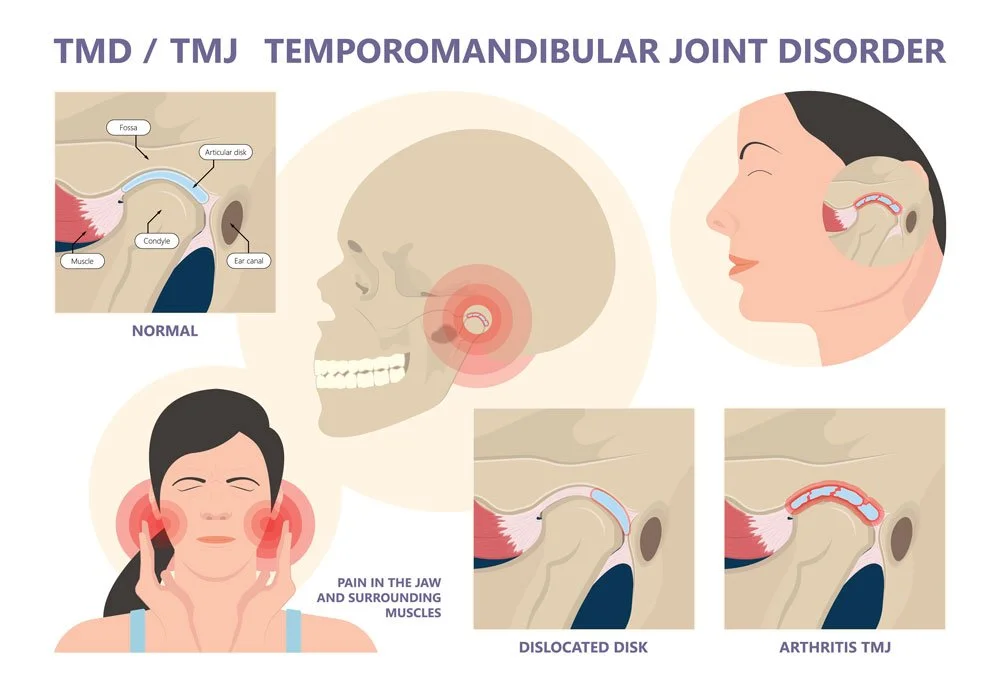
The temporomandibular joint, commonly called the TMJ, connects the lower jaw to the skull.
There are two TMJs—one on each side of the face. These joints allow the jaw to:
Open and close
Move forward and backward
Move from side to side
The jaw joints work together with the teeth, chewing muscles, ligaments, and surrounding structures.
When something affects the way these structures function together, some patients may experience symptoms associated with temporomandibular disorders, commonly referred to as TMD.
What Symptoms Can Patients Experience?
TMJ-related symptoms can vary significantly from person to person.
Some patients experience occasional clicking without pain. Others may develop more persistent symptoms, including:
Jaw pain
Pain when chewing
Clicking or popping
Jaw stiffness
Jaw locking or catching
Facial pain
Headaches
Muscle tension
Ear pressure or discomfort
Difficulty opening the mouth
A feeling that the bite has changed
For some patients, symptoms develop gradually over time.
A small click may initially be ignored. Later, the patient may notice jaw fatigue, muscle soreness, or pain that becomes more frequent.
Why Do Patients Associate Their Symptoms With Previous Braces?
Patients often look back at their dental history when new symptoms develop.
They may say:
“I never had jaw pain before my orthodontic treatment.”
Or:
“My teeth are straight, but my bite feels different now.”
Or:
“I finished braces years ago, and now my jaw is clicking and painful.”
These experiences can understandably cause patients to question whether their previous orthodontic treatment may be related to their current symptoms.
However, the timing of symptoms alone cannot establish a cause-and-effect relationship.
A thorough evaluation is needed to understand the individual factors that may be contributing to the patient's symptoms.
What Other Factors May Contribute to TMJ Symptoms?
TMJ symptoms can have many possible contributing factors.
These may include:
Clenching and Grinding
Teeth clenching and grinding can place increased load on the jaw muscles and joints.
Some people are aware that they grind their teeth. Others may clench unconsciously during the day or while sleeping.
Stress and Muscle Tension
Stress can contribute to increased muscle tension and clenching behaviours.
The jaw, face, neck, and shoulders may all become involved in patterns of muscle tension.
Changes Over Time
The teeth, jaw joints, muscles, and surrounding structures can change over time.
Natural ageing, dental treatment, tooth wear, missing teeth, and other changes may influence how the jaw functions.
Previous Trauma
An injury to the jaw, face, head, or neck may contribute to jaw symptoms.
Some patients develop symptoms immediately after trauma, while others may notice problems later.
Individual Anatomy and Joint Factors
The structure and function of the jaw joints vary between individuals.
Some patients may be more susceptible to developing symptoms due to their individual anatomy or other factors.
Does This Mean Braces Are Always the Cause?
No.
It is important to avoid assuming that previous orthodontic treatment is automatically responsible for a patient's TMJ symptoms.
At the same time, patients should feel comfortable discussing their orthodontic history with their dentist or TMJ clinician.
A proper assessment may consider:
The patient's symptoms
When symptoms began
Whether symptoms have progressed
The patient's orthodontic history
Current dental condition
Jaw movement
Muscle function
Joint sounds
Clenching and grinding
The patient's bite
Other relevant health and dental factors
The aim is to understand the individual patient rather than make assumptions based on one factor alone.
Why a TMJ Evaluation May Be Helpful
If you have developed persistent jaw pain, painful clicking, jaw locking, or other symptoms, it may be appropriate to seek an evaluation from a clinician experienced in assessing TMJ-related conditions.
A TMJ-focused assessment may help identify:
Where the pain is coming from
Whether the symptoms involve the jaw joints, muscles, or both
Whether jaw movement is restricted
Whether the symptoms are progressing
Whether further investigations may be appropriate
The purpose of an assessment is not simply to identify whether a jaw clicks.
The more important question is:
How is the jaw functioning, and what may be contributing to the patient's symptoms?
What Should You Do If You Have TMJ Symptoms Years After Braces?
If you have developed new or persistent jaw symptoms years after orthodontic treatment, consider arranging an assessment with a TMJ-focused dentist or other appropriately qualified clinician.
Before your appointment, it may be helpful to note:
When your symptoms first began
Whether the symptoms are getting worse
Whether your jaw clicks on one or both sides
Whether the clicking is painful
Whether your jaw locks or catches
Whether your bite feels different
Whether you clench or grind your teeth
Any previous orthodontic or dental treatment
Any history of jaw, head, or neck trauma
This information can help provide a clearer picture of your symptoms.
Your Concerns Deserve a Proper Assessment
If you develop jaw pain or clicking years after braces, it is understandable to wonder whether your orthodontic history may be relevant.
The relationship between orthodontic treatment and TMJ symptoms is not always simple, and symptoms can have multiple contributing factors.
What is important is that persistent or worsening symptoms should not be ignored.
A thorough assessment can help you better understand your jaw symptoms and determine whether further investigation or treatment may be appropriate.
If you are experiencing jaw pain, clicking, locking, or changes in your bite years after braces, consider seeking an evaluation from a TMJ-focused dentist or clinician.