"My teeth aren't yellow, so my gums must be fine, right?"
Wrong.
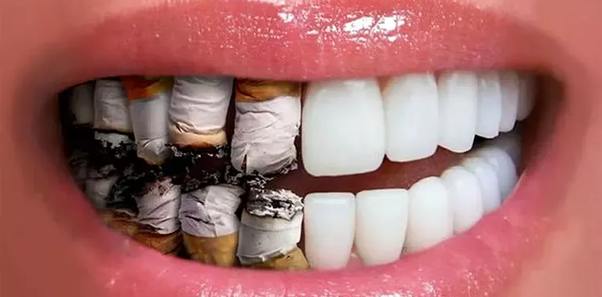
While most smokers worry about stained teeth or bad breath, the real damage is happening silently beneath the gumline. Smoking doesn't just affect your lungs—it fundamentally changes the environment inside your mouth, turning a healthy pink foundation into a battlefield of inflammation, infection, and bone loss.
Here is the honest, science-backed truth about what cigarettes and tobacco are doing to your gums, and what you can do about it.
The Biology: Why Smoking Is a Disaster for Gums
Your gums are living tissue that require a constant supply of oxygen-rich blood to stay healthy. This blood delivers nutrients, fights infection, and helps repair daily wear and tear.
Smoking destroys this system in four key ways:
It Starves the Tissue: Nicotine is a powerful vasoconstrictor—it narrows your blood vessels. This reduces blood flow to your gums by up to 70%. Without adequate circulation, your gum tissue becomes pale, weak, and unable to heal.
It Kills the Good Bacteria: Your mouth has a natural balance of bacteria. Smoking alters this microbiome, allowing harmful, disease-causing bacteria to flourish while suppressing protective strains.
It Depletes Vitamin C: Vitamin C is essential for collagen production, which keeps your gums tight against your teeth. Smoking rapidly depletes your body's vitamin C stores, leaving your gums loose and vulnerable.
It Impairs Immune Response: The toxins in cigarette smoke suppress your white blood cells. This means even if an infection starts, your body's army is too slow to respond, allowing gum disease to progress unchecked.
The Classic Sign Smokers Miss: The "Masking Effect"
Here is the most dangerous part about smoking and gum disease: Smoking masks the symptoms.
In a non-smoker, the first sign of gum disease is usually red, swollen, and bleeding gums when brushing. That bleeding is an inflammatory warning signal.
But because smokers have restricted blood flow, their gums often do not bleed. Instead, they look pale, thin, and tight. A smoker might think, "My gums don't bleed, so they must be healthy."
In reality, the infection is silently eating away at the bone that holds teeth in place. By the time a smoker notices loose teeth or gum recession, the damage is often severe and irreversible.
Gum Disease in Smokers: A Faster, More Aggressive Course
There are two stages of gum disease:
Gingivitis: Reversible inflammation of the gums only.
Periodontitis: Advanced infection that destroys the bone and ligaments supporting your teeth.
For smokers, the progression from gingivitis to periodontitis happens much faster. Smokers are twice as likely to develop periodontitis compared to non-smokers. The deeper the pocket between the tooth and gum, the more bacteria accumulate—and smoking makes those pockets deeper and harder to clean.
The Healing Problem: Why Recovery Is Harder
One of the most frustrating realities for dentists is treating smokers. Even with professional cleanings, scaling, and root planing, a smoker's gums simply do not respond as well to treatment.
Reduced Healing: After deep cleaning, non-smokers see a significant reduction in pocket depth. Smokers see much less improvement.
Implant Failure: If a smoker loses a tooth and opts for an implant, the failure rate is significantly higher. The implant needs to fuse with the jawbone (osseointegration), but smoking impairs bone healing.
Delayed Recovery: Any oral surgery—extraction, grafting, or implant placement—takes up to twice as long to heal in a smoker.
The Good News: The Mouth Bounces Back
Here is the silver lining that gives every smoker hope: Your gums are incredibly resilient.
The positive changes begin the very moment you stop smoking.
48 Hours: Blood flow to the gums begins to improve. Oxygen levels start normalizing.
1 to 2 Weeks: You may actually notice your gums bleed slightly when brushing. This is a good sign—it means the blood vessels are recovering and inflammation is returning to normal levels.
1 Month: Your immune response strengthens, making it easier for your body to fight off gum infections.
1 Year: Your risk of developing periodontal disease drops to nearly the same level as a non-smoker.
The tissue damage from smoking is reversible. The bone loss—once it happens—is permanent. That is why the best time to quit is right now.
What You Can Do Today
If you are a smoker, you don't have to wait until you are ready to quit to take action. Here is a three-step approach:
Step 1: Get a Comprehensive Gum Assessment. Ask your dentist for a full periodontal probing. They will measure the pockets around every tooth to establish a baseline.
Step 2: Commit to More Frequent Cleanings. Smokers often need to visit every 3 to 4 months instead of every 6 months. These "maintenance" visits keep bacterial loads low and inflammation manageable.
Step 3: Start a Reduction Plan. Even cutting back significantly reduces the toxic load on your gums. Pair this with an electric toothbrush and a water flosser to maximize at-home cleaning.
The Bottom Line
Smoking and healthy gums simply do not mix. The tobacco industry has spent decades convincing people that the damage is only to the lungs, but your mouth is the front door to your entire body.
If your gums are pale, receding, or you have noticed a persistent bad taste, don't wait for pain to force your hand—gum disease is usually painless until it is advanced.
Your smile deserves better than nicotine. And your body has an incredible capacity to heal—if you give it the chance.
Are you a smoker worried about your gum health? Call our office today to schedule a comprehensive periodontal exam. We'll show you exactly where your gums stand and create a personalized plan to protect your smile for the long haul.