"Which tooth replacement option is right for me?"
If you are missing one or several teeth, you have likely asked yourself this question. Living with gaps in your smile isn't just an aesthetic issue; it affects how you eat, speak, and how your remaining teeth shift over time.
Today, we are breaking down the "Big Three" of tooth replacement: Dental Implants, Dentures, and Fixed Bridges.
Here is the honest, no-fluff guide to help you understand the comfort, the commitment, and the lifestyle impact of each.
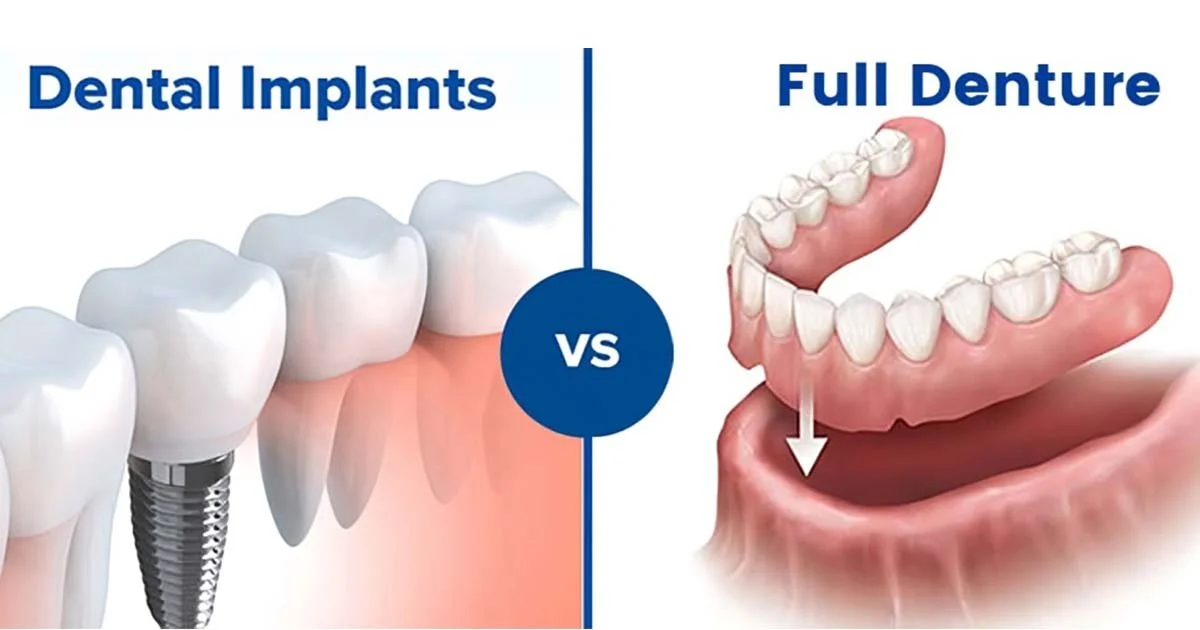
1. Dental Implants: The "New Root" Solution
Best for: Missing one tooth, several teeth, or even full arches (with All-on-4).
The Process: A titanium post is surgically placed into your jawbone. Over a few months, the bone fuses to the post (osseointegration). Finally, a custom crown is screwed or cemented on top.
The Pros:
Longevity: With proper care, implants can last 20+ years to a lifetime.
Bone Health: They stimulate the jawbone, preventing the "sunken" facial look that occurs when bone deteriorates.
Function: They feel, look, and function exactly like natural teeth. You can eat steak and apples without worry.
Independence: They don't rely on adjacent teeth for support (unlike bridges).
The Cons:
Treatment Timeline: The process takes several months from surgery to final crown.
Surgical Requirement: Requires a minor surgical procedure and adequate bone density.
2. Fixed Dental Bridge: The "Crown & Pontic" Solution
Best for: Replacing 1 to 3 consecutive missing teeth, provided the teeth on either side are healthy and strong.
The Process: The teeth adjacent to the gap are reshaped. Two crowns are placed over these "abutment" teeth, and a false tooth (pontic) hangs in between to fill the gap.
The Pros:
Speed: Usually completed in just 2 to 3 dental visits (roughly 2-3 weeks).
Stability: Permanently cemented in; it doesn't move or slip.
Familiarity: A traditional, well-understood procedure that doesn't require surgery.
The Cons:
Impact on Healthy Teeth: You must reshape perfectly healthy neighboring teeth to support the bridge.
Cleaning Complexity: You cannot floss normally; you must use a special "floss threader" to clean underneath the false tooth.
Lifespan: Typically lasts 10 to 15 years before needing replacement.
Bone Changes: The bone where the tooth is missing will still shrink over time, which can eventually create a visible gap under the bridge.
3. Dentures: The Removable Solution
Best for: Patients missing all teeth on a single arch (upper or lower), or multiple teeth across the arch.
The Process: A custom acrylic base is created to fit over your gums. It uses either suction (upper) or a light adhesive (lower) to stay in place.
The Pros:
Non-Invasive: No surgery and no drilling on natural teeth.
Adjustable: Easily relined or adjusted if your gums change shape over time.
Full-Arch Solution: Provides a complete set of teeth when natural ones are no longer viable.
The Cons:
Instability: They can shift, click, or slip while talking or eating, especially lower dentures.
Dietary Adjustments: You will need to avoid sticky, hard, or tough foods.
Bone Resorption: Without root stimulation, your jawbone will slowly deteriorate, causing dentures to become loose over time.
Maintenance Routine: Must be removed nightly for soaking and thorough cleaning.
Which One Should You Choose?
While this guide gives you the framework, the true answer depends on your unique anatomy and goals:
Choose an Implant if you want a permanent, standalone solution and have healthy bone density.
Choose a Bridge if you want a quick, fixed solution for a small gap and prefer to avoid surgery.
Choose Dentures if you are missing a large number of teeth or need a full-arch replacement without surgical intervention.
A note on hybrid solutions: Many patients today opt for "Implant-Supported Dentures" (Overdentures). This involves placing just 2 to 4 implants to snap a denture securely in place. It offers the stability of implants with the full-arch coverage of a denture—without needing to replace every single tooth individually.
The Bottom Line
Replacing missing teeth is an investment in your overall health, not just your smile.
The biggest mistake? Doing nothing. Leaving gaps unchecked leads to shifting teeth, bite collapse, and bone loss that makes future replacement much harder.
Ready to find out which option fits your mouth and your lifestyle? Call our office today to schedule a comprehensive consultation. We'll take a 3D scan of your jawbone and walk you through the recovery expectations so you can make the best choice with confidence.