Losing a tooth can feel like losing a part of yourself. Whether it happened due to injury, decay, or gum disease, the gap left behind affects more than just your smile—it impacts your ability to chew, speak, and even your self-esteem.
For decades, dentures and bridges were the only options. But today, there is a solution that looks, feels, and functions just like a natural tooth: the dental implant.
If you've been considering implants but feel overwhelmed by the terminology and the process, you are not alone. Let's break it down step by step so you know exactly what to expect.
What Is a Dental Implant?
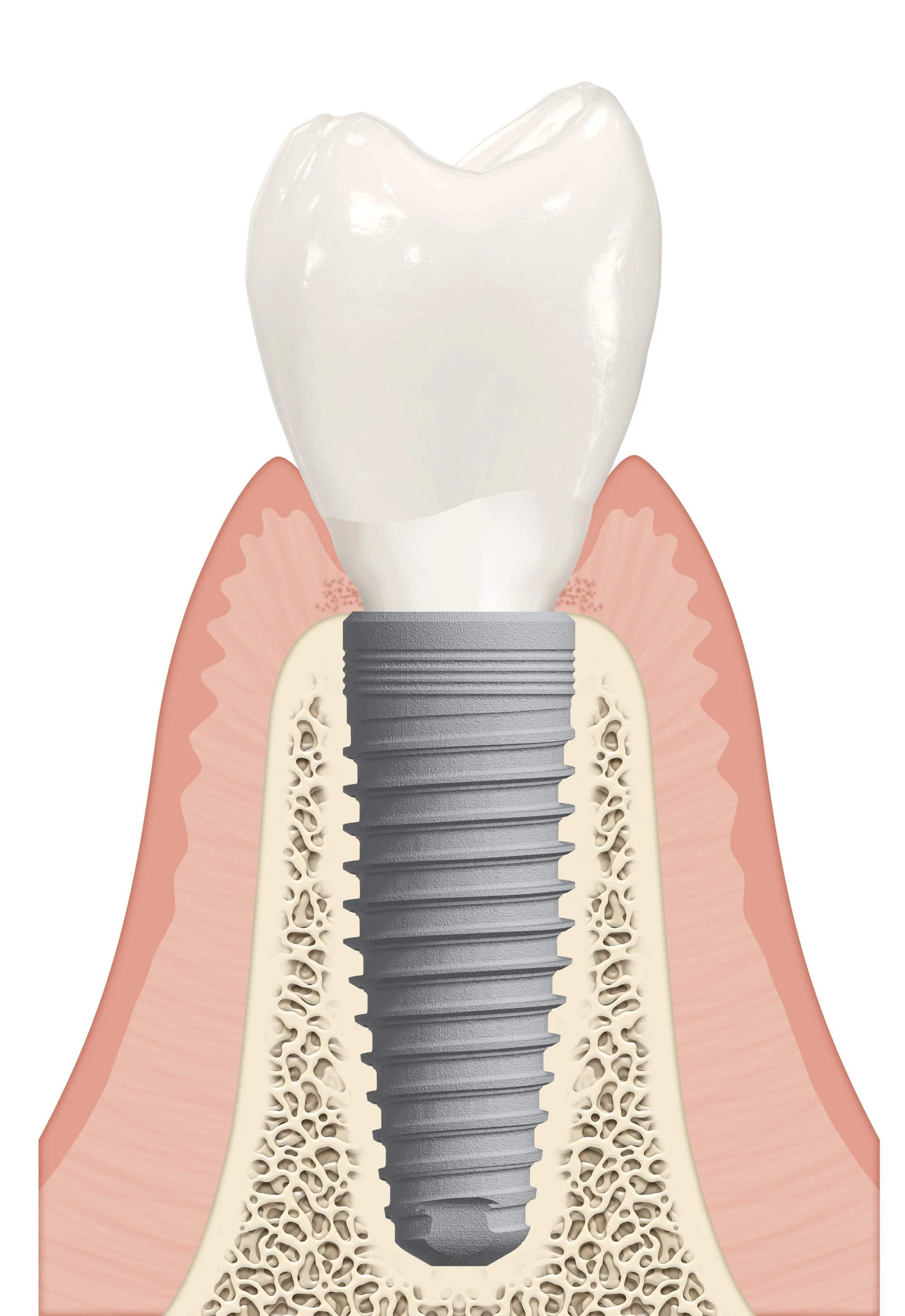
Think of a dental implant as an artificial tooth root. It is a small titanium post that is surgically placed into your jawbone beneath the gum line. Once in place, it fuses with your bone through a process called osseointegration—which is just a fancy way of saying your bone grows around the implant, locking it in permanently.
After this fusion is complete, an abutment (connector) is placed on top, and finally, a custom-made crown is attached. The result? A tooth that is virtually indistinguishable from the real thing.
Why Choose an Implant Over Other Options?
There are several ways to replace missing teeth, but implants offer distinct advantages that make them the gold standard.
Key benefits of implants:
Bone preservation: When you lose a tooth, the jawbone begins to deteriorate. An implant stimulates the bone, keeping it healthy and strong. Bridges and dentures do not provide this benefit.
No damage to neighbors: Unlike a bridge, implants don't require shaving down adjacent healthy teeth. Your natural teeth remain untouched.
Permanent solution: With proper care, implants can last a lifetime—often 20 years or more. Bridges typically last 5 to 15 years, and dentures may need replacement every 5 to 10 years.
Comfort and stability: No slipping, clicking, or adhesive creams. You eat, speak, and smile with complete confidence. Implants feel just like your own teeth.
Natural appearance: The crown is custom-made to match the color, shape, and size of your surrounding teeth. No one will ever know it's not your natural tooth.
The Procedure: What to Expect
The idea of surgery can be intimidating, but modern dentistry has made the implant process remarkably comfortable. Here is a timeline:
Step 1: Consultation and Planning
Your dentist will take X-rays and 3D scans to assess your jawbone density. If you don't have enough bone, you may need a bone graft (more on that later). This is also the time to discuss your medical history and treatment plan.
Step 2: Implant Placement (Day of Surgery)
Under local anesthesia or sedation, the implant is placed directly into the jawbone. The gum tissue is stitched closed over the implant. This procedure typically takes 1-2 hours per implant.
Step 3: Healing and Osseointegration
This is the waiting game—and it's crucial. Over the next 3 to 6 months, the bone fuses with the implant. You will wear a temporary crown or denture during this time so you are never without a smile.
Step 4: Abutment Placement
Once healing is complete, a minor procedure exposes the implant and attaches the abutment. This is the piece that connects the implant to the crown.
Step 5: Crown Placement
Finally, your custom-made crown is placed on top. Your dentist will check the color match, fit, and bite alignment to ensure perfection.
Do I Need a Bone Graft?
One of the most common questions is: "What if I don't have enough bone?"
When a tooth is missing for a long time, the jawbone shrinks. If there isn't enough bone to support the implant, your dentist may recommend a bone graft. This involves adding bone (from a donor or synthetic material) to the area and allowing it to heal for several months before the implant is placed.
Yes, it adds time to the process. But it is often necessary for long-term success—and thousands of patients undergo it successfully every year.
Is the Procedure Painful?
This is the #1 fear—and the #1 myth.
Most patients report that implant surgery is less painful than a tooth extraction. You are fully numbed during the procedure, and any post-operative discomfort is manageable with over-the-counter pain relievers.
Expect some swelling and bruising for a few days, but most people return to work within 24-48 hours.
Cost of Dental Implants
Let's be real—dental implants are an investment. In the U.S., a single implant can range from $3,000 to $6,000 (including the crown). The price varies based on:
Geographic location
The dentist's experience
Additional procedures (bone grafts, sinus lifts)
Materials used (titanium vs. zirconia)
But here's the silver lining: Many dental offices offer payment plans, financing, or in-house membership plans. Some insurance plans also cover a portion of the procedure.
Think of it this way: a $5,000 implant that lasts 30 years costs less than $14 per month—a small price for a lifetime of confidence.
Recovery and Aftercare
Your implant aftercare is similar to caring for a natural tooth:
Brush twice daily with a soft-bristled toothbrush.
Floss daily—special floss or water flossers work great around implants.
Avoid hard foods for the first few weeks.
Quit smoking—it significantly increases the risk of implant failure.
Visit your dentist every 6 months for professional cleanings and check-ups.
Who Is a Good Candidate?
Most healthy adults with good oral hygiene are candidates. However, the implant may not be suitable if you:
Have uncontrolled diabetes
Are a heavy smoker
Have received radiation to the jaw
Have severe gum disease (treatable first)
Take certain medications that affect bone healing
Always consult with your dentist for a personalized evaluation.
The Bottom Line
Dental implants are the closest thing to a natural tooth—and for many, they are life-changing. They restore function, aesthetics, and confidence in a way that dentures and bridges simply cannot match.
Yes, the process takes time and requires a financial commitment. But ask anyone who has gone through it, and they'll tell you: it was worth every penny.