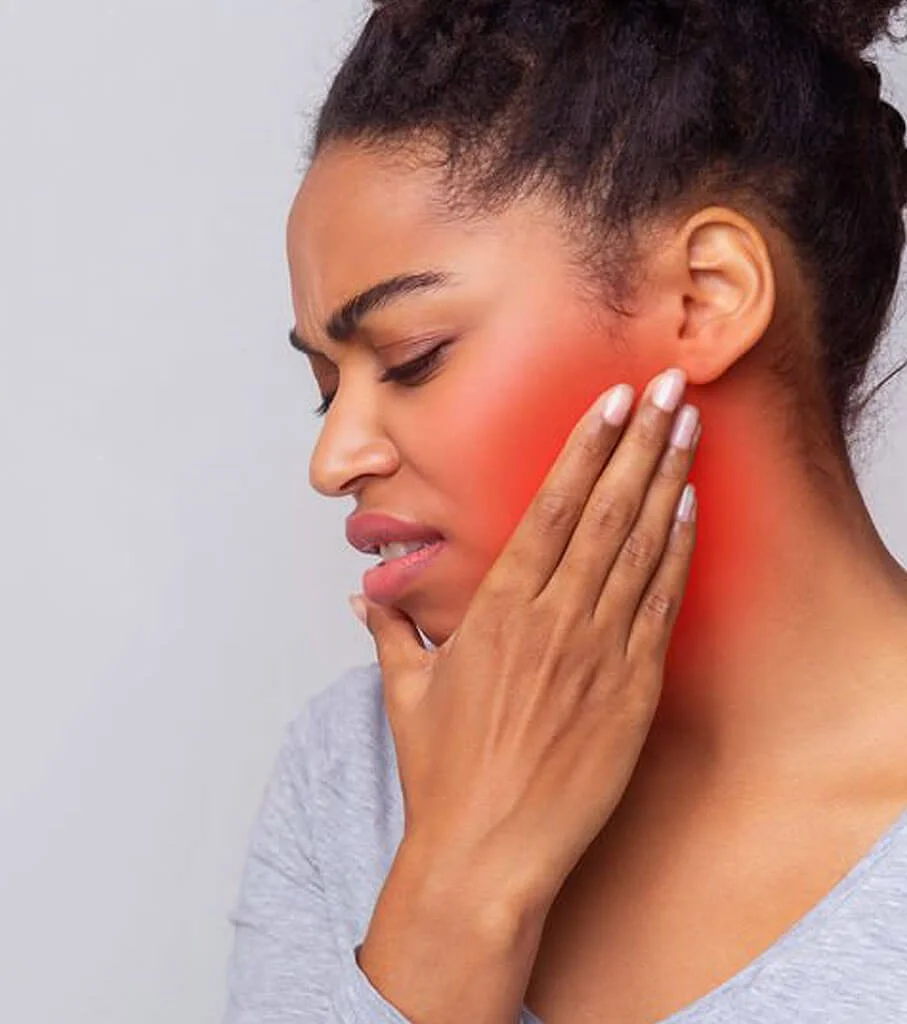
We often take our jaws for granted. We use them to chew, talk, yawn, and express our emotions. But for millions of people, this essential joint becomes a source of chronic, debilitating pain that affects every aspect of daily life.
I am talking about TMJ disorders—or TMD (Temporomandibular Disorders). If you have ever woken up with a headache that feels like it is radiating from your ear, experienced a "click" every time you open your mouth, or felt a deep ache in your cheek, you know exactly what I mean.
Let's break down what is happening, why it hurts, and—most importantly—what you can do about it.
What is the TMJ?
Before we talk about the pain, let's look at the anatomy. The Temporomandibular Joint is the hinge that connects your jawbone (mandible) to your skull (temporal bone). It is one of the most complex joints in your body because it doesn't just open and close like a hinge; it slides forward and backward, side to side.
When this system of muscles, ligaments, and bones gets out of sync, it creates a domino effect of discomfort.
Common Symptoms (It's Not Just Jaw Pain)
TMJ pain is sneaky. While jaw pain is the main hallmark, many people are surprised to learn that their "migraines" or "ear infections" are actually TMD-related. Look out for:
Pain: Dull aches in the jaw joint, neck, or shoulders.
Headaches: Frequent tension headaches or migraines that start at the temple.
Ear pain: A feeling of fullness in the ears, ringing (tinnitus), or pain without an infection.
Sounds: Clicking, popping, or grating sounds when you open your mouth (Note: If it doesn't hurt, it's usually fine; if it hurts, it's a concern).
Locking: Difficulty opening your mouth wide, or the jaw getting "stuck" in an open or closed position.
What Causes TMJ Pain?
The tricky thing about TMJ is that it is rarely caused by one single thing. It’s usually a combination of physical and psychological factors:
Bruxism (Clenching/Grinding): Often done subconsciously at night or during stressful moments, this puts enormous pressure on the joint.
Stress: Even if you don't grind your teeth, high stress causes us to hold tension in our facial muscles.
Arthritis: Like the knees or hips, the jaw joint can suffer from osteoarthritis or rheumatoid arthritis.
Injury: A blow to the face or whiplash can displace the disc within the joint.
Misalignment: If your bite feels "off," it can force the jaw to work harder to bring your teeth together.
Immediate Relief: What to Do When It Hurts Right Now
When the pain flares up, you need quick fixes. Here is a game plan for acute pain:
Ice or Heat: Use an ice pack for acute swelling and sharp pain. Use a warm, moist heat pack (like a warm towel) for muscle stiffness and tension to encourage blood flow. I usually recommend 15 minutes on, 15 minutes off.
Soft Foods: Give your jaw a vacation. Stick to soups, smoothies, mashed potatoes, and scrambled eggs. Avoid chewy meats, nuts, and crunchy snacks that force you to overwork the joint.
Over-the-Counter Anti-Inflammatories: Ibuprofen or naproxen can help reduce the inflammation in the joint capsule, offering temporary relief.
Gentle Massage: Place two fingers on your cheek muscle (masseter) and press gently, moving in small circles. Also, massage the temples to release overall head tension.
Long-Term Strategies: Breaking the Cycle
If you are dealing with TMJ pain for months on end, you need a strategy to break the habit loop.
1. The "Lips Together, Teeth Apart" Rule
This is the holy grail of TMJ management. Your jaw is designed to be at rest, not clenched. The correct resting position is with your lips closed, teeth slightly apart (not touching), and your tongue resting gently on the roof of your mouth. Check in with yourself throughout the day—are your teeth touching? If so, relax them.
2. Stretching Exercises
To fix a tight jaw, you need to stretch it gently:
The Goldfish: Press your tongue against the roof of your mouth. Place one finger on your chin and slowly open your mouth as far as you can (without pain). Hold for 6 seconds. Do this 6 times.
Resisted Opening: Place your thumb under your chin. Open your mouth while pushing up with your thumb to create resistance. Hold for 5 seconds.
3. The "Night Guard" Dilemma
If you grind at night, a custom-fitted mouth guard from your dentist is often the best investment you can make. Over-the-counter "boil and bite" guards can sometimes make things worse by encouraging clenching. A dentist can balance your bite specifically to protect the joint.
4. Manage the Stress
This isn't just fluffy advice—it is biomechanical. If you are stressed, you are clenching. Consider daily practices like:
Deep breathing before bed.
Yoga or gentle neck stretches.
Cognitive Behavioral Therapy (CBT) to help manage the psychological triggers of teeth grinding.
When to See a Professional
If you have tried the above for two weeks and see no improvement, it is time to escalate. Don't suffer in silence.
See a Dentist: They can prescribe physical therapy, muscle relaxants, or fit you for a splint.
See a Physical Therapist: They specialize in neck and jaw alignment and can do deep tissue release.
See an ENT or Oral Surgeon: In extreme cases, if the joint is severely damaged, you might need an arthroscopy or surgery, but do not rush into surgery. It is usually a last resort, and 90% of TMJ issues resolve with conservative treatment.
The Takeaway
Living with TMJ pain can feel lonely and exhausting. It is easy to get frustrated when the pain affects your sleep, your eating habits, and your mood. But take heart: you are not broken, and this is fixable.
It requires patience and consistency. Start with the small things: relax your jaw, massage your temples, and eat softer foods. Be kind to your body—it's trying to tell you it needs a break.
Have you found any tricks that help your TMJ pain? Let me know in the comments below!