Wisdom teeth have a reputation for causing trouble—but does everyone really need to have them removed?
Not necessarily.
Some wisdom teeth grow normally, remain healthy, and cause no problems throughout a person's life. Others become impacted, difficult to clean, painful, or infected, making removal the better option.
So, when should you remove your wisdom teeth?
The answer depends on how your wisdom teeth are developing, their position, your symptoms, and whether they are causing or likely to cause problems.
7 Signs You May Need Your Wisdom Teeth Removed
1. You Have Recurring Wisdom Tooth Pain
Pain at the very back of your mouth is one of the most common reasons people seek advice about wisdom teeth.
You may notice:
Aching or throbbing pain
Pain when chewing
Tenderness around the back molar
Jaw discomfort
Pain that comes and goes
Occasional discomfort doesn't automatically mean extraction is necessary. However, repeated episodes of wisdom tooth pain should be assessed by a dentist.
The cause could be inflammation, infection, decay, pressure from an impacted tooth, or another dental problem.
2. Your Wisdom Tooth Is Impacted
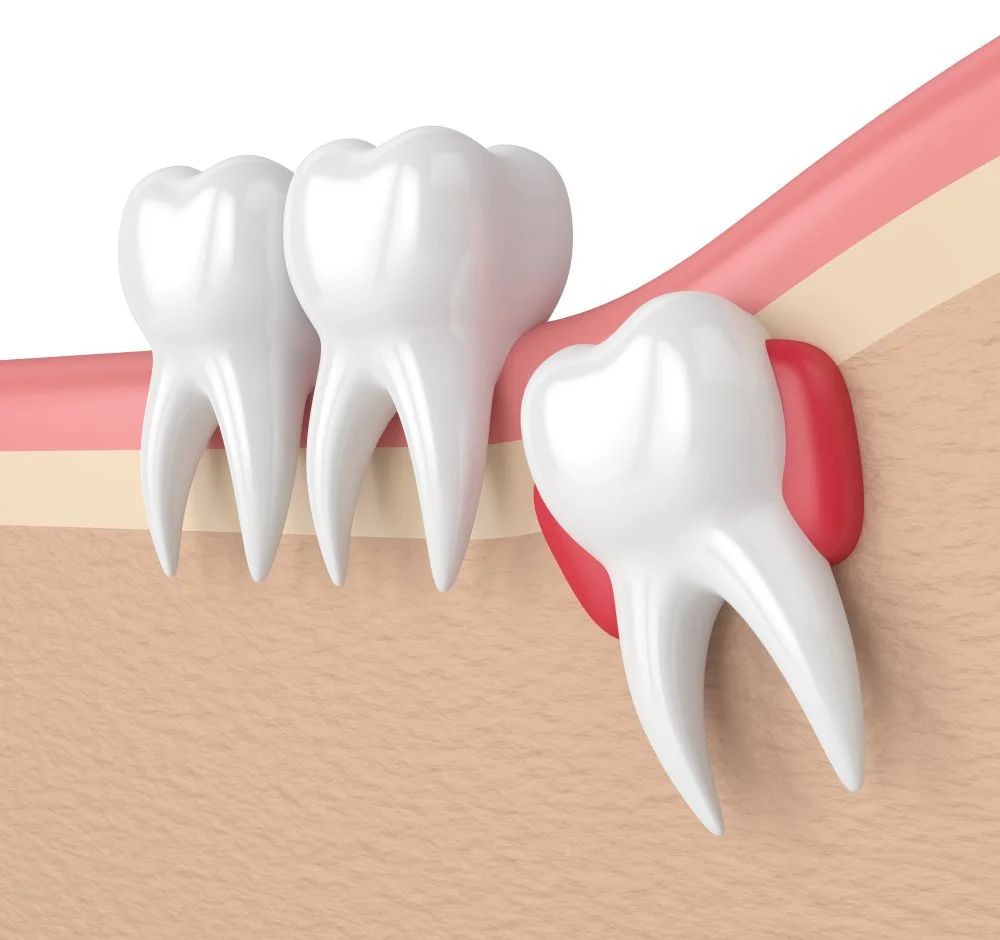
An impacted wisdom tooth doesn't have enough space to erupt properly into the mouth.
It may remain partially or completely trapped beneath the gum or bone. Depending on its position, an impacted wisdom tooth can press against the neighbouring molar or create an area that's difficult to clean.
Some impacted wisdom teeth cause no symptoms at all. Others can lead to pain, infection, decay, gum problems, or damage to nearby teeth.
A dental examination and X-ray can help determine the position of the tooth and whether removal is recommended.
3. Your Gums Keep Becoming Swollen or Infected
A partially erupted wisdom tooth can create a flap of gum around the tooth.
Food and bacteria can become trapped underneath this area, potentially causing inflammation or infection known as pericoronitis.
You may experience:
Red or swollen gums
Bad taste or bad breath
Difficulty opening your mouth
Pain around the wisdom tooth
Pus or discharge
Swelling around the jaw
If these infections keep returning, your dentist may recommend removing the wisdom tooth rather than repeatedly treating the symptoms.
4. Your Wisdom Tooth Is Difficult to Clean
Wisdom teeth sit at the very back of the mouth, making them harder to brush and floss properly.
If a wisdom tooth has only partially erupted, cleaning can become even more challenging.
Over time, plaque and bacteria can contribute to tooth decay and gum disease.
If your dentist determines that the tooth has a poor long-term outlook because it cannot be adequately maintained, extraction may be considered.
5. The Wisdom Tooth Is Causing Damage to the Tooth Next to It
An incorrectly positioned wisdom tooth can sometimes push against or sit very close to the second molar.
This can create an area where food and plaque become trapped and may contribute to decay or gum problems affecting the neighbouring tooth.
In some cases, the wisdom tooth itself may not hurt—but it may still be causing damage.
This is one reason regular dental examinations and appropriate imaging are important.
6. You Have Significant Tooth Decay
Wisdom teeth can be particularly vulnerable to decay because of their location and difficulty of access.
If a wisdom tooth develops extensive decay and is unlikely to be easily restored, extraction may be recommended.
However, the decision isn't based on decay alone. Your dentist will consider whether the tooth can be restored and whether keeping it provides a meaningful long-term benefit.
7. Your Dentist Identifies a Problem on an X-ray
Sometimes the first indication that a wisdom tooth needs attention is not pain—it's what appears on an X-ray.
Dental imaging can show:
The angle and position of the wisdom tooth
Whether it is impacted
Its relationship with neighbouring teeth
Bone or gum changes
Other abnormalities around the tooth
This is particularly useful because wisdom teeth can cause problems beneath the gum without producing obvious symptoms.
Do All Wisdom Teeth Need to Be Removed?
No.
If your wisdom teeth are healthy, fully erupted, functional, easy to clean, and not causing problems, your dentist may recommend monitoring them rather than removing them.
There is no universal rule that everyone should have their wisdom teeth extracted.
The best approach is to assess each tooth individually.
Your dentist may consider factors such as its position, cleanliness, function, symptoms, surrounding tissues, and the likelihood of future complications.
What Happens If You Don't Remove a Problem Wisdom Tooth?
Ignoring recurring wisdom tooth problems may allow them to become more complicated.
An impacted or partially erupted tooth can potentially contribute to infection, decay, gum disease, or damage to neighbouring teeth.
That doesn't mean every wisdom tooth problem requires immediate surgery. It means that repeated pain or infection shouldn't simply be ignored.
If your wisdom tooth has been causing problems, an assessment can help you understand whether monitoring, treatment, or removal is appropriate.
What Is IV Sedation for Wisdom Tooth Removal?
For some patients, the thought of wisdom tooth surgery is more stressful than the procedure itself.
That's where IV sedation may be an option for suitable patients.
IV sedation involves administering sedative medication through a vein to help you feel deeply relaxed during your dental procedure. You remain monitored throughout treatment, while local anaesthetic is used to numb the area being treated.
Patients often choose sedation because they feel anxious about dental treatment, have a strong gag reflex, have had difficult dental experiences in the past, or are concerned about undergoing wisdom tooth surgery.
The exact level of sedation and monitoring required depends on your individual circumstances and the clinician providing the treatment.
Does IV Sedation Put You to Sleep?
This depends on the level of sedation being provided.
With IV sedation used in dentistry, patients are generally deeply relaxed and may become drowsy. You may remember little or nothing about parts of the procedure, but sedation is not necessarily the same as general anaesthesia.
Your dental team will explain what level of sedation is planned, what you can expect, and what you need to do before and after treatment.
Is IV Sedation Suitable for Wisdom Tooth Removal?
IV sedation can be an option for suitable patients undergoing wisdom tooth extraction, particularly when anxiety or the complexity of treatment makes conventional dental care difficult.
Before sedation, your dental team will review your medical history, medications, allergies, and other relevant factors to determine whether sedation is appropriate.
It's important to follow all pre-treatment instructions carefully.
What Is Wisdom Tooth Removal Recovery Like?
After extraction, some swelling, discomfort, and tenderness are normal.
Your dentist will provide specific aftercare instructions, which may include guidance about:
Eating and drinking
Brushing around the extraction site
Physical activity
Pain relief
Swelling management
Smoking and vaping
When to return for review
Recovery varies depending on how straightforward or complex the extraction is and whether one or multiple wisdom teeth are removed.
Following your dentist's instructions can help support a smooth recovery.
When Is Wisdom Tooth Pain an Emergency?
Wisdom tooth pain shouldn't automatically be treated as an emergency, but certain symptoms require prompt attention.
Seek urgent dental or medical assessment if you develop significant facial swelling, difficulty breathing or swallowing, rapidly worsening symptoms, or feel seriously unwell.
A dental infection can sometimes spread beyond the immediate area, so severe or rapidly progressing symptoms should not be ignored.
The Bottom Line
Not every wisdom tooth needs to be removed.
But if you are experiencing recurring pain, swelling, infection, difficulty cleaning the tooth, decay, or problems with the neighbouring molar, it's worth having your wisdom teeth assessed.
And if the thought of wisdom tooth removal makes you anxious, ask your dental team whether IV sedation is an appropriate option for you.
The right treatment isn't simply about removing a tooth—it's about choosing the safest and most appropriate approach for your long-term oral health.
Frequently Asked Questions
At what age should wisdom teeth be removed?
There isn't one specific age when everyone should have their wisdom teeth removed. The decision is based on the condition and position of the teeth, symptoms, and individual circumstances.
Can wisdom teeth grow in without needing removal?
Yes. Some people have wisdom teeth that erupt normally and remain healthy without causing problems.
Is wisdom tooth removal painful?
Local anaesthetic is used to numb the area during extraction. Some soreness, swelling, and discomfort can occur afterwards, particularly following a more complex extraction.
Does IV sedation help with wisdom tooth removal anxiety?
IV sedation can help suitable patients feel significantly more relaxed during dental treatment. Your dentist or sedation provider can discuss whether it is appropriate for your circumstances.
Can I remove all four wisdom teeth at once?
In some cases, multiple wisdom teeth can be removed during the same appointment. Whether this is appropriate depends on factors such as the position of the teeth, complexity of the extractions, and your overall circumstances.
Should I remove a wisdom tooth if it doesn't hurt?
Not necessarily. A symptom-free wisdom tooth may simply need monitoring. However, an X-ray may identify an underlying problem even when there is no pain, so regular dental assessment is important.
Think your wisdom teeth may be causing problems? Book an assessment with your dentist to find out whether monitoring, treatment, or removal is the right option for you.