
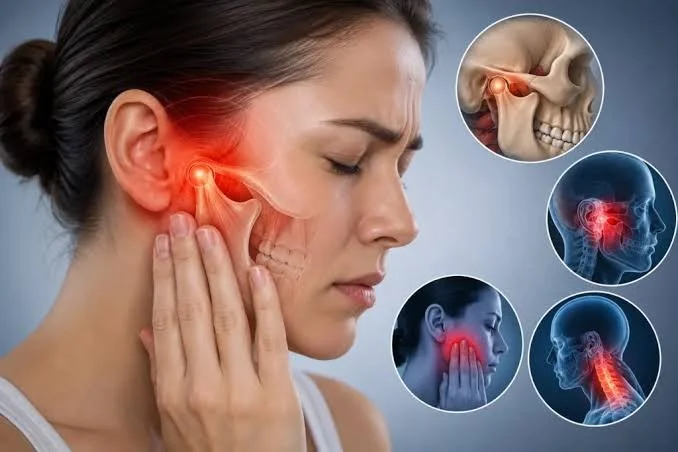
That dull ache in your jaw when you wake up. The clicking sound every time you chew. The headaches that seem to come from nowhere. The ear pain that your doctor says isn't an ear infection.
If any of this sounds familiar, you may be dealing with a TMJ disorder.
The temporomandibular joint (TMJ) is the hinge that connects your jawbone to your skull—one on each side of your face, right in front of your ears . It is one of the most complex joints in your body, moving in multiple directions to let you speak, eat, swallow, and make facial expressions . It gets extensive use throughout the day and night, which means it can be prone to muscle spasms, stiffness, and misalignments .
The good news? TMJ disorders are common—nearly half of all people experience jaw dysfunction at some stage during their life . And even better news? In most cases, TMJ dysfunction improves over time. Your symptoms may go away without needing complex treatment .
Here is what you need to know about TMJ pain—and how your dentist can help.
What Does TMJ Pain Actually Feel Like?
TMJ disorders can show up in surprising ways. You might experience :
Pain or tenderness in your jaw, especially when eating
An ache or pain in front of your ear
Aching facial pain
Headaches or neck pain
Clicking, popping, or grating noises when you open or close your mouth
A locking sensation—difficulty opening or closing your mouth
An uncomfortable or uneven bite
Ear problems—tinnitus (ringing in your ears), a feeling of "fullness," or earache
Swelling around the jaw joint
Tooth pain that occurs alongside jaw tenderness
One of the most important things to know: clicking sounds alone do not necessarily mean you need treatment. If there is no pain or limitation of movement related to your jaw clicking, it is likely that you won't need treatment .
But if you have pain, stiffness, or locking—it is time to get it checked.
Why Does TMJ Pain Happen?
The exact cause of TMJ disorder is often hard to determine . It is usually a mix of factors rather than a single cause .
Common causes and contributing factors include :
Jaw habits:
Teeth grinding or clenching (bruxism)—often linked to stress or anxiety
Frequent gum chewing or nail biting
Opening your mouth wide (such as during prolonged dental treatments)
Joint issues:
Wear and tear of the TMJ, usually caused by osteoarthritis
Other joint diseases, such as rheumatoid arthritis or gout
The cartilage disc slipping out of place
Injury or bite problems:
Injury to your jaw, head, or neck
An uneven bite
Dental issues—new fillings or dentures that change how your bite fits
Stress and lifestyle:
Stress and anxiety are recognised contributing factors—they can lead to unconscious clenching or grinding
Stress does not cause TMD, but it can increase levels of pain
People in jobs that require frequent talking or holding the jaw in an awkward position (like musicians) may be more affected
You might also have TMJ dysfunction without any obvious cause .
When to See a Dentist
See your dentist or doctor if you have symptoms of TMJ dysfunction or you are worried about any changes in your mouth or jaw .
Seek urgent care if you have symptoms of TMJ dysfunction along with :
Vision problems, such as double vision or blurred vision
Difficulty eating or drinking
Frequent and severe headaches
Do not let your jaw pain continue for weeks or months on end. There are treatments available—but it all starts with taking that first step to get help .
What You Can Do at Home Right Now
In many cases, simple self-care can make a significant difference. Your dentist might suggest starting with these approaches :
Adjust what you eat:
Eat soft foods
Cut all food into small pieces
Chew with your back teeth rather than biting with your front teeth
Use both sides of your mouth at the same time
Gradually return to a normal diet when pain begins to reduce
Avoid aggravating activities:
Avoid opening your mouth wide (like when yawning)
Avoid chewing gum
Avoid biting your nails
Avoid clenching your jaw
Avoid chewing objects like pens
Use heat or cold:
Apply moist heat or cold (whichever feels better) on your cheek over the jaw area
Try a warm, damp towel or wrap ice in a thin towel and apply for no more than five minutes at a time
Relax your jaw:
Keep your tongue up on the roof of your mouth and your teeth apart—this helps keep your jaw muscles in a relaxed position
Learn and practise relaxation including abdominal breathing
Manage stress and anxiety levels
Gentle jaw exercises:
Touch your tongue to the roof of your mouth (behind your upper front teeth), then open and close your mouth slowly—repeat several times
Try chin tucks to release jaw tension and improve posture
A recent clinical trial found that mandibular exercises led to significantly greater improvements in pain-free mouth opening compared to conservative therapy alone. After three months, patients who did jaw exercises had superior, clinically meaningful gains in how wide they could open their mouth without pain .
Another study showed that jaw-opening exercises (until the occurrence of pain) may be particularly effective in improving both pain intensity and range of mouth opening .
Professional Treatment Options
If home care has not helped enough, your dentist can offer several treatments :
Medication:
Anti-inflammatory medicines (like ibuprofen) may help during flare-ups—check with your dentist or doctor before taking them
Anti-inflammatory gel applied to the skin around your jaw
In some cases, muscle relaxants, nerve pain medicines, or low-dose antidepressants may be prescribed
Splint therapy (mouthguard):
A custom-made occlusal splint (biteguard) worn over your teeth, usually at night, can help reduce the effects of clenching and grinding
Splints are designed to protect your teeth from wear and reduce strain on the jaw joint
Your dentist will talk to you about whether a splint could help and which type is best for you
Physiotherapy and jaw exercises:
A physiotherapist can show you which exercises are right for you
Physiotherapy can be especially helpful if you also have problems with your neck, shoulders, or back
Talking therapy:
TMD can make people feel stressed, anxious, or low—talking to someone about how it is affecting your life may help
Other mental health issues like anxiety, depression, or PTSD can make TMD symptoms worse
You might benefit from pain management psychology
Injectables:
Botox (botulinum toxin type A) can be injected into the jaw muscles to help them relax
This can reduce pain for a short time
Botox is not suitable for everyone
Surgery (last resort):
Surgery is usually a last resort after conservative measures have failed
Most people with TMJ disorders do not need surgery
If your TMJ dysfunction does not get better after a few weeks, it can lead to chronic jaw pain that may require surgery, but this is uncommon
Why See a Dentist for TMJ?
You might wonder why your dentist is the right person to help with jaw pain. The answer is simple: your dentist has extensive knowledge of your teeth, bite alignment, and the muscles, ligaments, and tendons of the jawbone .
Your dentist can :
Perform a thorough clinical examination of your jaw joints, muscles, and bite
Review your symptoms and medical history
Use 3D imaging to assess the position and condition of the joint in more complex cases
Create a customised treatment plan based on your specific situation
If you are experiencing chronic clenching or grinding, addressing it early helps protect the long-term health of your teeth and jaw. Untreated TMJ issues can lead to significant tooth wear, cracking, and fracture over time .
The Bottom Line
TMJ pain is common, treatable, and often resolves with simple approaches. You do not have to live with jaw pain, headaches, or that worrying click every time you chew.
The first step is an assessment. We will listen to your symptoms, examine your jaw, and help you understand what is going on—and what you can do about it.
Your jaw works hard for you every day. It deserves some care in return.
Suffering from jaw pain or TMJ symptoms? Visit https://painfreedentistsydney.com.au/ to book your TMJ assessment online. Call us at (02) 9558 8988 or email info@painfreedentistsydney.com.au to speak with our team.