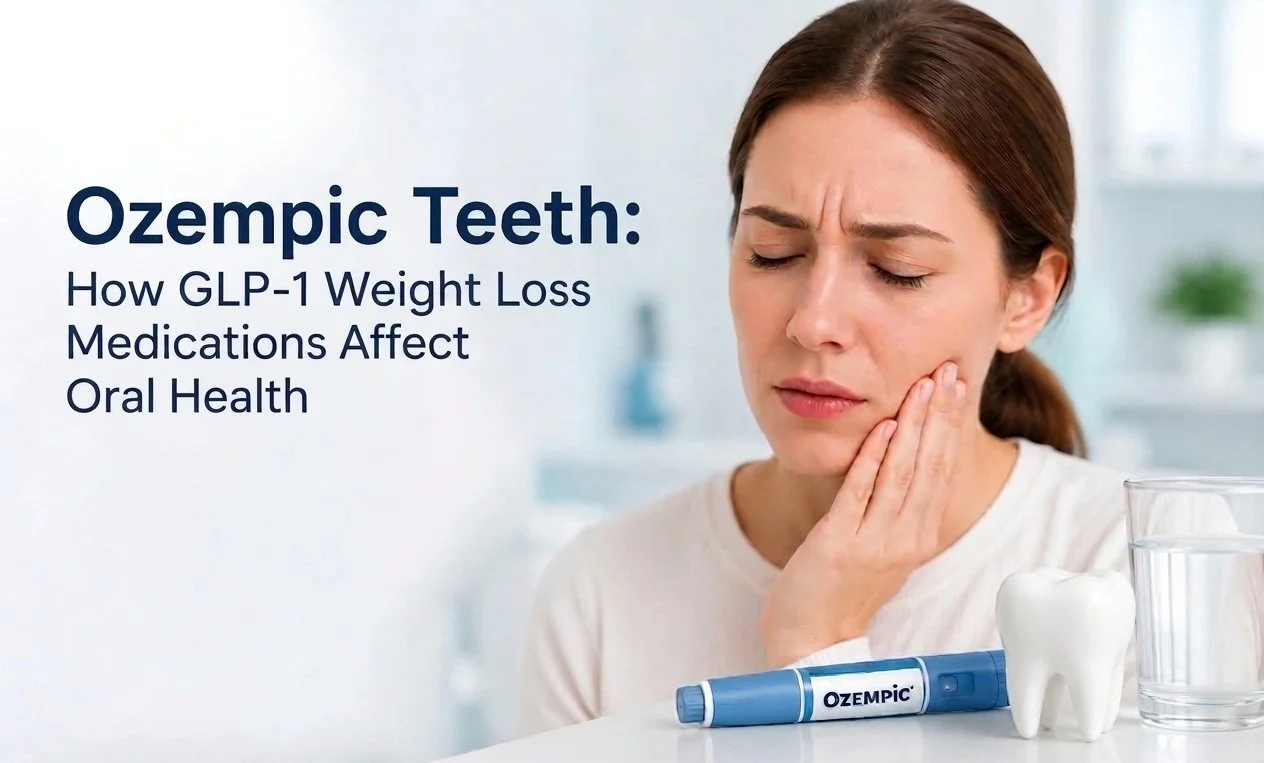
If you are taking Ozempic, Wegovy, Mounjaro, or another GLP-1 medication, you are not alone. Around half a million Australians are now using these medications monthly—nearly two per cent of the adult population . These drugs have been truly life-changing for many people managing type 2 diabetes or seeking effective weight loss support.
But here is something your prescribing doctor might not have mentioned: these medications can affect your oral health.
Dentists are seeing a growing number of patients surprised by how quickly dental symptoms emerge after starting GLP-1 treatment . The good news? Most of these issues are preventable once you know what to look for.
Let us walk through what is happening, what to watch for, and—most importantly—how to protect your smile while benefiting from these medications.
What Are "Ozempic Teeth"?
You may have heard the term "Ozempic teeth" circulating online. It is not a medical diagnosis—it is an informal term describing a pattern of dental changes some people experience while taking GLP-1 medications .
Patients reporting "Ozempic teeth" often notice a combination of :
New cavities or increased tooth decay
Tooth sensitivity, especially to hot or cold
Enamel erosion or a chalky texture on tooth surfaces
Inflamed or bleeding gums
Persistent bad breath
A dry, sticky feeling in the mouth
Here is the important thing to understand: GLP-1 medications do not directly damage your teeth. The problems arise from the side effects these medications can trigger—and those side effects create conditions where decay and erosion develop much faster than usual .
Why Do GLP-1 Medications Affect Dental Health?
There are several pathways through which these medications can impact your mouth. Understanding them helps you take the right preventive steps.
1. Dry Mouth (Xerostomia)
This is the biggest concern.
GLP-1 medications can reduce saliva production . Some patients also drink less water because they feel nauseous or simply are not thirsty, making the problem worse .
Why does this matter? Saliva is your mouth's natural defence system. It washes away food particles, neutralises acids produced by bacteria, and helps repair early damage to tooth enamel . Without enough saliva, your risk of tooth decay and oral infections goes up—even if you brush and floss regularly .
2. Nausea, Vomiting, and Acid Reflux
Nausea occurs in 16 to 20 per cent of people taking semaglutide, and 5 to 9 per cent experience vomiting . These medications also slow digestion, which can lead to gastroesophageal reflux disease (GERD)—the most frequently reported event among GLP-1 users .
When stomach acid reaches your mouth through vomiting or reflux, it can wear away your tooth enamel . Stomach acid is highly acidic, and repeated exposure gradually erodes the protective outer layer of your teeth, leading to sensitivity and increased decay risk .
One important tip: do not brush your teeth right after vomiting. The acid softens your enamel, and brushing too soon can wear it away even faster. Instead, rinse your mouth with plain water, wait at least 30 minutes, then brush .
3. Changes in Eating Habits
These medications reduce appetite, which is the goal. But it also means many people eat less of the foods that support healthy teeth and gums . Calcium, vitamin D, and phosphorus are essential for strong enamel and bone structure. When intake of these nutrients drops over time, teeth can become more vulnerable to decay and fracture .
4. Reduced Oral Hygiene
Some patients neglect regular brushing and flossing while they are feeling unwell—especially if they are dealing with nausea or fatigue . This can accelerate plaque buildup and tooth decay .
What the Latest Research Tells Us
A large-scale 2026 study analysed over 226,000 GLP-1 users and found that GERD was the most common oral-adjacent side effect, affecting 5.36 per cent of patients . Interestingly, the study also found that GLP-1 therapy was not associated with an increased overall risk of most orofacial conditions—but it did confirm the need to monitor for GERD-related symptoms .
This means that while the medication itself is not directly harming your teeth, the side effects—particularly acid reflux and dry mouth—are where the real risk lies .
What You Can Do to Protect Your Smile
The good news is that most of these issues are preventable and, in many cases, reversible . Here is what the experts recommend:
Stay Hydrated
This is the single most important step. Drink plenty of water throughout the day—even if you are not thirsty . Staying hydrated combats dry mouth and helps maintain saliva flow .
Rinse After Vomiting
If you experience vomiting or acid reflux, rinse your mouth with plain water—or a mixture of water and baking soda—to neutralise the acid . Wait at least 30 minutes before brushing your teeth .
Use Saliva-Boosting Products
Sugar-free gum, lozenges, or mouth rinses that stimulate saliva production can help keep your mouth moist . If these are not effective, your dentist can recommend prescription options .
Choose a Fluoride Toothpaste
Fluoride strengthens enamel and helps protect against decay. Your dentist may recommend a prescription-strength fluoride toothpaste for extra protection .
Maintain a Balanced Diet
Even with reduced appetite, try to include foods rich in calcium, vitamin D, and phosphorus . These nutrients are vital for strong teeth and gums.
Keep Up Your Oral Hygiene Routine
Brush twice daily with fluoride toothpaste and floss daily . If nausea makes brushing unpleasant, try a milder-tasting toothpaste or brush at times when you feel least nauseous .
See Your Dentist More Frequently
Regular check-ups allow your dentist to catch issues early—before they become bigger problems . Your dentist may recommend more frequent visits—every three to four months—if you are struggling with dry mouth or reflux .
Tell Your Dentist You Are Taking a GLP-1 Medication
This is essential. Your dental team needs to know about any medications you are taking so they can provide the best possible care . It helps them tailor their advice and watch for specific warning signs .
When to See Your Dentist
Do not wait for a problem to become serious. Contact your dentist if you notice :
Bleeding or swollen gums
Chronic bad breath
Tooth sensitivity or looseness
Sudden changes in your bite or tooth structure
Persistent dry mouth that is not improving
The Bottom Line
GLP-1 medications like Ozempic, Wegovy, and Mounjaro are powerful tools for managing diabetes and promoting weight loss. But they are not without side effects—and your mouth is one of the first places these effects can show up .
The good news? With the right preventive care, lifestyle adjustments, and early intervention, it is possible to enjoy the benefits of these medications without sacrificing your smile . Your dentist is your partner in this journey—and we are here to help you stay healthy, inside and out.
Taking a GLP-1 medication? Visit https://painfreedentistsydney.com.au/ to book your dental check-up online. Call us at (02) 9558 8988 or email info@painfreedentistsydney.com.au to speak with our team.