Intro
A bright, white smile is often associated with health, confidence, and youth. But over time, natural ageing, dietary habits, and lifestyle choices can dull the brightness of your teeth—even if you maintain good oral hygiene .
If you have been staring at your smile in the mirror and wishing it were brighter, you are not alone. Teeth whitening is one of the most popular cosmetic dental treatments in Australia, and for good reason. It is affordable, safe, and can make a dramatic difference to how you look and feel.
But with so many options available—from supermarket strips to in-chair laser treatments—it can be hard to know where to start. This guide will walk you through everything you need to know about professional teeth whitening, so you can make an informed decision with confidence.
What Causes Teeth to Become Discoloured?
Teeth can become stained or discoloured for a variety of reasons. Understanding the root cause can help you make informed decisions about whitening and maintaining your results :
Dietary Habits – Beverages like coffee, tea, red wine, and soft drinks, as well as dark-coloured fruits and sauces, can stain the enamel over time .
Smoking & Tobacco Use – Nicotine and tar can cause significant yellowing and even brown staining .
Ageing – As you age, the outer layer of enamel naturally wears down, revealing the yellowish dentin underneath .
Medication-Related Stains – Some antibiotics (such as tetracycline), chemotherapy, and radiation can cause deep intrinsic stains that are harder to remove .
Genetics – Your natural tooth colour and enamel thickness are determined by your genes .
Poor Oral Hygiene – Inadequate brushing and flossing allow plaque and stains to build up more rapidly .
While professional cleaning can remove surface stains, deeper discolouration often requires a dedicated whitening treatment .
Professional In-Chair Whitening: What to Expect
Professional in-chair whitening is the fastest and most predictable way to brighten your smile. The most widely used system in dental offices worldwide is Philips Zoom! Whitening, chosen by millions of patients for its speed and dramatic results .
How It Works
The Zoom! whitening system uses a light-activated hydrogen peroxide gel—typically 25%—applied directly to the tooth surface. A specially calibrated Zoom! lamp activates the bleaching gel, accelerating the process by breaking apart stain molecules in the enamel and dentin . The result is a shade improvement that would take weeks of at-home treatment to achieve .
The Procedure Step by Step
Initial Evaluation and Shade Assessment – Your dentist will examine your teeth and gums to ensure you are a suitable candidate. Any issues like cavities or gum inflammation need to be addressed first. Your baseline shade is recorded using a professional shade guide .
Gum and Lip Protection – A protective barrier is applied to your gums and soft tissue to isolate the teeth and prevent any contact with the whitening gel. A cheek retractor keeps your lips clear throughout the procedure .
Gel Application and Light Activation – The whitening gel is applied evenly across all visible teeth. The Zoom! lamp is then positioned and activates the hydrogen peroxide. This cycle is repeated 3 to 4 times, with fresh gel applied before each cycle. The full appointment—including preparation and post-treatment assessment—is completed in under 90 minutes .
Final Results and Shade Comparison – Once all cycles are complete, your new shade is assessed against your baseline. A post-treatment fluoride application or desensitising gel may be applied to reduce sensitivity and strengthen enamel .
How Much Whiter Will My Teeth Be?
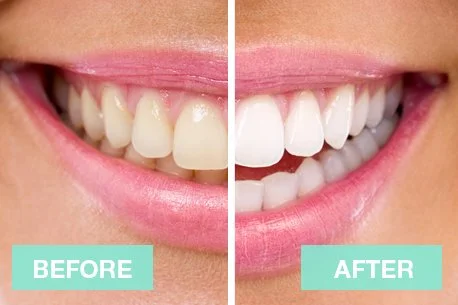
Based on clinical data, most patients achieve an improvement of 6 to 10 shades in a single session . Results are immediate—patients leave with visibly whiter teeth the same day .
Take-Home Whitening Kits: A Gradual Alternative
If you prefer to whiten your teeth at home, your dentist can provide custom-fitted trays and professional-grade whitening gel. This option offers a more gradual whitening process over several weeks .
How It Works
Your dentist takes impressions of your teeth to create custom trays that fit perfectly. You apply the gel at home over several weeks, typically achieving similar results to in-chair whitening. The custom trays ensure the gel stays precisely where it should—on your teeth, not your gums—which means more effective whitening and less irritation.
Professional vs Over-the-Counter: What Changes When a Dentist Is Involved?
The supermarket aisle makes whitening look simple. Strips, pens, LED kits, and generic trays all promise a brighter smile for less money . But lower cost and better value are not the same thing.
Why Professional Treatment Is Different
Professional whitening starts with diagnosis. Over-the-counter products start with assumption. They assume your teeth are suitable, your staining will respond, your gums will tolerate the product, and your existing dental work won't create cosmetic mismatch . Sometimes that assumption holds up. Sometimes it doesn't.
Professional treatment also gives you a better fit. Custom trays hug the teeth you have. Generic trays fit almost no one particularly well. That matters because sloppy tray fit usually means sloppy gel placement, more leakage, and more gum irritation .
Where Over-the-Counter Products Can Make Sense
There are situations where store-bought products are reasonable—mild staining, small expectations, a patient who understands the limitations and wants only a modest refresh .
Where they tend to disappoint is when the goal is a more noticeable colour change, when the stains are stubborn, or when the patient already has sensitivity . In those cases, people often spend money in stages—first on supermarket products, then on another kit, then finally on a professional appointment. The total outlay ends up feeling wasteful because the early steps did not solve the original problem .
Instead of asking only "What's cheapest?", ask "What is most likely to work safely for my teeth?" Whitening isn't just a product purchase. It is a cosmetic dental treatment, and the best value usually comes from choosing the option that fits your teeth, timeline, and tolerance for risk .
How Long Do Whitening Results Last?
With proper care, the results of a professional whitening treatment typically last 12 to 24 months before a touch-up session is advisable . Some patients maintain their results for longer with disciplined oral hygiene habits and lifestyle choices .
In general, teeth whitening results last 1 to 3 years with proper care .
Tips for Maintaining Your Results
Avoid smoking – Tobacco is one of the most aggressive causes of re-staining
Limit coffee, tea, and red wine – Or rinse with water immediately after consuming them
Use a whitening toothpaste to gently manage surface stains between professional treatments
Maintain consistent oral hygiene habits – Brush twice daily and floss daily
Schedule a teeth cleaning every six months – Professional prophylaxis removes surface staining before it sets
Use custom take-home trays with professional-grade whitening gel for periodic maintenance
Results last as long as lifestyle permits – smokers and those who frequently enjoy coffee, tea, or red wine will not experience the same long-lasting results .
What to Do Before and After Whitening
Before Your Appointment
Professional Teeth Cleaning – For the bleaching gel to work effectively, it is recommended to have a professional teeth cleaning no more than 4 weeks before whitening. This ensures that plaque and tartar are removed, allowing the bleaching agent to penetrate evenly .
Avoid Staining Foods – In the days leading up to your treatment, try to avoid foods and drinks that can cause stains such as coffee, tea, red wine, and berries .
Consult Your Dentist About Sensitivity – If you have sensitive teeth or gums, talk to your dentist before the treatment. They may recommend desensitising products .
After Your Appointment
The "White Diet"
Follow a "white diet" for at least 48 hours after treatment. Safe foods include:
Yogurt
Chicken
Rice
Eggs
Bananas
Avoid:
Coffee (wait at least 48 hours)
Tea
Red wine
Dark sauces (soy sauce, balsamic vinegar)
Chocolate
Tomatoes and tomato-based sauces
Berries and dark-coloured fruits
Other Tips
Wait 30 minutes to an hour before eating after your session
Avoid smoking for at least 48 hours
Continue brushing twice a day with fluoride toothpaste
Watch for sensitivity—it is normal and should subside within a few days
Side Effects and Safety
Gum irritation and increased tooth sensitivity are the most common side effects of teeth bleaching with peroxide solutions . Temporary tooth sensitivity is the most common side effect and typically resolves within 48 hours .
The American Dental Association has granted its seal of approval on some teeth whitening products. Always talk to your dentist about which products are most effective and safe to use .
The Bottom Line
Professional teeth whitening is one of the simplest, safest, and most effective ways to transform your smile. Whether you choose in-chair Zoom whitening, advanced laser treatment, or a take-home kit, the key is to start with a dental consultation.
Your dentist will assess your teeth, discuss your goals, and recommend the best option for your smile. The result? A brighter, more confident you—without the guesswork of over-the-counter products.
Ready to brighten your smile? Visit https://painfreedentistsydney.com.au/ to book your consultation online. Call us at (02) 9558 8988 or email info@painfreedentistsydney.com.au to speak with our team.