Do you wake up with a sore jaw, dull headaches, or sensitive teeth? Do you ever catch yourself clenching your jaw during a stressful workday? You might be one of the millions of people experiencing bruxism—the medical term for grinding, clenching, or gnashing your teeth.
Bruxism is surprisingly common. It affects up to one-third of adults during the day and more than one in ten people while they sleep . It can affect children too, though many outgrow it . The challenge is that many people don't even know they're doing it, especially if it happens at night .
Bruxism isn't just a harmless habit. Understanding its causes and consequences is the first step to protecting your teeth, easing your pain, and improving your overall well-being.
What Is Bruxism?
Bruxism is an umbrella term for the involuntary, rhythmic or spasmodic grinding or clenching of teeth, which is different from the functional chewing movement of your jaw . It's not a disorder in itself but a motor activity that can be a sign of an underlying issue or a normal variation of behaviour .
There are two main types of bruxism:
Awake Bruxism happens during the day, often subconsciously. It's usually triggered by emotions like stress, anxiety, concentration, or frustration. You might not even notice you're doing it until someone points it out, or you become aware of the tension in your jaw.
Sleep Bruxism occurs at night and is considered a sleep-related movement disorder . It's often more harmful because you have no control over it, and the grinding can be more forceful. The rhythmic muscle contractions tend to peak during REM sleep, the stage where dreaming occurs . People with sleep bruxism are also more likely to have other sleep issues like snoring or sleep apnoea .
What Causes Bruxism?
There isn't one single cause of bruxism. It's a multifactorial condition, meaning it arises from a combination of physical, psychological, and genetic factors . However, a few key triggers are consistently identified.
1. Stress and Anxiety: The Primary Culprit
The most common cause of bruxism, particularly awake bruxism, is emotional stress or anxiety . When you're feeling tense, angry, or frustrated, your body often responds by tensing muscles, including those in your jaw . This subconscious response can become a habit, a way to "release" emotional tension, especially in our modern, fast-paced lives where physical outlets for stress are often suppressed .
2. Sleep Disorders and Breathing Problems
Sleep bruxism is frequently linked to other conditions that interrupt your sleep, especially sleep apnoea, where breathing repeatedly stops and starts. Research has confirmed a strong connection between the two . One theory is that the grinding motion helps to reopen the airway, acting as a protective mechanism to restore breathing . Snoring is another common risk factor for sleep bruxism .
3. Lifestyle Factors and Medications
What you consume can make you more prone to grinding your teeth. Smoking, heavy drinking, and high caffeine intake (more than six cups of coffee a day) are all significant risk factors .
Certain medications can also trigger bruxism. This is particularly common with some antidepressants, especially a class called SSRIs (selective serotonin reuptake inhibitors), which are used to treat anxiety and depression .
4. Personality and Genetics
Your personality can be a contributing factor. People with aggressive, competitive, or hyperactive tendencies are more likely to develop bruxism . It's also common in people who are naturally "type A" and high-strung .
Sleep bruxism often runs in families, suggesting a genetic component . If your parents or siblings grind their teeth, you are at a higher risk.
The Hidden Dangers: Problems Caused by Bruxism
The consequences of untreated bruxism can go far beyond a sore jaw. The constant, excessive force exerted on your teeth and jaw joints can lead to a cascade of problems .
Dental Damage and Tooth Wear
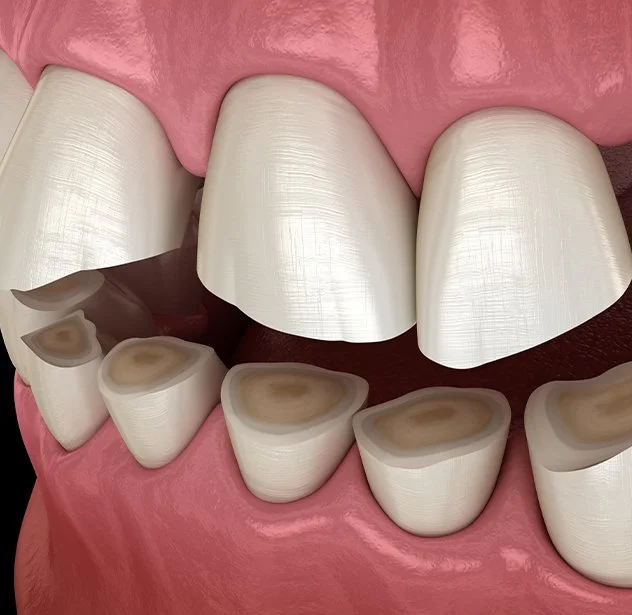
This is one of the most direct and visible impacts. Over time, grinding can flatten, fracture, chip, or loosen your teeth . It can wear down the protective enamel, exposing the softer dentin inside and leading to increased sensitivity to hot and cold . It can also cause your teeth to become mobile and damage existing dental work like crowns and fillings .
Jaw Pain and TMJ Disorders
Bruxism is a leading cause of pain in the jaw muscles and the temporomandibular joint (TMJ)—the hinge connecting your jaw to your skull. This can result in a condition called myofascial pain syndrome, where the pain from overworked jaw muscles radiates to other areas, including the neck, shoulders, and back . You might also hear a clicking or popping sound when you open or close your mouth .
Chronic Headaches and Facial Pain
Many people are surprised to learn that their morning headaches are linked to teeth grinding. The muscle tension from clenching and grinding can cause a dull, aching headache that starts at your temples or feels like an earache, even though your ears are fine .
Reduced Quality of Life
The impact of bruxism can be life-altering. Chronic pain from headaches and jaw issues can interfere with eating, sleeping, and daily concentration, leading to a significant reduction in your overall quality of life . It can also be a source of stress, especially if a sleep partner is disturbed by the sound of your grinding .
Conclusion
Bruxism is more than just a bad habit; it's a complex condition with significant consequences for your dental health and overall well-being. While the causes are varied, from stress to sleep apnoea, it's a manageable condition.
If you suspect you might be grinding your teeth—perhaps because you have a sore jaw, morning headaches, or your partner has heard you grinding at night—the first step is to see your dentist. They can check for signs of tooth wear and help you find the most effective way to protect your smile and ease your pain.
Disclaimer: This article is for informational purposes only and does not constitute medical advice. Always consult with a qualified healthcare provider for diagnosis and treatment of any health condition.