All-on-4 vs All-on-6 Dental Implants Under Sedation: A Comfortable, Life-Changing Solution

Missing teeth can affect far more than your smile—they can impact your confidence, speech, and ability to enjoy everyday meals. Fortunately, modern dentistry offers advanced full-arch solutions like All-on-4 and All-on-6 dental implants, designed to restore both function and aesthetics. Even better, these treatments can now be performed under sedation, making the entire experience far more comfortable and stress-free.

What Are All-on-4 and All-on-6 Implants?

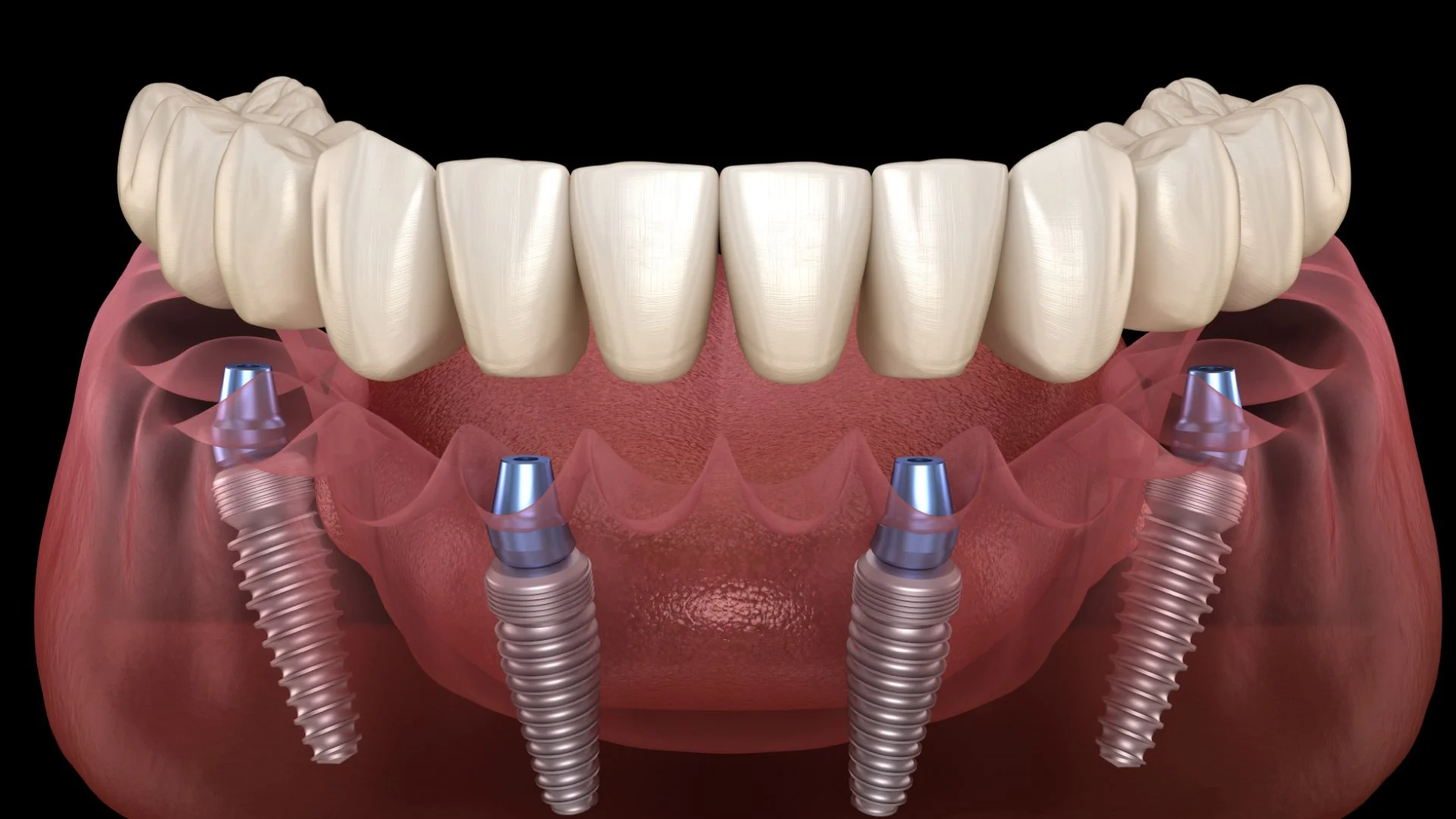
Both All-on-4 and All-on-6 are full-mouth dental implant solutions that replace an entire arch of teeth using a fixed bridge supported by implants.

  • All-on-4 uses four strategically placed implants to support a full set of teeth.

  • All-on-6 uses six implants, offering additional stability and support—often recommended for patients with stronger jawbone density or those seeking enhanced durability.

These treatments are ideal for patients who have lost most or all of their teeth, or who are struggling with failing dentures.

Key Differences: All-on-4 vs All-on-6

While both options deliver excellent results, there are a few differences to consider:

  • Support & Stability: All-on-6 provides extra anchorage, which can improve long-term strength.

  • Bone Distribution: All-on-4 is often better suited for patients with lower bone density, as it maximizes available bone.

  • Cost: All-on-6 typically involves higher costs due to the additional implants.

  • Longevity: Both are highly durable, but All-on-6 may offer slightly more resilience over time.

A thorough consultation will determine which option best suits your needs.

Why Choose Sedation Dentistry?

For many patients, the idea of dental surgery can be intimidating. That’s where sedation dentistry comes in. With modern sedation options, you can undergo implant treatment in a calm, relaxed state.

Sedation Options May Include:

  • IV Sedation: You’ll be deeply relaxed and may not remember the procedure.

  • Oral Sedation: A prescribed medication taken before your appointment to ease anxiety.

  • General Anaesthesia (in some cases): For more complex treatments or highly anxious patients.

Benefits of Undergoing Implants Under Sedation

  • Pain-Free Experience: Minimal discomfort during and after the procedure.

  • Reduced Anxiety: Ideal for nervous or phobic patients.

  • Efficient Treatment: Multiple procedures can often be completed in one visit.

  • Improved Recovery Experience: Less stress on the body overall.

What to Expect During the Procedure

  1. Consultation & Planning: Digital scans and treatment planning tailored to your smile.

  2. Sedation Administration: Ensuring you are completely comfortable.

  3. Implant Placement: Precise placement of 4 or 6 implants into the jawbone.

  4. Temporary Teeth Placement: Often, a provisional set of teeth is placed the same day.

  5. Healing & Final Restoration: After healing, your permanent teeth are fitted.

Transform Your Smile with Confidence

All-on-4 and All-on-6 dental implants are truly life-changing solutions. When combined with sedation dentistry, the journey becomes smooth, comfortable, and virtually pain-free.

If you’ve been putting off treatment due to fear or discomfort, now is the time to explore a better way.

Experience Pain-Free Dentistry in Dulwich Hill

At Pain Free Dentist Sydney Dulwich Hill, patient comfort is the top priority. With advanced sedation techniques and a caring, experienced team, you can restore your smile without stress or fear. Whether you're considering All-on-4 or All-on-6 implants, you’ll receive personalised care every step of the way.

Book your consultation today at (02) 9558 8988 or www.painfreedentistsydney.com.au and take the first step towards a confident, fully restored smile, all without the pain!

👅 Undiagnosed Tongue-Tie and Its Hidden Effects: Jaw Pain, Posture Issues, Sleep Problems & More (2026 Guide)

Tongue-tie (ankyloglossia) is a condition where the tongue’s movement is restricted due to a tight or short lingual frenulum. While often identified in infants, undiagnosed tongue-tie in teens and adults can contribute to a wide range of oral, muscular, and postural issues that may go unnoticed for years.

Because the tongue plays a major role in posture, breathing, and jaw function, restriction can affect more than just speech.

👅 What Is Tongue-Tie?

Tongue-tie occurs when the tissue under the tongue is too tight, limiting movement. This can affect:

  • Tongue elevation

  • Tongue resting posture

  • Swallowing patterns

  • Oral muscle balance

In some cases, mild tongue-tie may go undiagnosed until later in life when symptoms develop.

🦷 How Tongue-Tie Affects Jaw and TMJ Function

Restricted tongue movement can influence how the jaw and surrounding muscles function.

This may contribute to:

  • Jaw tension or tightness

  • TMJ discomfort or clicking

  • Teeth grinding (bruxism)

  • Overuse of facial and jaw muscles

  • Uneven bite pressure

When the tongue cannot rest properly against the palate, other muscles may compensate, increasing strain on the jaw system.

🧍‍♂️ Tongue-Tie and Poor Posture (Hidden Connection)

One of the lesser-known effects of tongue-tie is its potential link to postural imbalance.

When tongue mobility is restricted, the body may adapt in subtle ways:

  • Forward head posture

  • Neck and shoulder tightness

  • Upper back strain

  • Muscle compensation patterns

Why this happens:

The tongue is connected to deep muscle chains in the neck and floor of the mouth. When it cannot function optimally, surrounding muscles may overcompensate, influencing head and neck alignment over time.

😴 Tongue-Tie and Sleep Issues

Tongue-tie may also influence breathing patterns and sleep quality in some individuals.

Possible associations include:

  • Mouth breathing during sleep

  • Snoring

  • Dry mouth on waking

  • Restless sleep

  • Reduced airway support due to low tongue posture

While not a direct cause of sleep apnea, tongue posture can be a contributing factor in airway function.

🤕 Headaches, Facial Tension & TMJ-Like Symptoms

Chronic muscle compensation from tongue restriction may lead to:

  • Tension headaches

  • Facial muscle fatigue

  • Jaw soreness

  • Ear pressure sensations

  • TMJ-like symptoms

These symptoms often overlap with stress or bite-related issues, making diagnosis more complex.

🗣️ Speech, Swallowing & Oral Function

Tongue-tie can also affect:

  • Speech clarity (especially “L,” “R,” and “S” sounds)

  • Swallowing mechanics

  • Tongue thrusting patterns

  • Dental spacing or crowding over time

These functional issues may become more noticeable in adolescence or adulthood.

🧪 Why Tongue-Tie Is Often Missed

In adults, tongue-tie can be overlooked because:

  • Symptoms develop gradually

  • Compensation masks restriction

  • Focus is often placed on teeth or jaw, not tongue function

  • It may be mild but still functionally significant

A proper functional assessment is often needed for diagnosis.

🦷 Treatment Options for Tongue-Tie-Related Issues

Management depends on severity and symptoms and may include:

👅 Frenectomy (Tongue-Tie Release)

A minor procedure to improve tongue mobility.

🧘 Myofunctional Therapy

Exercises to retrain tongue posture and muscle balance.

🦷 TMJ & Bite Assessment

Evaluates how jaw function has adapted.

💉 Adjunct TMJ Treatments (if needed)

Such as splints or Botox for muscle overactivity.

🧍 Postural & Breathing Re-Education

Helps correct compensatory patterns in the neck and airway.

📍 Tongue-Tie Assessment in Sydney

At Pain Free Dentist Sydney, we assess tongue function in relation to jaw pain, posture, breathing, and overall oral health. A multidisciplinary approach is often needed to understand the full impact of restriction.

📞 Book a Consultation

If you suspect undiagnosed tongue-tie may be contributing to jaw pain, posture issues, or breathing concerns, professional assessment is recommended.

👉 Pain Free Dentist Sydney
📞 Call us: (02) 9558 8988
📧 Email: info@painfreedentistsydney.com.au
💻 Or book online today

❓ FAQs

Can tongue-tie cause TMJ pain?
It may contribute to jaw muscle imbalance and tension in some individuals.

Can tongue-tie affect posture?
Yes, restricted tongue function may contribute to compensatory neck and head posture changes.

Is tongue-tie treatable in adults?
Yes, treatment may include frenectomy and myofunctional therapy.

🦷 TMJ Dysfunction and Whole-Body Symptoms: Sleep Apnea, Tinnitus, Migraines & More (2026 Guide)

Temporomandibular joint (TMJ) dysfunction is often thought of as a jaw problem, but for many patients, symptoms can extend beyond the mouth. TMJ disorders may be associated with broader issues such as sleep disturbances, tinnitus, headaches, and facial pain, especially when muscle tension and bite imbalance are involved.

Understanding these connections is important for accurate diagnosis and effective treatment.

🧠 What Is TMJ Dysfunction?

TMJ dysfunction (TMD) affects the jaw joint and surrounding muscles responsible for chewing and speaking.

Common local symptoms include:

  • Jaw pain or stiffness

  • Clicking or popping sounds

  • Limited mouth opening

  • Teeth clenching or grinding (bruxism)

However, TMJ-related muscle tension and nerve involvement may also contribute to symptoms beyond the jaw.

😴 TMJ and Sleep Apnea (Sleep Disturbances)

Some patients with TMJ dysfunction also report poor sleep quality or sleep-disordered breathing.

While TMJ does not directly cause sleep apnea, contributing factors may overlap, including:

  • Jaw position affecting airway space

  • Nighttime teeth grinding

  • Muscle tension in the jaw and neck

  • Mouth breathing patterns

Possible signs include:

  • Snoring

  • Waking up tired

  • Morning headaches

  • Dry mouth on waking

A combined dental and medical assessment may be required if sleep apnea is suspected.

🔊 TMJ and Tinnitus (Ringing in the Ears)

Tinnitus (ringing or buzzing in the ears) is commonly reported alongside TMJ symptoms.

This may be linked to:

  • Shared nerve pathways between jaw and ear structures

  • Muscle tension near the ear

  • Jaw joint inflammation

  • Bruxism-related pressure

Symptoms may include:

  • Ringing in one or both ears

  • Ear fullness or pressure

  • Sound sensitivity

🤕 TMJ and Migraines or Headaches

One of the most common TMJ-related complaints is chronic headaches or migraines.

This is often due to:

  • Overactive jaw muscles

  • Referred pain from the temporalis muscle

  • Night-time clenching or grinding

  • Stress-related muscle tension

Typical patterns:

  • Morning headaches

  • Pain around temples or eyes

  • Neck and shoulder tightness

😖 Other Possible TMJ-Related Symptoms

Some patients also report:

  • Facial pain or pressure

  • Neck and shoulder discomfort

  • Dizziness or imbalance sensations

  • Difficulty concentrating due to chronic pain

  • Earaches without infection

These symptoms often overlap with stress, posture, and muscular dysfunction.

🧪 Why TMJ Can Affect Multiple Systems

The jaw joint is closely connected to:

  • Facial nerves

  • Ear structures

  • Neck and upper spine muscles

  • Head posture and airway function

Because of this, dysfunction in the TMJ area may contribute to widespread muscular and neurological symptoms in some individuals.

🦷 Treatment Options for TMJ-Related Symptoms

Effective treatment depends on severity and may include:

🛡️ Night Guards / Splints

Reduce grinding and joint pressure during sleep.

💉 Botox for TMJ

Helps relax overactive jaw muscles and reduce pain.

🧘 Jaw Physiotherapy

Improves muscle balance and jaw movement.

🦷 Bite Assessment & Dental Review

Ensures proper alignment and function.

😌 Stress & Habit Management

Addresses clenching triggers and muscle tension.

📍 TMJ & Complex Symptoms in Sydney

At Pain Free Dentist Sydney, we assess TMJ dysfunction in relation to jaw pain, headaches, sleep issues, and muscle tension. Our focus is on identifying contributing factors and creating a tailored treatment plan.

📞 Book a TMJ Assessment

If you are experiencing jaw pain along with symptoms like headaches, poor sleep, or ear discomfort, a professional evaluation may help identify the cause.

👉 Pain Free Dentist Sydney
📞 Call us: (02) 9558 8988
📧 Email: info@painfreedentistsydney.com.au
💻 Or book online today

❓ FAQs

Can TMJ cause sleep apnea?
TMJ does not directly cause sleep apnea, but jaw position and muscle tension may contribute to airway issues in some cases.

Is tinnitus linked to TMJ?
Yes, some patients with TMJ dysfunction report tinnitus due to shared nerve and muscle connections.

Can TMJ cause migraines?
TMJ-related muscle tension and clenching can trigger tension-type headaches and migraine-like symptoms.