What Is the Best Treatment for TMJ Disorder?

If you experience jaw pain, clicking, headaches, facial tension or difficulty opening your mouth, you may be wondering:

What is the best treatment for TMJ disorder?

The answer depends on the underlying cause of your symptoms.

TMJ disorder, also known as temporomandibular disorder (TMD), can affect the jaw joints, chewing muscles or both. Because there are many possible causes of jaw pain, there is no single treatment that is suitable for every patient.

The best treatment is usually the one that addresses the factors contributing to your individual symptoms.

What Is TMJ Disorder?

The temporomandibular joints, or TMJs, are the joints that connect your lower jaw to your skull.

These joints allow you to:

  • Open and close your mouth

  • Chew

  • Speak

  • Yawn

  • Move your jaw from side to side

TMJ disorder can affect the joints, the surrounding muscles or the way the jaw functions.

Common symptoms include:

  • Jaw pain

  • Jaw clicking or popping

  • Headaches

  • Facial pain

  • Ear pain

  • Tinnitus

  • Jaw stiffness

  • Difficulty opening the mouth

  • Jaw locking

  • Pain when chewing

  • Teeth grinding or clenching

What Causes TMJ Disorder?

There is often more than one contributing factor.

Possible causes and contributing factors include:

Teeth Grinding and Clenching

Bruxism can place excessive pressure on the jaw muscles and joints.

Some people grind their teeth during sleep, while others clench during the day without realising it.

Over time, excessive muscle activity may contribute to jaw pain, headaches and tooth wear.

Stress and Muscle Tension

Stress can contribute to increased muscle tension and clenching.

Some people notice that their jaw symptoms become worse during periods of stress, poor sleep or emotional tension.

Jaw Joint Problems

The structure and function of the jaw joint can contribute to symptoms such as:

  • Clicking

  • Popping

  • Pain

  • Limited movement

  • Locking

The cause of a clicking or painful jaw needs to be assessed individually.

Bite and Occlusion

The way the upper and lower teeth come together may influence the forces placed on the teeth, jaw muscles and joints.

An assessment of the bite may be part of a comprehensive TMJ evaluation.

Trauma

An injury to the jaw, face or head may contribute to TMJ symptoms.

Symptoms may develop immediately after an injury or become noticeable later.

Airway and Breathing Factors

Some patients with jaw symptoms may also experience breathing or sleep-related problems.

Snoring, mouth breathing and sleep-disordered breathing may be relevant factors in some patients and may require further assessment.

What Is the Best Treatment for TMJ Disorder?

There is no single “best” treatment for every patient.

Treatment should be based on:

  • Your symptoms

  • The cause of your jaw problem

  • The condition of your jaw joints

  • Your jaw muscles

  • Your bite

  • Your teeth

  • Your habits

  • Your sleep and breathing patterns

  • Your overall treatment goals

A comprehensive assessment is often the first step in determining the most appropriate treatment.

1. TMJ Assessment and Diagnosis

Before deciding on treatment, it is important to understand what may be causing your symptoms.

A TMJ assessment may include:

  • Discussion of your symptoms

  • Medical and dental history

  • Assessment of jaw movement

  • Examination of the jaw joints

  • Examination of the jaw muscles

  • Assessment of your bite

  • Evaluation of teeth grinding and clenching

  • Dental imaging where clinically indicated

In some cases, further imaging such as CBCT or MRI may be recommended depending on the symptoms and clinical findings.

2. Custom TMJ Splint Therapy

A custom dental splint may be recommended for selected patients with TMJ symptoms, teeth grinding or excessive jaw muscle activity.

A splint may be designed to:

  • Protect the teeth

  • Reduce excessive forces

  • Support a more stable jaw position

  • Help manage clenching and grinding

  • Assist with jaw joint decompression in selected cases

The type of appliance and the recommended wearing schedule depend on the patient's individual condition.

A TMJ appliance should be carefully assessed and adjusted as necessary.

3. Myofunctional Therapy

Myofunctional therapy may be recommended for selected patients as part of a broader treatment plan.

It may focus on areas such as:

  • Tongue posture

  • Breathing

  • Swallowing

  • Oral muscle function

  • Jaw muscle coordination

The goal is to address relevant functional factors that may contribute to symptoms.

4. Managing Teeth Grinding and Clenching

If bruxism is contributing to your TMJ symptoms, treatment may involve strategies to reduce the effects of excessive clenching and grinding.

This may include:

  • A custom dental appliance

  • Behavioural awareness

  • Stress management

  • Sleep assessment

  • Muscle treatment

  • Addressing contributing dental or functional factors

The most appropriate approach depends on the individual patient.

5. Botox for TMJ and Jaw Muscle Tension

Botox may be considered for selected patients who experience excessive activity or tension in certain jaw muscles.

Treatment may help reduce muscle activity in appropriate cases and may be considered for patients experiencing:

  • Jaw muscle tension

  • Clenching

  • Facial muscle pain

  • Masseter muscle overactivity

Botox is not suitable for every patient and does not treat every cause of TMJ disorder.

A proper assessment is required to determine whether it may be appropriate.

6. Physiotherapy and Muscle Treatment

Some patients with TMJ symptoms may benefit from physiotherapy or treatment directed at the muscles of the jaw, face, neck and surrounding areas.

This may be particularly relevant when symptoms are associated with:

  • Neck tension

  • Postural problems

  • Muscle tightness

  • Limited jaw movement

A coordinated approach may be recommended where appropriate.

7. Assessing Airway and Sleep Factors

Some patients with TMJ symptoms also experience:

  • Snoring

  • Mouth breathing

  • Poor sleep

  • Daytime fatigue

  • Sleep-disordered breathing

If these symptoms are present, further assessment may be appropriate.

Depending on the individual situation, this may involve collaboration with other healthcare professionals, including medical or sleep specialists.

8. Restorative Dental Treatment

In some cases, damaged or severely worn teeth may contribute to problems with chewing function and bite.

Restorative dental treatment may be considered where appropriate.

Depending on the condition of the teeth, treatment may include:

  • Composite restorations

  • Crowns

  • Other restorative procedures

Any restorative treatment should be carefully planned as part of the overall dental and jaw assessment.

Can TMJ Disorder Be Cured?

The answer depends on the cause and severity of the condition.

Some patients experience significant improvement with appropriate treatment and management.

For others, TMJ disorder may require ongoing management.

Treatment goals may include:

  • Reducing pain

  • Improving jaw movement

  • Reducing excessive muscle tension

  • Protecting the teeth

  • Improving jaw function

  • Addressing contributing factors

The earlier contributing factors are identified, the more effectively an appropriate treatment plan can be developed.

Is Surgery Always Needed for TMJ Disorder?

No.

Many patients with TMJ symptoms are initially managed with non-surgical approaches.

Surgery may be considered in selected cases involving specific structural or joint problems.

The appropriate treatment depends on the individual diagnosis.

How Long Does TMJ Treatment Take?

The treatment timeline varies significantly between patients.

It may depend on:

  • The cause of the symptoms

  • How long the problem has been present

  • The severity of the condition

  • The response to treatment

  • The type of treatment required

Some patients may notice improvement relatively quickly, while others require a longer-term treatment approach.

When Should I See a TMJ Dentist?

You should consider an assessment if you experience:

  • Persistent jaw pain

  • Jaw clicking or popping with pain

  • Frequent headaches

  • Facial pain

  • Ear pain or tinnitus

  • Jaw locking

  • Difficulty opening your mouth

  • Pain when chewing

  • Significant teeth grinding

  • Worn or damaged teeth

Persistent symptoms should not be ignored.

Frequently Asked Questions

What is the best treatment for TMJ disorder?

There is no single treatment that is best for every patient. The most appropriate treatment depends on the cause of the symptoms and may involve splint therapy, muscle treatment, myofunctional therapy, managing bruxism, Botox or other approaches.

Can TMJ disorder go away by itself?

Some mild symptoms may improve, but persistent or worsening pain should be assessed to identify possible contributing factors.

Can a dental splint help TMJ pain?

A custom dental splint may help selected patients by protecting the teeth and managing forces associated with clenching and grinding. The appropriate appliance depends on the individual patient.

Can Botox help TMJ disorder?

Botox may be considered for selected patients with excessive jaw muscle activity or tension. It is not suitable for every cause of TMJ disorder.

Can TMJ cause headaches?

Jaw muscle tension and TMJ problems may contribute to headaches in some patients. However, headaches can have many different causes.

Can TMJ cause ear pain or tinnitus?

Some patients with jaw joint or muscle problems may experience ear-related symptoms. Other possible causes should also be considered and assessed.

Do I need surgery for TMJ disorder?

Not necessarily. Many patients are initially managed with non-surgical treatment options. The appropriate treatment depends on the underlying cause.

TMJ Treatment in Sydney

If you are experiencing jaw pain, headaches, clicking, facial pain or teeth grinding, the most appropriate treatment depends on understanding the underlying causes of your symptoms.

At Pain Free Dentist Sydney, we provide personalised TMJ assessments for patients experiencing jaw joint and muscle problems.

Depending on your individual needs, treatment may involve custom splint therapy, assessment of the bite, myofunctional therapy, management of teeth grinding, Botox for selected cases of muscle overactivity and assessment of relevant airway or breathing factors.

If you are experiencing TMJ symptoms and would like to understand your treatment options, contact us to arrange an assessment.

📞 Call Pain Free Dentist Sydney on 9558 8988.

Serving patients in Dulwich Hill, Hurlstone Park and Sydney's Inner West.

How Do I Know If I Need a Root Canal?

Root canal treatment is one of the most commonly misunderstood dental procedures.

Many people associate a root canal with pain, but modern dental techniques, local anaesthetic and sedation options can make treatment much more comfortable than many patients expect.

If you have tooth pain, you may be wondering:

How do I know if I need a root canal?

The answer depends on what is happening inside the tooth. A dental examination and appropriate imaging are usually required to determine whether the nerve or pulp of the tooth has become inflamed, infected or irreversibly damaged.

What Is a Root Canal?

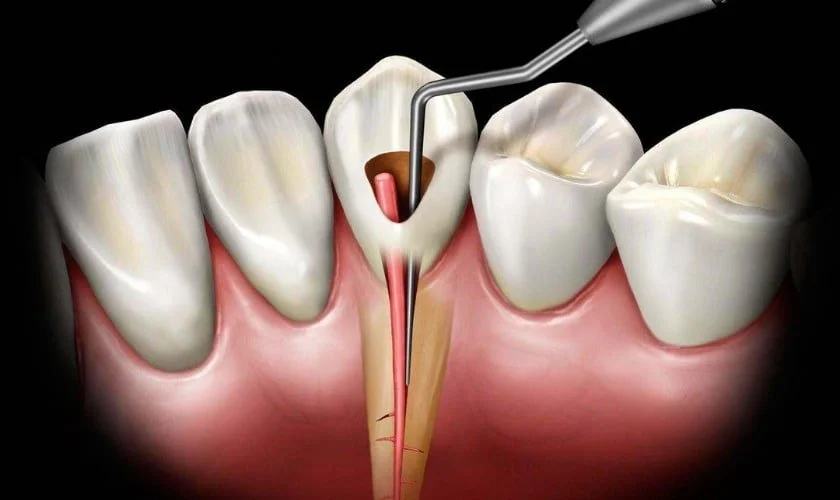
Inside every tooth is a soft area called the dental pulp.

The pulp contains:

  • Nerves

  • Blood vessels

  • Connective tissue

If the pulp becomes severely inflamed or infected, the tooth may cause significant pain.

Root canal treatment involves removing the damaged or infected pulp from inside the tooth, cleaning and disinfecting the root canals, and sealing the tooth.

The purpose of root canal treatment is to remove the source of infection or inflammation while preserving the natural tooth where possible.

What Are the Signs You May Need a Root Canal?

1. Severe Toothache

Severe tooth pain may be a sign that the dental nerve inside the tooth is inflamed or infected.

The pain may be:

  • Throbbing

  • Constant

  • Sharp

  • Worse at night

  • Triggered by hot or cold foods

  • Worse when biting

Severe tooth pain should be assessed promptly.

However, toothache can have many possible causes, so pain alone does not automatically mean that you need a root canal.

2. Lingering Sensitivity to Hot or Cold

It is normal for some teeth to experience a brief sensation when exposed to cold or hot temperatures.

However, if the pain lingers for a significant period after the source of the temperature has been removed, it may indicate inflammation of the dental pulp.

For example, you may drink something cold and continue to experience pain long after finishing the drink.

This type of lingering sensitivity should be assessed by a dentist.

3. Pain When Biting or Chewing

Pain when biting down may be associated with:

  • Inflammation inside the tooth

  • A dental infection

  • A cracked tooth

  • A damaged filling

  • Problems around the tooth root

If the pain is persistent or worsening, a dental examination may be required.

4. Swelling Around the Tooth

Swelling around a tooth may indicate an infection.

You may notice:

  • A swollen gum

  • A small pimple or bump on the gum

  • Facial swelling

  • Tenderness around the tooth

An infection inside a tooth can spread into the surrounding tissues.

Prompt dental assessment is recommended if you notice swelling.

5. A Dental Abscess

A dental abscess may develop when bacteria enter the inner part of a tooth and cause infection.

Symptoms may include:

  • Severe throbbing pain

  • Swelling

  • Pus

  • A bad taste in the mouth

  • Fever

  • Pain when biting

A dental abscess requires professional assessment.

Depending on the condition of the tooth, root canal treatment may be one treatment option to remove the source of infection and preserve the tooth.

6. A Deep Cavity

A cavity that extends deeply into the tooth may eventually reach the dental pulp.

If the pulp becomes irreversibly inflamed or infected, a filling may no longer be sufficient.

Root canal treatment may be considered to preserve the remaining tooth structure.

7. A Cracked or Fractured Tooth

A crack in a tooth can allow bacteria to reach the inner part of the tooth.

A cracked tooth may cause:

  • Sharp pain when biting

  • Pain when releasing your bite

  • Sensitivity to hot and cold

  • Intermittent toothache

The treatment required depends on the location and severity of the crack.

Some cracked teeth may be treated with root canal treatment and a crown, while severely fractured teeth may not be restorable.

Can I Need a Root Canal Without Pain?

Yes.

Some teeth requiring root canal treatment may not cause significant pain.

A tooth may have a damaged or dead nerve and still appear relatively comfortable.

In some cases, the problem may be discovered during a routine dental examination or on an X-ray.

This is one reason why regular dental check-ups can be important.

How Does a Dentist Know If I Need a Root Canal?

Your dentist may assess:

  • Your symptoms

  • The history of your tooth pain

  • Your response to hot and cold testing

  • Your response to tapping or biting

  • The condition of the tooth

  • The surrounding gum tissues

  • Dental X-rays where clinically indicated

In some cases, additional imaging may be recommended.

The goal is to determine whether the dental pulp is healthy, inflamed, infected or no longer viable.

Is Root Canal Treatment Painful?

Many patients are surprised to learn that the procedure itself is often much more comfortable than they expect.

Local anaesthetic is used to numb the tooth and surrounding area.

For patients who are anxious about dental treatment, sedation may also be an option in suitable circumstances.

The level of discomfort after treatment can vary depending on the condition of the tooth and the extent of infection or inflammation.

Your dentist will provide instructions for managing your recovery.

Root Canal Treatment Under Dental Sedation

Dental anxiety is very common.

Some patients delay root canal treatment because they are worried about:

  • Pain

  • The sound of dental instruments

  • The length of treatment

  • Previous negative dental experiences

  • Feeling anxious or unable to relax in the dental chair

Sedation may help selected patients feel more relaxed during dental treatment.

What Is Dental Sedation?

Dental sedation uses medication to help reduce anxiety and promote relaxation during dental treatment.

Depending on the type of sedation used, you may remain conscious and able to communicate with the dental team while feeling calmer and more comfortable.

The appropriate sedation option depends on:

  • Your medical history

  • Your level of anxiety

  • The complexity of the procedure

  • The expected length of treatment

  • Your individual health circumstances

Can I Have a Root Canal Under IV Sedation?

Selected patients may be suitable for IV sedation during dental treatment.

IV sedation may be considered for patients who:

  • Experience significant dental anxiety

  • Have had a previous traumatic dental experience

  • Have difficulty relaxing during dental treatment

  • Require lengthy or complex dental procedures

  • Prefer a more relaxed treatment experience

Your suitability for IV sedation must be assessed before treatment.

Specific fasting instructions may apply, and patients receiving IV sedation generally require an appropriate escort home after treatment.

Your dental team will provide detailed instructions before your appointment.

How Long Does Root Canal Treatment Take?

The length of treatment depends on:

  • The tooth being treated

  • The number of root canals

  • The complexity of the root canal anatomy

  • The presence of infection

  • The condition of the tooth

  • Whether additional restorative treatment is required

Some root canal treatments can be completed in one appointment, while others may require multiple appointments.

After root canal treatment, the tooth may require a restoration such as a crown to help protect the remaining tooth structure.

Does Every Tooth Need a Crown After a Root Canal?

Not necessarily.

The type of restoration required depends on:

  • The tooth's location

  • The amount of remaining tooth structure

  • The extent of damage

  • The forces placed on the tooth

Back teeth often experience significant chewing forces and may require additional protection.

Your dentist can discuss the most appropriate restoration for your tooth.

What Happens If I Do Not Have a Root Canal?

If a tooth has an infected or severely damaged dental pulp and is left untreated, the problem may progress.

Possible complications include:

  • Increasing pain

  • Dental abscess

  • Swelling

  • Bone damage

  • Spread of infection

  • Loss of the tooth

The appropriate treatment depends on the individual situation.

In some cases, the options may include root canal treatment or extraction.

Can a Root Canal Save My Tooth?

In many cases, root canal treatment can help preserve a natural tooth that might otherwise require extraction.

Preserving a natural tooth may help maintain:

  • Chewing function

  • The position of surrounding teeth

  • Jawbone support

  • Your natural bite

However, not every tooth can be saved.

The prognosis depends on factors such as:

  • The extent of decay

  • The amount of remaining tooth structure

  • The severity of any crack

  • The condition of the surrounding bone and gums

  • The quality of the root canal treatment and final restoration

When Is Tooth Pain a Dental Emergency?

Seek urgent dental care if you experience:

  • Severe or worsening tooth pain

  • Facial swelling

  • Swelling around the gums

  • Fever

  • Pus or a bad taste

  • Difficulty opening your mouth

  • Difficulty swallowing

  • Difficulty breathing

Difficulty breathing or swallowing, or rapidly increasing facial swelling, requires immediate medical attention.

Frequently Asked Questions

How do I know if I need a root canal or a filling?

A filling may be suitable when decay has not reached or permanently damaged the dental pulp. If the pulp is severely inflamed or infected, root canal treatment may be required.

Can a tooth infection go away without a root canal?

An infection inside a tooth generally requires professional treatment. The appropriate treatment may involve root canal treatment or extraction, depending on whether the tooth can be restored.

Can I have a root canal if I am scared of the dentist?

Yes. Dental sedation may be an option for selected patients who experience significant dental anxiety.

Is IV sedation available for root canal treatment?

Selected patients may be suitable for IV sedation, depending on their health, medical history and the complexity of the dental treatment.

How long does a root canal last?

A successfully treated tooth can provide long-term function when properly restored and maintained. Regular dental care and good oral hygiene remain important.

Is it better to have a root canal or extract the tooth?

The answer depends on the condition of the tooth. When a tooth can be predictably restored, preserving the natural tooth may be considered. In other cases, extraction may be the more appropriate option.

Root Canal Treatment and Dental Sedation in Sydney

Severe tooth pain should not be ignored.

If you have lingering sensitivity, pain when biting, a cracked tooth, swelling or a dental abscess, you may require prompt dental assessment.

At Pain Free Dentist Sydney, we assess patients experiencing tooth pain and dental infections and can discuss appropriate treatment options.

For suitable patients who experience dental anxiety, dental sedation may be available to help create a calmer and more comfortable treatment experience.

If you are concerned that you may need a root canal or are anxious about dental treatment, contact us to discuss your options.

📞 Call Pain Free Dentist Sydney on 9558 8988.

Serving patients in Dulwich Hill, Hurlstone Park and Sydney's Inner West.

Wisdom Tooth Pain: Do I Need My Wisdom Teeth Removed?

Wisdom tooth pain is a common reason people seek urgent dental care.

You may experience pain at the back of your mouth, swollen gums, difficulty opening your mouth or discomfort when chewing. Sometimes wisdom tooth pain comes and goes, while other times it can become severe and require urgent treatment.

If you are experiencing wisdom tooth pain, you may be wondering:

Do I need to have my wisdom teeth removed?

The answer depends on the position of your wisdom teeth, your symptoms and whether they are causing damage or ongoing problems.

What Are Wisdom Teeth?

Wisdom teeth are the third and final set of molars at the back of the mouth.

Most people have up to four wisdom teeth:

  • Two in the upper jaw

  • Two in the lower jaw

They usually begin to develop during the teenage years and may erupt during the late teenage years or early adulthood.

However, not everyone develops all four wisdom teeth, and some people do not develop wisdom teeth at all.

Why Do Wisdom Teeth Cause Pain?

Wisdom teeth can cause pain for several reasons.

1. Impacted Wisdom Teeth

A wisdom tooth is impacted when it does not have enough space to erupt properly.

It may remain partially covered by gum or become trapped against another tooth.

An impacted wisdom tooth may cause:

  • Pain

  • Pressure

  • Swelling

  • Infection

  • Damage to neighbouring teeth

The position of the tooth can usually be assessed with dental X-rays.

2. Infection Around the Wisdom Tooth

When a wisdom tooth only partially erupts, bacteria and food can become trapped around the gum.

This can cause inflammation and infection, known as pericoronitis.

Symptoms may include:

  • Pain at the back of the mouth

  • Swollen gums

  • Bad taste

  • Bad breath

  • Difficulty opening the mouth

  • Pain when swallowing

  • Facial swelling

Recurring infections around a wisdom tooth may be an indication that removal should be considered.

3. Lack of Space

Sometimes there is simply not enough room for the wisdom tooth to erupt properly.

The tooth may grow at an angle or push against the neighbouring molar.

This can make cleaning difficult and may increase the risk of:

  • Tooth decay

  • Gum disease

  • Infection

  • Damage to the adjacent tooth

4. Tooth Decay

Wisdom teeth can be difficult to brush and floss effectively because they are located at the very back of the mouth.

This can increase the risk of tooth decay.

If the tooth is difficult to restore or is repeatedly causing problems, removal may be recommended.

5. Cysts or Other Problems

In some cases, an impacted wisdom tooth may be associated with a cyst or other changes in the surrounding bone.

Although uncommon, this is one reason why assessment and appropriate dental imaging may be recommended.

Do All Wisdom Teeth Need to Be Removed?

No.

Not every wisdom tooth needs to be removed.

A wisdom tooth may not require removal if it:

  • Has erupted normally

  • Is healthy

  • Can be cleaned effectively

  • Is not causing pain

  • Is not damaging neighbouring teeth

  • Is not associated with infection or other pathology

Your dentist can assess the position and condition of your wisdom teeth and discuss whether monitoring or removal is appropriate.

When Should Wisdom Teeth Be Removed?

Wisdom tooth removal may be recommended if the tooth is causing:

  • Repeated pain

  • Recurrent infection

  • Gum swelling

  • Tooth decay

  • Damage to the neighbouring tooth

  • Cysts or other pathology

  • Difficulty maintaining good oral hygiene

  • Significant crowding or other dental problems

The decision should be based on an individual assessment.

Can Wisdom Teeth Cause Headaches or Jaw Pain?

Wisdom tooth problems can sometimes contribute to pain around the jaw and face.

You may experience:

  • Jaw pain

  • Facial discomfort

  • Ear pain

  • Difficulty opening the mouth

  • Headaches associated with pain and muscle tension

However, headaches and jaw pain can have many different causes.

If your symptoms continue after the wisdom tooth problem has been treated, further assessment may be required to investigate other possible causes, including TMJ problems or teeth grinding.

What Happens During a Wisdom Tooth Consultation?

During a consultation, your dentist may:

  • Discuss your symptoms

  • Examine your teeth and gums

  • Assess the position of the wisdom tooth

  • Check for infection or swelling

  • Evaluate the neighbouring teeth

  • Take dental X-rays where clinically indicated

For more complex cases, additional imaging such as a CBCT scan may be recommended to assess the relationship between the tooth roots and important anatomical structures.

Your dentist can then discuss whether the wisdom tooth should be monitored, treated or removed.

Wisdom Tooth Removal and Dental Sedation

Many patients feel anxious about wisdom tooth treatment.

Dental sedation may be an option for selected patients who are nervous about dental treatment or require more complex wisdom tooth removal.

Sedation can help create a calmer and more comfortable experience during dental treatment.

What Is Dental Sedation?

Dental sedation involves using medication to help reduce anxiety and promote relaxation during dental treatment.

Depending on the type of sedation used, you may remain conscious and able to communicate with the dental team while feeling significantly more relaxed.

The appropriate sedation option depends on:

  • Your medical history

  • Your level of anxiety

  • The complexity of the procedure

  • The expected length of treatment

  • Your individual health circumstances

Can Wisdom Teeth Be Removed Under IV Sedation?

In selected cases, wisdom tooth removal may be performed with IV sedation.

IV sedation may be considered for patients who:

  • Experience significant dental anxiety

  • Have had previous traumatic dental experiences

  • Require complex or lengthy dental treatment

  • Have difficulty tolerating dental procedures

  • Prefer a more relaxed treatment experience

Your suitability for IV sedation must be assessed before treatment.

Patients receiving IV sedation generally require specific fasting instructions and must arrange an appropriate escort home after treatment.

Your dental team will provide detailed instructions before your appointment.

Is Wisdom Tooth Removal Painful?

During the procedure, local anaesthetic is used to numb the area.

Sedation may also be used for suitable patients to help reduce anxiety and improve comfort.

After the procedure, some soreness, swelling or bruising may occur.

Your dentist will provide instructions about:

  • Pain management

  • Eating and drinking

  • Oral hygiene

  • Activity restrictions

  • Follow-up care

Recovery can vary depending on the position of the wisdom tooth and the complexity of the removal.

What Should I Eat After Wisdom Tooth Removal?

After wisdom tooth removal, soft foods may be more comfortable.

Suitable options may include:

  • Soft pasta

  • Scrambled eggs

  • Mashed vegetables

  • Yoghurt

  • Smooth foods

  • Soft fish

Avoid very hard, crunchy or extremely hot foods during the early recovery period, according to your dentist's instructions.

Can Wisdom Tooth Pain Go Away by Itself?

Wisdom tooth pain may temporarily improve, but this does not necessarily mean that the underlying problem has resolved.

For example, inflammation around a partially erupted wisdom tooth may settle temporarily before returning.

If you experience repeated wisdom tooth pain, it is important to have the tooth assessed.

When Is Wisdom Tooth Pain a Dental Emergency?

Seek urgent dental care if you experience:

  • Severe or rapidly worsening pain

  • Significant facial swelling

  • Swelling around the throat or neck

  • Difficulty swallowing

  • Difficulty breathing

  • Fever or feeling very unwell

  • Difficulty opening your mouth

  • Pus or a bad taste associated with swelling

Difficulty breathing or swallowing requires immediate medical attention.

Frequently Asked Questions

Do all wisdom teeth need to be removed?

No. Healthy wisdom teeth that have erupted properly and can be cleaned effectively may not need to be removed.

How do I know if my wisdom tooth is infected?

Pain, swelling, bad taste, bad breath, difficulty opening your mouth and fever may be signs of infection.

Can I have my wisdom teeth removed under sedation?

Selected patients may be suitable for dental sedation, including IV sedation, depending on their health, anxiety levels and the complexity of the procedure.

Is IV sedation safe for wisdom tooth removal?

IV sedation can be appropriate for suitable patients when properly assessed and administered by appropriately qualified professionals. Your medical history and individual circumstances must be considered before treatment.

How long does wisdom tooth removal take?

The treatment time varies depending on the number of teeth being removed and the position and complexity of the wisdom teeth.

Can wisdom teeth cause jaw pain?

Wisdom tooth problems can cause pain and inflammation around the back of the jaw. However, persistent jaw pain may also have other causes, including TMJ disorders and teeth grinding.

Wisdom Tooth Removal and Dental Sedation in Sydney

Wisdom tooth pain should not be ignored, particularly when it is associated with swelling, infection or difficulty opening your mouth.

Not every wisdom tooth needs to be removed. A dental assessment and appropriate imaging can help determine whether your wisdom teeth should be monitored or removed.

At Pain Free Dentist Sydney, we provide personalised assessments for patients experiencing wisdom tooth pain and dental anxiety.

For suitable patients, dental sedation may be available to help create a calmer and more comfortable treatment experience.

If you are experiencing wisdom tooth pain or are anxious about wisdom tooth removal, contact us to discuss your treatment options.

📞 Call Pain Free Dentist Sydney on 9558 8988.

Serving patients in Dulwich Hill, Hurlstone Park and Sydney's Inner West.