Why Do My Gums Bleed When I Floss? The Answer Might Surprise You

Intro

You flossed—good for you. Then you spat, and there it was: pink in the sink.

You probably thought one of two things:

  1. "I must have flossed too hard."

  2. "My gums are just sensitive."

Here is the truth that surprises most people: flossing too hard is rarely the cause. And "sensitive gums" is not really a thing—gums do not just bleed because they are delicate.

Bleeding gums are almost always a sign of inflammation caused by plaque and bacteria. And that inflammation has a name: gingivitis—the earliest stage of gum disease .

The good news? Gingivitis is reversible. And the solution is simpler than you think.

The Simple Science Behind Bleeding Gums

Here is what happens in your mouth when you skip flossing:

Plaque—a sticky, colourless film of bacteria—builds up along your gumline. Your immune system recognises this bacteria as a threat and sends white blood cells to fight it. This triggers inflammation: your gums become red, swollen, and tender .

When you floss, you disturb the bacteria and the inflamed tissue. The fragile, swollen blood vessels in your gums break easily, causing bleeding. It is not because you flossed too hard—it is because the tissue is already inflamed.

Think of it like a scratch on an inflamed patch of skin. The problem is not the scratch—it is the inflammation underneath.

The Three Stages of Gum Disease

Understanding where you are in the journey helps you know what to do next.

Stage 1: Gingivitis

  • Gums are red, swollen, and bleed when you brush or floss

  • No bone loss yet

  • Usually no pain

  • Reversible with professional cleaning and improved home care

Stage 2: Periodontitis

  • Inflammation spreads below the gumline

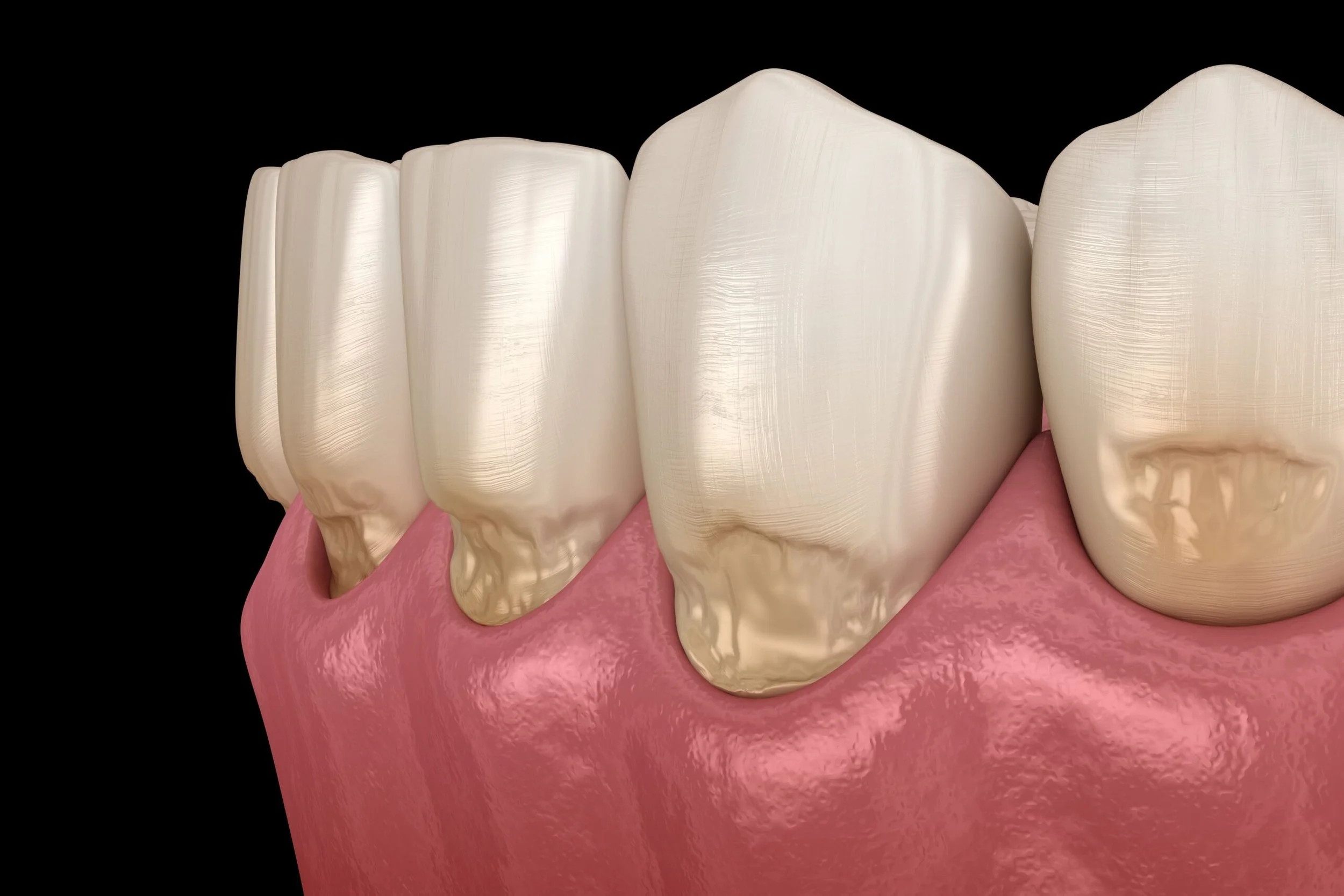
  • Gums begin to pull away from teeth (recession)

  • Bone loss begins

  • Not reversible, but manageable—treatment can stop progression

Stage 3: Advanced Periodontitis

  • Significant bone loss

  • Teeth become loose or shift

  • Painful chewing, severe bad breath, pus around gums

  • Advanced treatment needed—scaling, root planing, or surgery

Here is the critical part: gingivitis does not always hurt. You can have gum disease and feel perfectly fine . That is why bleeding gums are such an important early warning sign—they are often the only clue.

Is Bleeding Gums Serious?

Bleeding gums are a sign that your gums are inflamed. Left untreated, that inflammation can progress to periodontitis—which can lead to tooth loss .

But the concerns go beyond your mouth. Inflamed gums can trigger low-grade inflammation throughout your body . This has been linked to:

  • Heart disease

  • Diabetes (and difficulty controlling blood sugar)

  • Pregnancy complications

  • Respiratory infections

Your gums are not just about your teeth—they are connected to your whole health.

Why You Should Never Stop Flossing

Here is the most common mistake people make: they floss, their gums bleed, so they stop flossing.

Please read this next sentence carefully: If you stop flossing, the bleeding will not stop—it will get worse.

When you floss regularly, the bacteria is disrupted, inflammation decreases, and the bleeding stops. If you floss consistently for about two weeks, the bleeding should significantly reduce or stop entirely .

Stopping flossing just lets the plaque build back up, making the inflammation worse. You have to push through the first week or two—and then it gets much better.

What Actually Fixes Bleeding Gums?

You do not need expensive treatments or complicated routines. Here is what works:

1. Floss daily, gently
Use proper technique: curve the floss around each tooth in a C-shape and gently slide it beneath the gumline. Do not snap it against your gums. If regular floss is difficult, try floss picks, water flossers, or interdental brushes.

2. Brush twice daily with fluoride toothpaste
Brush for at least two minutes. Tilt your brush at a 45-degree angle toward the gumline to clean along the gum margin.

3. Use a soft-bristled brush
Hard bristles can damage gums. Soft bristles are effective and gentle.

4. See your dentist for a professional clean
Plaque that has hardened into tartar cannot be removed by brushing alone. A professional cleaning removes tartar and gives your gums a fresh start.

5. Consider an antimicrobial mouthwash
Your dentist may recommend a mouthwash to help reduce bacteria and inflammation.

6. Quit smoking
Smoking weakens your immune system and makes it harder for gums to heal.

When to See a Dentist

If your gums bleed consistently for more than two weeks despite improving your home care, it is time to see a dentist.

Also make an appointment if you notice:

  • Receding gums

  • Loose teeth

  • Persistent bad breath

  • Pus around your teeth or gums

  • Pain when chewing

  • Changes in how your teeth fit together when you bite

What Happens at the Dentist?

If we find gum disease, we will recommend one of the following:

  • Scaling and root planing: A deep clean below the gumline to remove plaque and tartar and smooth tooth roots so gums can reattach.

  • Improved home care: Guidance on brushing and flossing techniques tailored to your teeth.

  • Regular maintenance: More frequent cleanings—every three to four months instead of six.

  • Surgery (if advanced): In severe cases, gum surgery may be needed to treat deep pockets.

But for most patients, a professional clean and improved home care are enough to reverse gingivitis.

The Bottom Line

Bleeding gums are not normal. They are your gums waving a red flag and saying: "Something is wrong."

But here is the good news: you can fix it. With daily flossing, proper brushing, and a professional clean, you can stop the bleeding and protect your health.

Do not ignore the pink in the sink. It is one of the easiest health problems to fix—if you act early.

Are your gums bleeding when you floss? Visit https://painfreedentistsydney.com.au/ to book your appointment online. Call us at (02) 9558 8988 or email info@painfreedentistsydney.com.au to speak with our team.

Dental Implants vs. Dentures: Which Is Right for You?

If you are missing teeth—whether one or several—you have probably asked yourself this question: what is the best way to replace them?

It is a big decision. Your choice will affect how you eat, how you speak, how you smile, and even how your face looks over time. It also affects your wallet, your daily routine, and your long-term oral health.

Two options dominate the conversation: dental implants and dentures. Both have helped millions of people restore their smiles. But they are fundamentally different—in how they work, how they feel, and what they require from you.

Here is what you need to know to make the right choice for your life.

What Are Dental Implants?

Dental implants are the closest thing to natural teeth you can get.

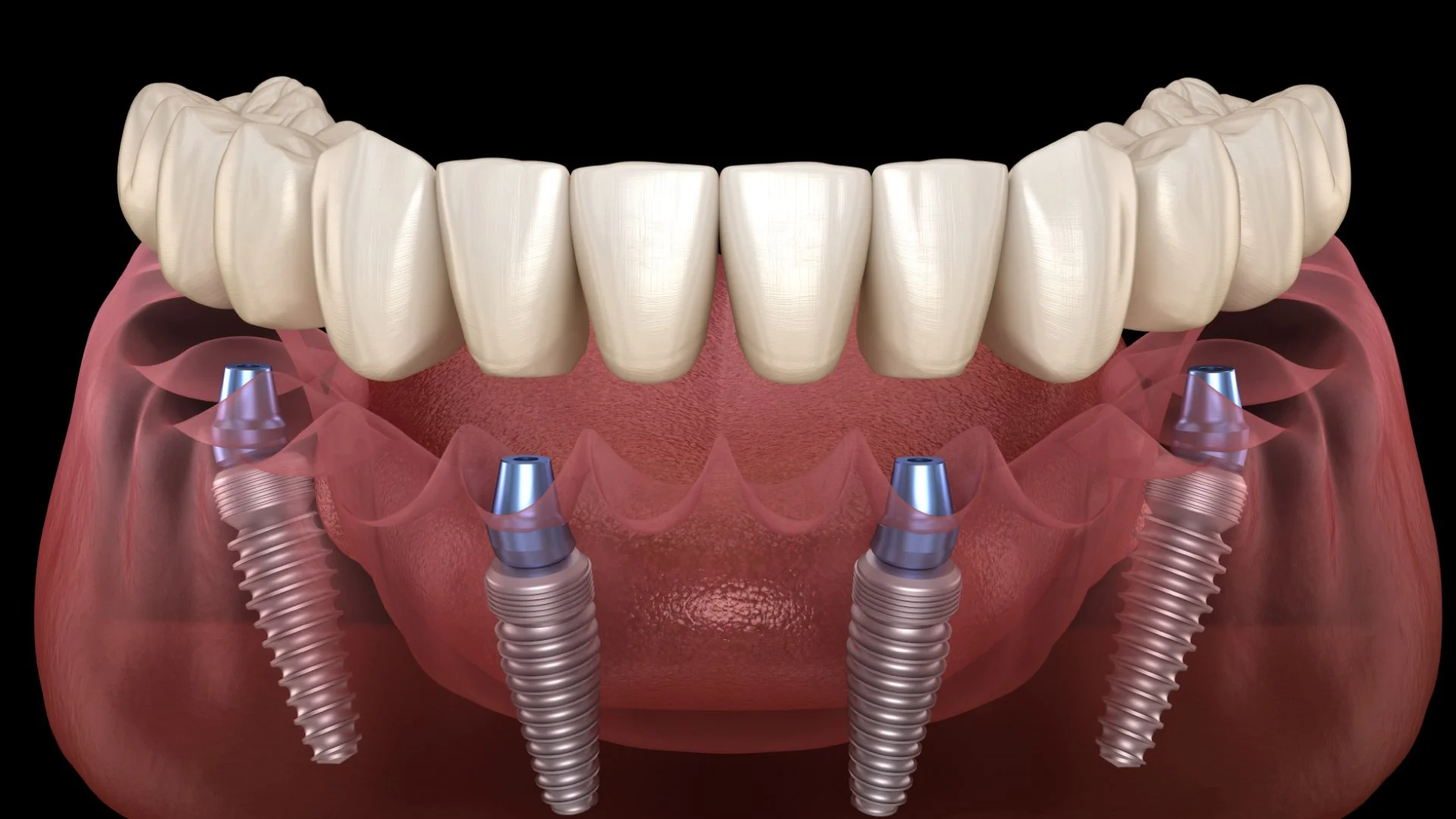
How they work: A small titanium post is surgically placed into your jawbone. Over three to six months, the bone fuses with the implant in a process called osseointegration. Once healed, an abutment and a custom-made crown are attached.

What they feel like: They feel just like natural teeth. They are fixed in place—they do not move, click, or shift. You clean them just like your natural teeth.

Best for: Patients with sufficient bone density, good overall health, and a desire for a permanent solution.

The journey: The process takes several months, requires surgery, and costs more upfront. But for many, the long-term benefits are worth it.

What Are Dentures?

Dentures have been around for centuries, and they remain a popular and effective option.

How they work: A custom-made acrylic plate sits on your gums, held in place by suction, adhesives, or clips on existing teeth. Full dentures replace all teeth on an arch; partial dentures fill gaps between natural teeth.

What they feel like: They sit on your gums and can move slightly during eating or speaking. They require adhesives for stability and need to be removed nightly for cleaning.

Best for: Patients with multiple missing teeth, limited bone density, or budget considerations.

The journey: Dentures are faster to create—usually a few weeks. They are less expensive upfront and do not require surgery.

Comparing the Two

Here is a breakdown of what matters most:

Feel and Function

Implants feel and function like natural teeth. You can eat steak, apples, and corn on the cob without worry. Because they are anchored in bone, they provide stable chewing force.

Dentures sit on the gum surface. They can shift when chewing, which can limit food choices. Many patients avoid sticky, hard, or tough foods.

Winner: Implants.

Bone Health

Implants stimulate your jawbone, just like natural tooth roots. This prevents bone loss and preserves your facial structure, preventing the sunken appearance that can come with tooth loss.

Dentures do not stimulate bone. Over time, the jawbone shrinks where teeth are missing, which can change the shape of your face and cause dentures to become loose.

Winner: Implants.

Maintenance

Implants are brushed and flossed just like natural teeth. No special cleaning solutions, no overnight soaking, no adhesives.

Dentures require daily removal, soaking in cleaning solution, and careful handling. They are delicate and can break if dropped.

Winner: Implants.

Natural Teeth Preservation

Implants stand alone. They do not require altering neighbouring teeth.

Dentures do not alter natural teeth either—but partial dentures use clips or clasps that can put stress on remaining teeth over time.

Winner: Implants.

Speech

Implants do not affect speech—you speak naturally, just like with your original teeth.

Dentures can affect speech. Many patients find certain sounds difficult or notice clicking when they speak. This usually improves with practice, but some adjustment is always needed.

Winner: Implants.

Comfort

Implants are comfortable—they feel like part of you. There is no bulky plastic plate covering your palate.

Dentures can feel bulky, especially in the upper arch where the plate covers the roof of your mouth. Some patients never fully adjust to the feeling.

Winner: Implants.

Cost

Implants are more expensive upfront. A single implant crown ranges from $3,000 to $6,000 in Australia . Full arch solutions cost significantly more.

Dentures are more budget-friendly initially. A full set of upper and lower dentures costs between $2,000 and $5,000 .

Winner: Dentures.

Timeline

Implants take months—often three to six months for healing, sometimes longer if bone grafting is needed.

Dentures take weeks—usually two to four appointments over a few weeks.

Winner: Dentures.

Lifespan

Implants can last 20 years to a lifetime with proper care.

Dentures typically last 5 to 10 years and then need replacement as the jawbone changes shape.

Winner: Implants.

What About Implant-Supported Dentures?

There is a middle ground that many patients do not know about: implant-supported dentures.

This option uses two to four implants to stabilise a removable denture. The denture snaps onto the implants, providing far better stability than traditional dentures—without the cost of individual implants for every missing tooth.

Best for: Patients who want the stability of implants but cannot afford or do not need full implant crowns.

The result: A denture that stays firmly in place, does not require adhesives, and feels more natural—while still being removable for cleaning.

Which Option Is Right for You?

There is no single "right" answer—it depends on your situation. Here are some questions to ask yourself:

Do you want a permanent, fixed solution? Choose implants.
Do you prefer a faster, less expensive option? Choose dentures.
Do you have sufficient jawbone density? Implants may be possible. If not, bone grafting or dentures may be better.
Are you willing to undergo surgery? Choose dentures if you want to avoid surgery.
Do you want to eat all your favourite foods? Choose implants.
Is budget your primary concern? Dentures are more affordable upfront.

The Most Important Step

The best way to decide is to speak with a dentist who can assess your unique situation. We will examine your bone density, oral health, and overall health to make a recommendation tailored to you.

You do not need to have all the answers today—you just need to start the conversation.

Still unsure which option is right for you? Visit https://painfreedentistsydney.com.au/ to book your consultation online. Call us at (02) 9558 8988 or email info@painfreedentistsydney.com.au to speak with our team.

What If I Have Not Been to the Dentist in Years? Where Do I Even Start?

Let us start with a confession: you are not alone.

Millions of adults avoid the dentist for years—sometimes decades. Life gets busy. Fear takes over. Money is tight. Or maybe you just kept telling yourself, "I will go next month," until next month turned into next year, and then into five years.

If that sounds familiar, take a deep breath. You are about to read something that might surprise you: we do not judge.

We genuinely do not care how long it has been. We care about where you are today and where you want to be tomorrow. And we are here to help you get there—at your pace, on your terms.

Why Do People Avoid the Dentist?

The reasons are as varied as the people themselves. Here are the most common ones we hear:

1. Fear and anxiety
Dental anxiety affects a clinically significant portion of the population . Some patients are afraid of pain, needles, or the sounds in a dental office. Others feel a loss of control. Whatever the reason, the fear is real—and we take it seriously.

2. Embarrassment
This is one of the most common—and heartbreaking—reasons patients avoid care. People feel ashamed of their teeth. They worry we will judge them or lecture them. Let us be crystal clear: our job is to help, not to judge. We have seen it all, and we are here to support you.

3. Cost concerns
Dental care can feel expensive, especially when you think it has been building up for years. We understand that. We offer payment plans, membership options, and transparent pricing so you know exactly what to expect.

4. Time
Between work, family, and life, finding time for yourself can feel impossible. We offer flexible appointment times and efficient care to fit your schedule.

5. "My teeth are fine"
Some people genuinely do not think they have problems. But here is the thing: many dental issues are painless until they are advanced. A small cavity does not hurt. Early gum disease does not hurt. By the time you feel pain, the problem is bigger and more expensive to treat.

What Happens at Your First Appointment Back?

Here is the most important thing to know: we go at your pace.

Your first appointment is not about doing everything at once. It is about understanding where you are, building trust, and creating a plan that works for you.

Step 1: A conversation
We will sit down and talk. We want to know about your health history, your concerns, your fears, and your goals. You are in control of what we discuss and what we do next.

Step 2: A gentle examination
We will take a look at your teeth and gums, and we will take X-rays to see what is happening beneath the surface. This helps us understand the full picture—including issues you cannot see or feel.

Step 3: A personalised plan
Based on what we find, we will create a treatment plan that prioritises what matters most—first addressing anything urgent, then planning for long-term health. We will explain every step, every cost, and every option so you can make informed decisions.

Step 4: A clean
If you are ready, we may do a gentle clean to remove plaque and tartar. This is often the first step toward healthier gums and fresher breath.

What Might We Find?

It is natural to wonder what is going on in there. Here are some common findings after a long dental break:

  • Cavities: Even small ones can grow over time. The good news is that most can be treated simply with fillings.

  • Gum disease: Bleeding gums, redness, and swelling are signs of gingivitis—the early stage of gum disease. It is often reversible with professional cleaning and improved home care.

  • Bone loss: If teeth have been missing for years, the jawbone may have shrunk. This can affect your options for replacement, but there are solutions.

  • Worn teeth: Teeth grinding or clenching can wear down enamel and cause sensitivity or pain.

  • Oral cancer signs: We always screen for oral cancer because early detection saves lives.

The Hardest Step Is Walking Through the Door

We hear this from patients all the time: "I should have come sooner. It was not as bad as I thought."

The truth is, the buildup is almost always worse than the appointment itself. The anticipation, the worry, the what-ifs—they create a weight that you carry every day. And the moment you walk through the door, that weight starts to lift.

You deserve to feel good about your smile. You deserve to eat without pain, laugh without covering your mouth, and wake up without that nagging worry in the back of your mind.

What If I Cannot Afford It?

Cost is one of the biggest barriers to care, and we understand that completely.

Here is what we offer:

  • Transparent pricing: We explain costs upfront so there are no surprises.

  • Payment plans: We work with you to spread the cost of treatment over time.

  • Membership plans: For patients without insurance, our in-house membership provides affordable preventive care.

  • Prioritised treatment: We do not do everything at once. We tackle urgent issues first and plan the rest over time.

The most expensive dental care is the care you do not get. A small filling today can prevent a root canal tomorrow. A cleaning today can prevent gum surgery next year. Investing in your health now is always more affordable than waiting.

What Patients Say After Coming Back

We have helped countless patients return to care after years away. Here is what they tell us:

"I was so scared, but everyone was so kind. I wish I had come sooner."

"I thought they would lecture me, but they just helped me."

"I forgot what it felt like to not worry about my teeth."

"The hardest part was walking in. Once I did, it was easy."

Your Next Step

Here is what we want you to remember: we do not care how long it has been. We care about you.

No judgment. No lectures. Just compassionate, gentle care designed to help you feel better and smile more freely.

You have already taken the hardest step by reading this article. The next step is a phone call or a click.

Ready to come back? Visit https://painfreedentistsydney.com.au/ to book your appointment online. Call us at (02) 9558 8988 or email info@painfreedentistsydney.com.au to speak with our friendly team.