Worn Down Teeth From Bruxism: Why Does Teeth Grinding Cause Tooth Wear?

Worn down teeth are a common sign of bruxism, which involves clenching, grinding or forceful jaw muscle activity. While many people associate bruxism simply with stress, the reasons behind tooth grinding can be more complex.

At Pain Free Dentist Sydney, we look beyond the visible tooth wear to understand why the teeth may be wearing down in the first place.

What Is Bruxism?

Bruxism is repeated or sustained activity of the jaw muscles that can involve:

  • Grinding the teeth

  • Clenching the teeth

  • Holding the jaw tightly

  • Repeated tooth contact

  • Jaw muscle activity during sleep

Bruxism can occur while you are awake or asleep.

Over time, repeated forces can cause teeth to become shorter, flatter and more worn.

What Does Bruxism Do to Your Teeth?

When teeth repeatedly come into contact under significant force, the enamel can gradually wear down.

You may notice:

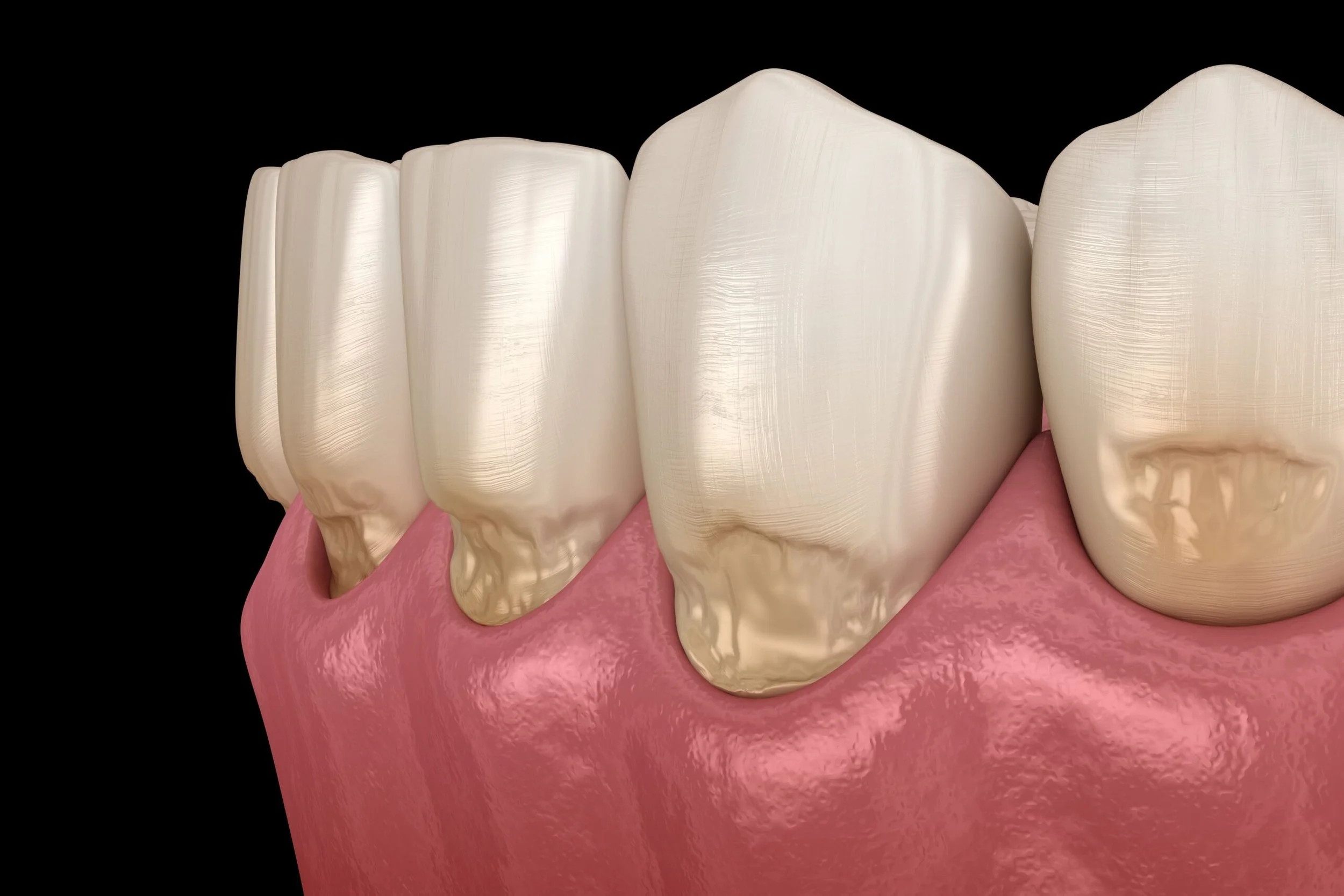
  • Flattened biting surfaces

  • Shorter front teeth

  • Chipped or fractured teeth

  • Cracks in teeth

  • Increased sensitivity

  • Worn-down cusps on back teeth

  • Changes in the appearance of your smile

  • Increased pressure on fillings, crowns or other dental work

In more advanced cases, significant tooth structure can be lost.

Why Does Bruxism Happen?

There is no single reason why everyone grinds or clenches their teeth.

Bruxism is considered a complex condition involving several possible factors.

1. Sleep-related factors

Sleep bruxism is associated with activity in the central nervous system and can occur around brief arousals during sleep.

Importantly, this means that simply telling someone to "stop grinding" may not address the underlying reason for their nighttime jaw activity.

Sleep disorders can also be relevant. Sleep-disordered breathing, including obstructive sleep apnoea, has been associated with sleep bruxism in some patients.

2. Stress and emotional factors

Stress, anxiety and emotional tension can contribute to increased jaw muscle activity, particularly during waking hours.

Some people unconsciously clench their teeth when concentrating, working, driving or feeling stressed.

However, stress is not necessarily the only explanation for sleep bruxism.

3. Airway and breathing factors

Breathing during sleep can be an important consideration when assessing significant nighttime bruxism.

People with snoring or obstructive sleep apnoea may experience repeated arousals and changes in jaw and tongue muscle activity during sleep.

This does not mean that airway problems are the cause of every case of bruxism. However, when severe tooth wear occurs alongside snoring, poor sleep, mouth breathing or other sleep symptoms, it may be appropriate to investigate further.

4. Dental and jaw factors

The way the teeth come together and the condition of the jaw and chewing muscles can also influence symptoms.

Missing teeth, heavily worn teeth, changes in the bite or reduced posterior tooth support may affect how forces are distributed.

However, it is important to understand that a particular "bad bite" should not automatically be assumed to be the cause of bruxism.

Bruxism is multifactorial, and the relationship between tooth contact and grinding is more complicated than simply having teeth that are "out of alignment."

Why Do Teeth Become Shorter?

Healthy enamel is extremely hard, but it is not indestructible.

Imagine repeatedly rubbing two hard surfaces together thousands of times. Over years, even small amounts of wear can accumulate.

With bruxism, repeated tooth contact can gradually flatten the natural anatomy of the teeth.

For example, front teeth may become noticeably shorter, while the cusps of the back teeth may become flattened.

As the teeth continue to wear, the underlying dentine may become exposed. This can contribute to sensitivity and can make the teeth more vulnerable to further wear.

Is Tooth Wear Always Caused by Bruxism?

No.

This is an important distinction.

Teeth can become worn for several different reasons, including:

  • Bruxism

  • Acid erosion

  • Abrasion

  • Tooth-to-tooth wear

  • Certain dietary habits

  • Acid reflux

  • Some medical conditions

  • Age-related changes

Sometimes several factors occur together.

For example, acid erosion can soften enamel, potentially making teeth more vulnerable to mechanical wear.

This is why identifying the pattern and cause of tooth wear is important before deciding on treatment.

What Happens If Worn Teeth Are Left Untreated?

Not every worn tooth requires immediate restorative treatment.

However, progressive tooth wear can eventually result in:

  • Sensitivity

  • Further loss of enamel

  • Dentine exposure

  • Chipping or fractures

  • Changes in the bite

  • Difficulty chewing

  • Aesthetic concerns

  • More complicated restorative treatment in the future

Early assessment can help determine whether the wear is stable or continuing to progress.

Can Worn Teeth Be Repaired?

Depending on the amount of tooth structure remaining, treatment may include monitoring, preventive measures, a night splint, composite restorations or other restorative options.

The appropriate treatment depends on the individual patient.

One important consideration is that simply rebuilding worn teeth without addressing ongoing excessive forces may not provide a long-term solution.

For some patients, treatment may therefore involve managing bruxism and protecting the teeth before or alongside restorative dentistry.

What About a Splint?

A dental splint or occlusal appliance may be recommended for some patients with bruxism.

A splint can provide a protective surface between the teeth and may help manage the forces placed on the teeth and dental restorations.

However, splints are not a cure for the underlying causes of bruxism.

The design of the appliance should be appropriate for the patient's teeth, jaw, symptoms and clinical circumstances.

Why We Look Beyond the Teeth

At Pain Free Dentist Sydney, we believe that significant tooth wear deserves more than simply asking, "How can we rebuild these teeth?"

We also want to understand:

Why are these teeth wearing down?

That may involve considering the patient's:

  • Bruxism and clenching patterns

  • Jaw muscles and TMJs

  • Sleep quality

  • Snoring or suspected sleep-disordered breathing

  • Tongue function and oral posture

  • Breathing habits

  • Existing tooth wear

  • Bite and dental history

  • Previous dental treatment

Not every patient will have the same contributing factors, and not every patient requires the same treatment.

Protecting Your Teeth From Further Wear

If you notice that your teeth are becoming shorter or flatter, don't wait until significant tooth structure has been lost.

An assessment can determine the pattern and severity of the wear and whether it appears to be active.

Depending on the findings, your dentist may recommend monitoring, preventive measures, a protective splint or restorative treatment.

Worn Down Teeth and Bruxism Treatment in Sydney

If you are concerned about worn teeth, teeth grinding, clenching, jaw pain or changes in your bite, contact Pain Free Dentist Sydney for an assessment.

Phone: 02 9558 8988
Email: info@painfreedentistsydney.com.au
Website: painfreedentistsydney.com.au
Hurlstone Park, Sydney

Sleep Apnoea, TMJ and Tongue-Tie: Understanding the Connection

Sleep apnoea, TMJ problems and tongue-tie are often discussed separately, but there can be overlapping factors involving the tongue, jaw, airway, breathing and sleep.

At Pain Free Dentist Sydney, we assess these areas together when appropriate because problems involving oral function and jaw position may be relevant to a patient's symptoms.

What Is Sleep Apnoea?

Sleep apnoea is a sleep-related breathing disorder where breathing repeatedly becomes reduced or stops during sleep.

The most common type is obstructive sleep apnoea (OSA). It occurs when the upper airway becomes partially or completely blocked during sleep.

Common symptoms include:

  • Loud snoring

  • Gasping or choking during sleep

  • Waking frequently

  • Morning headaches

  • Dry mouth

  • Daytime tiredness

  • Difficulty concentrating

  • Poor-quality sleep

Not everyone who snores has sleep apnoea, and symptoms should be properly assessed by a qualified healthcare professional.

What Is TMJ Dysfunction?

The temporomandibular joints (TMJs) connect your lower jaw to your skull and allow movements such as opening, closing and chewing.

TMJ disorders can involve the jaw joints, chewing muscles or both.

Symptoms may include:

  • Jaw pain or tenderness

  • Clicking or popping

  • Difficulty opening the mouth

  • Facial pain

  • Headaches

  • Ear-related symptoms

  • Tooth wear

  • Clenching or grinding

Sleep-related teeth grinding and jaw muscle activity can also occur alongside sleep disorders.

What Is Tongue-Tie?

Tongue-tie, or ankyloglossia, occurs when the tissue connecting the underside of the tongue to the floor of the mouth restricts tongue movement.

The clinical significance of tongue-tie varies considerably between individuals.

Some people have a restricted lingual frenulum but no significant functional problems. Others may experience difficulties with tongue mobility or oral function.

Importantly, having a tongue-tie does not automatically mean that a frenectomy is required.

A proper assessment should consider tongue movement, function, symptoms and other contributing factors.

How Could Tongue Function Relate to Sleep and the Airway?

The tongue is an important structure involved in swallowing, oral posture and maintaining the upper airway.

During sleep, muscle tone decreases. In susceptible individuals, the tongue and surrounding soft tissues can contribute to narrowing of the upper airway.

Tongue posture and oral function may therefore be relevant when assessing someone with symptoms associated with sleep-disordered breathing.

However, tongue-tie itself should not be considered a proven direct cause of obstructive sleep apnoea.

Sleep apnoea is a complex condition involving multiple anatomical and physiological factors.

What Is the Connection Between TMJ and Sleep Apnoea?

There can be an association between sleep-disordered breathing and jaw-related symptoms.

For example, a person with sleep-disordered breathing may experience increased muscle activity, clenching or grinding during sleep. This can place additional stress on the chewing muscles and temporomandibular joints.

Conversely, jaw anatomy and the position of the lower jaw can influence the dimensions of the upper airway.

This is why an assessment of someone with both TMJ symptoms and suspected sleep-disordered breathing may need to consider more than the teeth and jaw joints alone.

Where Does Tongue-Tie Fit In?

This is where the relationship becomes more complex.

A restricted tongue may affect how the tongue moves or rests. In some patients, this may be associated with altered oral function or compensatory muscle activity.

However, there is not enough evidence to say that tongue-tie directly causes TMJ disorders or sleep apnoea in every patient.

Similarly, releasing a tongue-tie should not automatically be presented as a treatment or cure for sleep apnoea or TMJ dysfunction.

The important question is whether the restriction is actually causing a clinically significant functional problem for that individual.

A Whole-Person Approach to TMJ and Airway Assessment

At Pain Free Dentist Sydney, we look at the relationship between different structures and functions when assessing appropriate patients.

Depending on the individual case, this may include assessment of:

  • Tongue mobility and function

  • Tongue resting posture

  • Palate and dental arch development

  • Jaw position

  • TMJ and chewing muscles

  • Tooth wear and clenching

  • Nasal and oral breathing

  • Sleep symptoms

  • Previous sleep studies

  • Relevant medical history

Where sleep apnoea is suspected, a formal sleep assessment is important. Dental assessment should complement, rather than replace, medical and sleep-medicine evaluation.

Does Everyone With TMJ Need a Tongue-Tie Release?

No.

A frenectomy or frenuloplasty should not be recommended simply because a patient has a visible frenulum.

The decision should be based on an appropriate clinical assessment of tongue function, symptoms and the individual's overall situation.

In some patients, improving tongue awareness, posture and function may be considered before surgery.

Can Treating TMJ Improve Sleep Apnoea?

It is important not to make a blanket claim that TMJ treatment will treat or cure sleep apnoea.

Treatment depends on the underlying cause of the patient's sleep-disordered breathing.

For some patients, oral appliance therapy may be considered as part of sleep apnoea management. This is different from treating TMJ dysfunction itself and should be planned according to the patient's diagnosis and dental and medical circumstances.

When Should You Consider an Assessment?

If you experience a combination of:

  • TMJ pain or jaw clicking

  • Teeth grinding or clenching

  • Snoring

  • Poor-quality sleep

  • Morning headaches

  • Daytime fatigue

  • Mouth breathing

  • Difficulty maintaining nasal breathing

  • Suspected tongue restriction

  • A narrow or high-arched palate

it may be worthwhile discussing these symptoms with an appropriately qualified dentist and healthcare professional.

A sleep study may be recommended when obstructive sleep apnoea is suspected.

The Connection Between the Tongue, Jaw and Airway

The tongue, jaw and upper airway are anatomically and functionally connected. Problems affecting one area can sometimes coexist with symptoms involving another.

However, association does not necessarily mean causation.

A thorough assessment is important before deciding whether the main issue relates to sleep-disordered breathing, TMJ dysfunction, tongue restriction, nasal obstruction, dental factors or a combination of these.

At Pain Free Dentist Sydney, our approach is to assess the individual rather than assume that one diagnosis explains every symptom.

Book a TMJ and Airway Assessment in Sydney

If you are experiencing TMJ symptoms, suspected sleep apnoea, tongue restriction or problems with oral function, contact Pain Free Dentist Sydney to discuss an assessment.

Phone: 02 9558 8988
Email: info@painfreedentistsydney.com.au
Website: painfreedentistsydney.com.au
Location: G1A / Suite 1A, 570 New Canterbury Rd, Hurlstone Park NSW 2193

Cold Sore Treatment in Sydney: How Gemini EVO Laser May Help

Cold sores can be painful, uncomfortable and frustrating, particularly when they appear before an important event. At Pain Free Dentist Sydney, we offer low-level laser therapy using the Gemini EVO laser as a supportive treatment option for suitable patients experiencing cold sores.

In this article, we explain what causes cold sores, how laser therapy may help, and when you should seek professional advice.

What Is a Cold Sore?

A cold sore, also known as herpes labialis, is a small, fluid-filled blister that commonly develops on or around the lips. It is usually caused by the herpes simplex virus type 1 (HSV-1).

Cold sores often begin with warning symptoms such as:

  • Tingling or burning

  • Itching

  • Sensitivity around the lip

  • Redness or irritation

A blister may then develop, break and form a crust as it heals. Most cold sores improve within approximately 7 to 10 days, although healing time can vary between individuals.

Once a person has been infected with HSV-1, the virus remains in the body and can reactivate from time to time. Common triggers can include stress, illness, tiredness, sun exposure and local irritation.

How Can Gemini EVO Laser Help With Cold Sores?

The Gemini EVO laser is a modern dental laser system that can be used for selected soft-tissue applications.

At Pain Free Dentist Sydney, low-level laser therapy, also known as photobiomodulation, may be used as a supportive treatment for suitable cold sore cases.

Photobiomodulation uses controlled light energy to interact with the body's tissues. Unlike a surgical laser, low-level laser therapy does not cut or remove the tissue.

Depending on the individual situation, laser therapy may help:

  • Reduce discomfort and tenderness

  • Support the body's natural healing response

  • Reduce inflammation

  • Support tissue repair

  • Potentially shorten the duration of symptoms

The goal is to make the cold sore episode more comfortable and support the body's natural healing process.

Can Laser Treatment Make a Cold Sore Heal Faster?

Research into low-level laser therapy for herpes labialis is promising, although more high-quality research is still needed.

Clinical studies have reported that low-level laser therapy may reduce pain and healing time in people with cold sores. However, results can vary between studies, and laser treatment should not be considered a guaranteed cure.

For this reason, we describe Gemini EVO laser treatment as a supportive therapy rather than a replacement for proven medical treatments such as antiviral medication when these are clinically indicated.

Does Gemini EVO Laser Cure Cold Sores?

No. Cold sores are caused by the herpes simplex virus, and laser therapy does not remove HSV-1 from the body.

The purpose of laser treatment is to help manage symptoms and support healing during an outbreak.

For people who experience frequent or severe cold sores, a doctor may recommend antiviral medication such as aciclovir or valaciclovir. These medications can be particularly helpful when started early, sometimes during the initial tingling stage.

Laser therapy may be considered alongside other treatments where appropriate.

Why Early Treatment May Be Important

Many people who experience recurrent cold sores recognise the early warning signs.

You may notice:

  • Tingling

  • Burning

  • Itching

  • Mild swelling

  • Increased sensitivity around the lip

This stage can occur before the blister becomes visible.

If you recognise these symptoms, seeking professional advice early may be beneficial. Early antiviral treatment can be particularly important for some patients, while laser therapy may be considered as supportive treatment.

What Happens During Cold Sore Laser Treatment?

If you are suitable for treatment, the process is generally simple and gentle.

First, the dentist will assess the affected area and discuss your symptoms. This is important because not every lesion around the lips is a cold sore.

If the lesion appears suitable for treatment, the Gemini EVO laser can be applied to the affected area using an appropriate low-level laser therapy protocol.

The treatment is non-invasive and does not involve cutting or removing the cold sore.

After treatment, you will receive advice about caring for the affected area and whether further treatment or medical assessment is recommended.

The appropriate laser settings and treatment frequency depend on the individual patient and clinical assessment.

How Can You Reduce Cold Sore Outbreaks?

Although cold sores cannot always be prevented, some people find that avoiding known triggers can reduce outbreaks.

Helpful measures may include:

  • Avoid touching or picking the cold sore

  • Wash your hands after touching the affected area

  • Avoid kissing or oral contact while the cold sore is active

  • Avoid sharing cups, utensils or lip products during an outbreak

  • Use lip sunscreen if sunlight triggers your cold sores

  • Manage stress and get adequate rest

  • Speak with your doctor if you experience frequent outbreaks

It is also important to avoid touching your eyes after touching a cold sore, as HSV can potentially infect the eye.

When Should You See a Dentist or Doctor?

You should seek professional advice if:

  • Your cold sore is unusually painful or extensive

  • It is not healing as expected

  • You experience frequent outbreaks

  • The sore is close to your eye

  • You are unsure whether the lesion is actually a cold sore

  • You have a weakened immune system

  • You develop sores inside your mouth that are unusual for you

An accurate diagnosis is important because other conditions can sometimes look similar to cold sores.

Cold Sore Laser Treatment in Sydney

At Pain Free Dentist Sydney, we use modern dental technology, including the Gemini EVO laser, to provide gentle and patient-focused treatment where clinically appropriate.

We understand that cold sores can be uncomfortable and inconvenient. Our aim is to assess your condition carefully, explain your treatment options clearly and provide appropriate supportive care.

If you are experiencing a cold sore and would like to know whether Gemini EVO laser treatment may be suitable for you, contact Pain Free Dentist Sydney.

Phone: 02 9558 8988
Email: info@painfreedentistsydney.com.au
Website: painfreedentistsydney.com.au
Location: G1A / Suite 1A, 570 New Canterbury Rd, Hurlstone Park NSW 2193

Frequently Asked Questions

Can Gemini EVO laser stop a cold sore from developing?

There is currently limited evidence that laser treatment can reliably prevent a cold sore from developing or prevent future outbreaks. It is better considered a supportive treatment rather than a guaranteed preventive treatment.

Is laser treatment for cold sores painful?

Low-level laser therapy is generally gentle and non-invasive. However, a cold sore can be sensitive, so the experience may vary depending on the individual and the stage of the outbreak.

Can I use antiviral medication and have laser treatment?

Laser therapy may be considered alongside other treatments, but you should always tell your dentist about any medications you are taking. Your dentist or doctor can advise whether combined treatment is appropriate for you.

When should I have cold sore laser treatment?

If you experience recurrent cold sores, it may be helpful to seek advice as soon as you notice the early signs such as tingling or burning. Your dentist or doctor can discuss whether laser therapy, antiviral medication or another approach is appropriate.

Does Gemini EVO laser remove the cold sore?

No. The laser does not physically remove the cold sore. Low-level laser therapy is intended to support healing and help manage symptoms during an outbreak.