
Gemini EVO Laser Dentistry: Advanced Dental Laser Technology for Tongue Tie, Gum Treatment and TMJ Care

Could modern laser technology make certain dental treatments more precise and comfortable?

Dental technology continues to evolve, giving dentists more options for treating oral soft tissues and managing selected dental conditions. One example is the Gemini EVO dental laser, a dual-wavelength diode laser designed for soft-tissue procedures and photobiomodulation therapy.

At Pain Free Dentist Sydney, we are interested in how different technologies may support individual treatment needs, including adult tongue tie, gum health and selected TMJ-related concerns.

But what exactly is the Gemini EVO laser, how does it work, and when might it be useful?

What Is the Gemini EVO Dental Laser?

The Gemini EVO is a dental diode laser developed by Ultradent Products. It combines two wavelengths, 810 nm and 980 nm, to provide different modes of interaction with oral tissues.

The device delivers up to 100 watts of peak super-pulsed power and has settings for a range of soft-tissue procedures. It also includes photobiomodulation (PBM) adapters for selected applications.

Unlike a dental drill used to remove hard tooth structure, the Gemini EVO is designed primarily for soft-tissue applications. Depending on the procedure, it may be used to cut, remove or coagulate tissue, or deliver light energy for photobiomodulation.

The appropriate settings and treatment approach depend on the clinical indication, the patient's circumstances and the dentist's training.

What Dental Treatments Can the Gemini EVO Laser Be Used For?

The Gemini EVO has several applications in dentistry, including the following.

1. Adult and Baby Tongue Tie Release

A tongue tie occurs when the tissue connecting the underside of the tongue to the floor of the mouth restricts tongue movement.

In selected cases, a procedure called a frenectomy or frenotomy may be recommended to release restrictive tissue. The Gemini EVO is designed for these types of soft-tissue procedures.

Potential advantages of laser-assisted treatment include controlled tissue removal and coagulation during the procedure. However, outcomes depend on the individual case, technique and aftercare.

Not every tongue tie requires surgery. An assessment should consider tongue mobility, functional difficulties and whether releasing the tissue is likely to address the patient's concerns.

2. Gum Treatment and Soft-Tissue Contouring

Dental lasers can be used for selected gum procedures, including gingivectomy, gingivoplasty and the removal of excess or diseased soft tissue.

Depending on the clinical situation, laser treatment may help the dentist manage bleeding while working on the soft tissues.

The choice between laser treatment and conventional techniques depends on the diagnosis, the area being treated and the intended result.

3. Treatment Around Dental Implants

In selected cases, a dental laser may be used to expose an implant during a later stage of treatment or manage specific soft-tissue concerns around dental implants.

The technique must be selected carefully to protect the implant and surrounding structures. Laser treatment is not a substitute for diagnosing and managing the underlying cause of implant-related inflammation.

4. Selected Oral Soft-Tissue Conditions

The Gemini EVO is designed for several additional applications, including the removal of certain oral soft-tissue lesions and the treatment of selected oral ulcers.

Any persistent, unusual or unexplained oral lesion should be properly assessed. A laser procedure should not replace appropriate investigation or biopsy when indicated.

What Is Photobiomodulation Therapy (PBM)?

One feature of the Gemini EVO is its ability to deliver photobiomodulation therapy, often called PBM or low-level light therapy.

PBM uses specific wavelengths of light at appropriate treatment parameters to influence biological processes in tissues. Unlike laser surgery, the objective is not to cut or remove tissue.

Depending on the condition and protocol, PBM is being investigated and used clinically for applications such as temporary pain relief and supporting tissue recovery.

The Gemini EVO includes three PBM adapters designed for different treatment areas:

  • 3 mm adapter: For small, targeted areas.

  • 7 mm adapter: For localised areas, including selected oral lesions.

  • 25 mm adapter: For larger treatment areas, including the region around the temporomandibular joint (TMJ).

The correct adapter, energy settings and treatment duration depend on the intended application.

Although PBM may be beneficial in selected situations, results vary. It should not be presented as a guaranteed treatment for pain, inflammation or tissue healing.

Can the Gemini EVO Laser Help With TMJ Pain?

The temporomandibular joints connect the lower jaw to the skull. Problems involving these joints, the surrounding muscles or related structures can contribute to jaw pain, tenderness, headaches and difficulty chewing.

Photobiomodulation is one approach that may be considered as part of a broader treatment plan for selected patients with temporomandibular disorders.

The intended aim may be temporary relief of muscle or joint discomfort. However, research findings vary according to the condition being treated, the laser parameters and the treatment protocol. PBM does not correct every underlying cause of TMJ symptoms.

At Pain Free Dentist Sydney, we believe jaw pain should be assessed individually. Depending on the findings, care may involve addressing contributing dental factors, clenching or grinding, muscle function and other relevant concerns.

Where appropriate, PBM may be considered as an adjunct to other treatment rather than a replacement for a comprehensive assessment.

Is Laser Dentistry Less Painful Than Traditional Treatment?

One of the reasons patients ask about dental lasers is the possibility of a more comfortable treatment experience.

Laser procedures may offer benefits in selected circumstances, including coagulation and controlled soft-tissue treatment. However, comfort depends on the procedure, the patient's sensitivity, the area being treated and the technique used.

Some procedures may still require local anaesthesia. Laser treatment can also cause post-operative discomfort, swelling or other complications.

It is therefore important to discuss the expected benefits, limitations, alternatives and aftercare before deciding whether laser-assisted treatment is suitable.

Is the Gemini EVO Laser Suitable for Everyone?

No. Laser dentistry is not appropriate for every patient or every dental condition.

Before recommending treatment, a dentist should assess the patient's medical and dental history, the problem being treated and any relevant risks. The clinician must also be appropriately trained in the use of the equipment and follow applicable laser safety procedures.

For example, a patient with restricted tongue movement may benefit from a tongue tie assessment, but the decision to perform a release should be based on functional findings rather than the availability of laser technology alone.

Similarly, a patient with jaw pain may require a comprehensive TMJ assessment before PBM is considered.

Gemini EVO Laser Dentistry at Pain Free Dentist Sydney

At Pain Free Dentist Sydney, we take an individualised approach to dental care. We consider the patient's symptoms, clinical findings and treatment goals when discussing appropriate options.

Depending on the circumstances, laser technology may form part of treatment for selected soft-tissue conditions or as an adjunct to managing certain pain-related concerns.

Our aim is to explain the available options clearly, discuss realistic expectations and recommend treatment based on clinical need.

If you have concerns about tongue restriction, gum health or TMJ-related discomfort, we invite you to discuss your symptoms with our team.

Book a Consultation in Sydney's Inner West

To learn more about whether laser-assisted dental treatment may be appropriate for your needs, contact Pain Free Dentist Sydney.

Pain Free Dentist Sydney

Address: Suite 1A, 570 New Canterbury Road, Hurlstone Park NSW 2193

Phone: 02 9558 8988

Website: https://painfreedentistsydney.com.au

Disclaimer: This article is for general educational purposes only. The suitability and effectiveness of laser treatment vary according to the condition and individual circumstances. A clinical assessment is required to determine appropriate treatment.

Adult Tongue Tie: Symptoms, Treatment and Its Connection to Jaw Pain and Sleep

Have you ever wondered whether a restricted tongue could be affecting more than just your speech? For some adults, a tongue tie may contribute to difficulties with tongue movement, oral function and certain everyday activities. Depending on the individual, it may also be worth assessing alongside concerns such as mouth breathing, jaw discomfort or sleep-related breathing problems.

At Pain Free Dentist Sydney, we take a whole-person approach to oral health, considering how the tongue, teeth, jaw and surrounding muscles work together.

What Is an Adult Tongue Tie?

An adult tongue tie, also known as ankyloglossia, occurs when the lingual frenulum, the tissue connecting the underside of the tongue to the floor of the mouth, restricts tongue movement.

While some people have a lingual frenulum that causes no functional problems, others experience significant restriction. Tongue tie can persist into adulthood, even if it was never diagnosed during childhood.

Importantly, a tongue tie is not determined by appearance alone. The key consideration is whether the restriction affects tongue function and causes meaningful difficulties.

Common Signs and Symptoms of Adult Tongue Tie

The symptoms of adult tongue tie vary from person to person. Possible signs include:

  • Difficulty lifting the tongue towards the roof of the mouth

  • Inability to comfortably extend the tongue beyond the lower front teeth or upper lip

  • Difficulty moving the tongue from side to side

  • Tension or discomfort beneath the tongue

  • Challenges with certain speech sounds

  • Difficulty clearing food from the teeth or maintaining oral cleanliness

  • Difficulty maintaining a comfortable tongue posture

  • Compensatory movements involving the jaw, lips or facial muscles

Some adults may also report jaw tension, headaches or difficulty with certain oral functions. However, these symptoms can have multiple causes, and a tongue tie should not automatically be assumed to be responsible.

If you recognise several of these signs, a functional assessment may help determine whether tongue restriction is contributing to your concerns.

Can Adult Tongue Tie Affect Jaw Function or TMJ Symptoms?

The tongue plays an important role in oral function, swallowing and the coordination of muscles around the mouth and jaw.

When tongue movement is restricted, some people develop compensatory movement patterns to perform everyday tasks. In certain cases, these patterns may be relevant when assessing jaw muscle discomfort or temporomandibular joint (TMJ) symptoms.

However, the relationship between tongue tie and TMJ disorders is complex. Current evidence does not establish that tongue tie directly causes TMJ pain in every affected person.

A comprehensive assessment should therefore consider other potential contributors, including clenching, grinding, dental factors, muscle tension, joint function and neck-related issues.

At Pain Free Dentist Sydney, we consider the individual’s symptoms and functional findings rather than focusing on a single structure in isolation.

Is There a Connection Between Adult Tongue Tie and Sleep Apnoea?

Sleep-disordered breathing, including obstructive sleep apnoea (OSA), is another area of interest when evaluating tongue function and oral anatomy.

During sleep, the muscles of the upper airway relax. In people with obstructive sleep apnoea, the airway repeatedly becomes narrowed or blocked, disrupting normal breathing and sleep.

Tongue posture, oral anatomy, jaw position, nasal obstruction and other anatomical or physiological factors may all be relevant to airway assessment.

Some adults with restricted tongue movement also report mouth breathing, snoring or unrefreshing sleep. However, these symptoms do not prove that a tongue tie is causing an airway problem, and research has not established that releasing an adult tongue tie alone reliably treats obstructive sleep apnoea.

If you experience loud snoring, witnessed pauses in breathing, gasping during sleep or persistent daytime tiredness, appropriate medical assessment and sleep testing are important.

Where indicated, dental and airway assessments may form part of a broader, multidisciplinary approach to understanding your symptoms.

How Is Adult Tongue Tie Diagnosed?

A proper assessment involves more than simply looking at the tissue beneath the tongue.

Depending on your concerns, an assessment may consider:

1. Tongue mobility

How far and how comfortably can you lift, extend and move your tongue in different directions?

2. Tongue posture and oral function

Can you comfortably position your tongue against the palate? Are there compensatory movements or functional limitations?

3. Jaw and muscle function

Are there signs of jaw restriction, muscle tenderness or other concerns that warrant further investigation?

4. Breathing and sleep history

Do you experience mouth breathing, snoring, suspected sleep apnoea or other symptoms that require additional assessment?

5. Your overall clinical history

Previous treatment, dental anatomy, oral habits and other contributing factors may influence the recommendations.

Not everyone with a visible tongue tie requires treatment. The decision should be based on symptoms, functional limitations, clinical findings and realistic treatment goals.

Adult Tongue Tie Treatment: Is a Frenectomy Necessary?

When a tongue tie causes clinically significant functional restriction, a procedure called a frenectomy or frenotomy may be considered.

These procedures involve releasing the restrictive tissue beneath the tongue. The appropriate technique depends on the individual’s anatomy, clinical findings and treatment needs.

Potential benefits may include improved tongue mobility and relief of specific functional difficulties when the restriction is genuinely contributing to them. Outcomes vary, and improvement in jaw pain, breathing or sleep should not be guaranteed.

Treatment may involve:

  • Assessment and diagnosis: Identifying the functional restriction and discussing appropriate treatment options.

  • Frenulum release, when indicated: Releasing tissue that is demonstrably restricting function.

  • Post-procedure rehabilitation: Individualised exercises or guidance may be recommended to support functional recovery.

  • Follow-up care: Monitoring healing, mobility and progress towards the agreed goals.

A tongue tie release is not a one-size-fits-all solution. Surgery may not resolve symptoms caused by other conditions, and exercises alone or other conservative approaches may be appropriate in some cases.

Why Choose a Comprehensive Assessment?

Tongue function does not exist in isolation. Depending on your symptoms, it may be useful to consider tongue mobility alongside jaw function, dental health, oral habits and breathing concerns.

At Pain Free Dentist Sydney, we aim to understand the individual concerns that bring each patient to our clinic and explain the available options clearly. Where necessary, we may recommend collaboration with other healthcare professionals, particularly when sleep-disordered breathing or other medical concerns require further investigation.

Our approach focuses on identifying relevant contributing factors and developing an appropriate plan rather than recommending the same treatment for everyone.

Frequently Asked Questions About Adult Tongue Tie

Can adults have their tongue tie released?

Yes. Adults can undergo tongue tie release when a clinically significant restriction is affecting function and treatment is considered appropriate following assessment.

Can adult tongue tie cause jaw pain?

A restricted tongue may be relevant to oral and muscular function in some individuals, but there is insufficient evidence to conclude that tongue tie directly causes TMJ disorders in every case. Other causes of jaw pain should also be assessed.

Can releasing a tongue tie cure sleep apnoea?

No reliable evidence establishes tongue tie release as a stand-alone cure for obstructive sleep apnoea. Suspected sleep apnoea requires appropriate medical assessment and management.

Will I need exercises after a tongue tie release?

Your clinician may recommend individualised exercises or rehabilitation, depending on your functional needs and the procedure performed. Follow-up instructions should be tailored to your circumstances.

How do I know whether I need adult tongue tie treatment?

If you have difficulty moving your tongue, persistent functional concerns or questions about your tongue mobility, arrange an assessment with an appropriately qualified clinician. Treatment should be based on your symptoms and clinical findings rather than the appearance of the frenulum alone.

Book an Adult Tongue Tie Assessment in Sydney

If you suspect that a restricted tongue may be affecting your oral function, jaw comfort or quality of life, the first step is to understand what is happening and whether treatment may be beneficial.

Pain Free Dentist Sydney provides individualised dental assessments in Sydney’s Inner West, with consideration of tongue function, jaw health and related concerns where clinically appropriate.

Contact Pain Free Dentist Sydney to discuss an adult tongue tie assessment.

📍 Suite 1A, 570 New Canterbury Road, Hurlstone Park NSW 2193

📞 Phone: 02 9558 8988

🌐 Website: https://painfreedentistsydney.com.au

Disclaimer: This article provides general information and is not a substitute for an individual clinical assessment or medical advice.

All-on-4 vs All-on-6 Dental Implants: Which Full-Mouth Tooth Replacement Is Right for You?

Are you missing most or all of your teeth? Do you struggle with loose dentures, difficulty chewing or feeling confident when you smile? Modern dental implant treatments may offer a more stable alternative to conventional removable dentures.

All-on-4 and All-on-6 dental implants are treatment approaches designed to replace a full arch of missing teeth using a fixed prosthesis supported by dental implants. Both options can restore chewing function and improve the appearance of your smile, but the most suitable approach depends on your oral health, bone structure and individual treatment needs.

At Pain Free Dentist Sydney in Dulwich Hill, we help patients understand their full-arch dental implant options so they can make informed decisions about their oral health.

What Are All-on-4 Dental Implants?

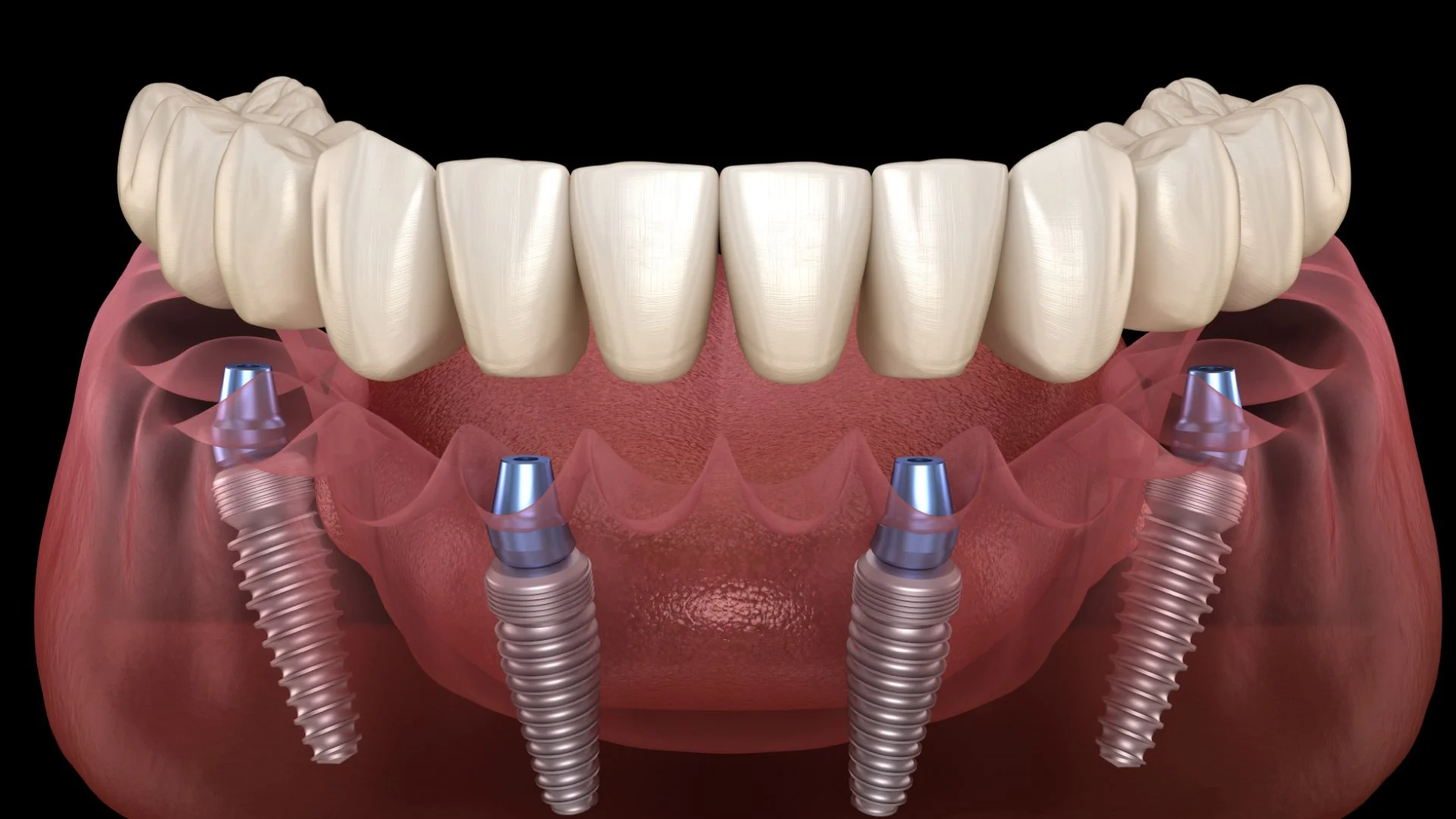
All-on-4 is a full-arch tooth replacement technique that typically uses four dental implants to support a fixed set of replacement teeth.

The implants are positioned strategically within the jawbone. In appropriate cases, angled placement of some implants can help make use of available bone and reduce the need for additional grafting procedures.

Potential benefits include:

  • Replacing an entire arch of missing or failing teeth

  • Providing a fixed alternative to removable dentures

  • Improving chewing ability and smile appearance

  • Using fewer implants to support a full-arch prosthesis

  • Potentially reducing the need for bone grafting in selected cases

Some patients may be suitable for temporary fixed teeth on the day of surgery or soon afterwards. However, immediate loading is not appropriate for everyone and depends on factors such as implant stability, bone quality and the treatment plan.

What Are All-on-6 Dental Implants?

All-on-6 is a full-arch restoration approach that uses six dental implants to support a fixed prosthesis.

The additional implants may provide more support and distribute chewing forces across more implant sites. This can be beneficial in selected patients, depending on the anatomy of the jaw, bite forces and the design of the replacement teeth.

Potential benefits include:

  • Additional implant support for a full arch

  • More opportunities to distribute functional forces

  • Flexibility in planning the restoration for certain anatomical situations

  • A fixed replacement for missing or severely compromised teeth

However, more implants do not automatically mean a better outcome. The ideal number and position of implants should be determined through a comprehensive clinical assessment.

All-on-4 vs All-on-6: What Is the Difference?

The main difference is the number of implants supporting the full-arch prosthesis. Other factors, including implant positioning, bone quality, prosthesis design and bite forces, are equally important.

All-on-4 may be considered when four strategically positioned implants can provide suitable support and the available bone allows a predictable treatment plan.

All-on-6 may be considered when additional implant support is beneficial and the patient's bone anatomy and restorative requirements make six implants appropriate.

Neither option is universally superior. A careful assessment helps determine which approach offers the most appropriate balance of function, stability, surgical requirements and long-term maintenance.

Am I Suitable for Full-Arch Dental Implants?

Full-arch implant treatment may be considered if you:

  • Have lost most or all teeth in the upper or lower jaw

  • Have multiple teeth that are severely damaged or cannot be predictably restored

  • Find conventional dentures uncomfortable or unstable

  • Want to explore a fixed alternative to removable dentures

  • Have sufficient bone, or may be suitable for a plan that addresses bone deficiencies

Your general health, gum condition, oral hygiene, smoking status, medications and ability to attend follow-up appointments can all affect treatment planning and healing.

A detailed assessment may include a clinical examination, dental imaging and, where indicated, a CBCT scan to evaluate bone volume and important anatomical structures.

Can You Get New Teeth on the Same Day?

In some cases, a temporary fixed bridge can be attached to dental implants on the day of surgery or shortly afterwards. This is often described as immediate loading.

However, same-day teeth are not guaranteed. The implants must achieve appropriate primary stability, and the bite and overall clinical circumstances must support early loading.

Some patients need a healing period before their replacement teeth can be attached. During healing, the implants integrate with the surrounding bone in a process called osseointegration.

Your dentist will explain the expected timeline and whether temporary or delayed restoration is more appropriate for you.

What Does the All-on-4 or All-on-6 Procedure Involve?

Although each treatment plan is different, full-arch implant treatment commonly involves several stages.

1. Consultation and planning

Your dentist evaluates your teeth, gums, jawbone, bite and medical history. Imaging and digital planning may be used to assess implant positioning.

2. Preparation and implant surgery

Depending on your condition, remaining teeth may need to be removed, and other procedures may be required. The implants are then placed according to the planned surgical approach.

3. Temporary teeth and healing

If suitable, temporary fixed teeth may be provided. Otherwise, an alternative temporary restoration may be recommended while the implants heal.

4. Final restoration

Once healing and implant stability have been assessed, the final prosthesis can be fitted and adjusted.

5. Ongoing maintenance

Regular professional reviews, careful cleaning and maintenance of the prosthesis are essential. Implant-supported teeth are not maintenance-free, and complications such as gum inflammation, prosthetic wear or screw loosening can occur.

Can All-on-4 or All-on-6 Be Performed Under IV Sedation?

For patients who experience dental anxiety or require extensive treatment, IV sedation may be an option where clinically appropriate and suitable sedation arrangements are available.

Sedation can help reduce anxiety and awareness of the procedure, but it is not the same as general anaesthesia and does not replace local anaesthesia. Your suitability, monitoring requirements and recovery arrangements must be assessed before surgery.

Restore Your Smile with a Personalised Implant Plan

Choosing between All-on-4 and All-on-6 is not simply a matter of choosing four or six implants. The right approach depends on your anatomy, oral health, bite, restorative goals and long-term maintenance needs.

At Pain Free Dentist Sydney in Dulwich Hill, we can assess your situation and discuss whether full-arch dental implants may be suitable for you.

Take the first step towards a more confident smile.

Contact Pain Free Dentist Sydney to arrange a consultation and explore your full-arch dental implant options.

Pain Free Dentist Sydney
Dulwich Hill, NSW
Phone: 02 9558 8988
Email: info@painfreedentistsydney.com.au
Website: https://painfreedentistsydney.com.au/

Dental implant treatment involves surgery and potential risks, including infection, implant failure, nerve or sinus complications, and the need for further treatment. Suitability, expected outcomes and treatment timelines vary between individuals and require an individual clinical assessment.