The Ultimate Smile Showdown: Implants vs. Dentures vs. Fixed Bridges

"Which tooth replacement option is right for me?"

If you are missing one or several teeth, you have likely asked yourself this question. Living with gaps in your smile isn't just an aesthetic issue; it affects how you eat, speak, and how your remaining teeth shift over time.

Today, we are breaking down the "Big Three" of tooth replacement: Dental Implants, Dentures, and Fixed Bridges.

Here is the honest, no-fluff guide to help you understand the comfort, the commitment, and the lifestyle impact of each.

1. Dental Implants: The "New Root" Solution

Best for: Missing one tooth, several teeth, or even full arches (with All-on-4).
The Process: A titanium post is surgically placed into your jawbone. Over a few months, the bone fuses to the post (osseointegration). Finally, a custom crown is screwed or cemented on top.

The Pros:

  • Longevity: With proper care, implants can last 20+ years to a lifetime.

  • Bone Health: They stimulate the jawbone, preventing the "sunken" facial look that occurs when bone deteriorates.

  • Function: They feel, look, and function exactly like natural teeth. You can eat steak and apples without worry.

  • Independence: They don't rely on adjacent teeth for support (unlike bridges).

The Cons:

  • Treatment Timeline: The process takes several months from surgery to final crown.

  • Surgical Requirement: Requires a minor surgical procedure and adequate bone density.

2. Fixed Dental Bridge: The "Crown & Pontic" Solution

Best for: Replacing 1 to 3 consecutive missing teeth, provided the teeth on either side are healthy and strong.
The Process: The teeth adjacent to the gap are reshaped. Two crowns are placed over these "abutment" teeth, and a false tooth (pontic) hangs in between to fill the gap.

The Pros:

  • Speed: Usually completed in just 2 to 3 dental visits (roughly 2-3 weeks).

  • Stability: Permanently cemented in; it doesn't move or slip.

  • Familiarity: A traditional, well-understood procedure that doesn't require surgery.

The Cons:

  • Impact on Healthy Teeth: You must reshape perfectly healthy neighboring teeth to support the bridge.

  • Cleaning Complexity: You cannot floss normally; you must use a special "floss threader" to clean underneath the false tooth.

  • Lifespan: Typically lasts 10 to 15 years before needing replacement.

  • Bone Changes: The bone where the tooth is missing will still shrink over time, which can eventually create a visible gap under the bridge.

3. Dentures: The Removable Solution

Best for: Patients missing all teeth on a single arch (upper or lower), or multiple teeth across the arch.
The Process: A custom acrylic base is created to fit over your gums. It uses either suction (upper) or a light adhesive (lower) to stay in place.

The Pros:

  • Non-Invasive: No surgery and no drilling on natural teeth.

  • Adjustable: Easily relined or adjusted if your gums change shape over time.

  • Full-Arch Solution: Provides a complete set of teeth when natural ones are no longer viable.

The Cons:

  • Instability: They can shift, click, or slip while talking or eating, especially lower dentures.

  • Dietary Adjustments: You will need to avoid sticky, hard, or tough foods.

  • Bone Resorption: Without root stimulation, your jawbone will slowly deteriorate, causing dentures to become loose over time.

  • Maintenance Routine: Must be removed nightly for soaking and thorough cleaning.

Which One Should You Choose?

While this guide gives you the framework, the true answer depends on your unique anatomy and goals:

  • Choose an Implant if you want a permanent, standalone solution and have healthy bone density.

  • Choose a Bridge if you want a quick, fixed solution for a small gap and prefer to avoid surgery.

  • Choose Dentures if you are missing a large number of teeth or need a full-arch replacement without surgical intervention.

A note on hybrid solutions: Many patients today opt for "Implant-Supported Dentures" (Overdentures). This involves placing just 2 to 4 implants to snap a denture securely in place. It offers the stability of implants with the full-arch coverage of a denture—without needing to replace every single tooth individually.

The Bottom Line

Replacing missing teeth is an investment in your overall health, not just your smile.

The biggest mistake? Doing nothing. Leaving gaps unchecked leads to shifting teeth, bite collapse, and bone loss that makes future replacement much harder.

Ready to find out which option fits your mouth and your lifestyle? Call our office today to schedule a comprehensive consultation. We'll take a 3D scan of your jawbone and walk you through the recovery expectations so you can make the best choice with confidence.

All-on-4 vs All-on-6: Choosing Your Full-Arch Dental Implant Solution

If you're missing most or all of your teeth, you've likely heard about All-on-4 and All-on-6 dental implants. These innovative treatments offer a permanent, fixed alternative to uncomfortable dentures, allowing you to eat, speak, and smile with renewed confidence. But which one is right for you? Let's explore the differences, benefits, and considerations to help you make an informed decision.

What Are Full-Arch Dental Implants?

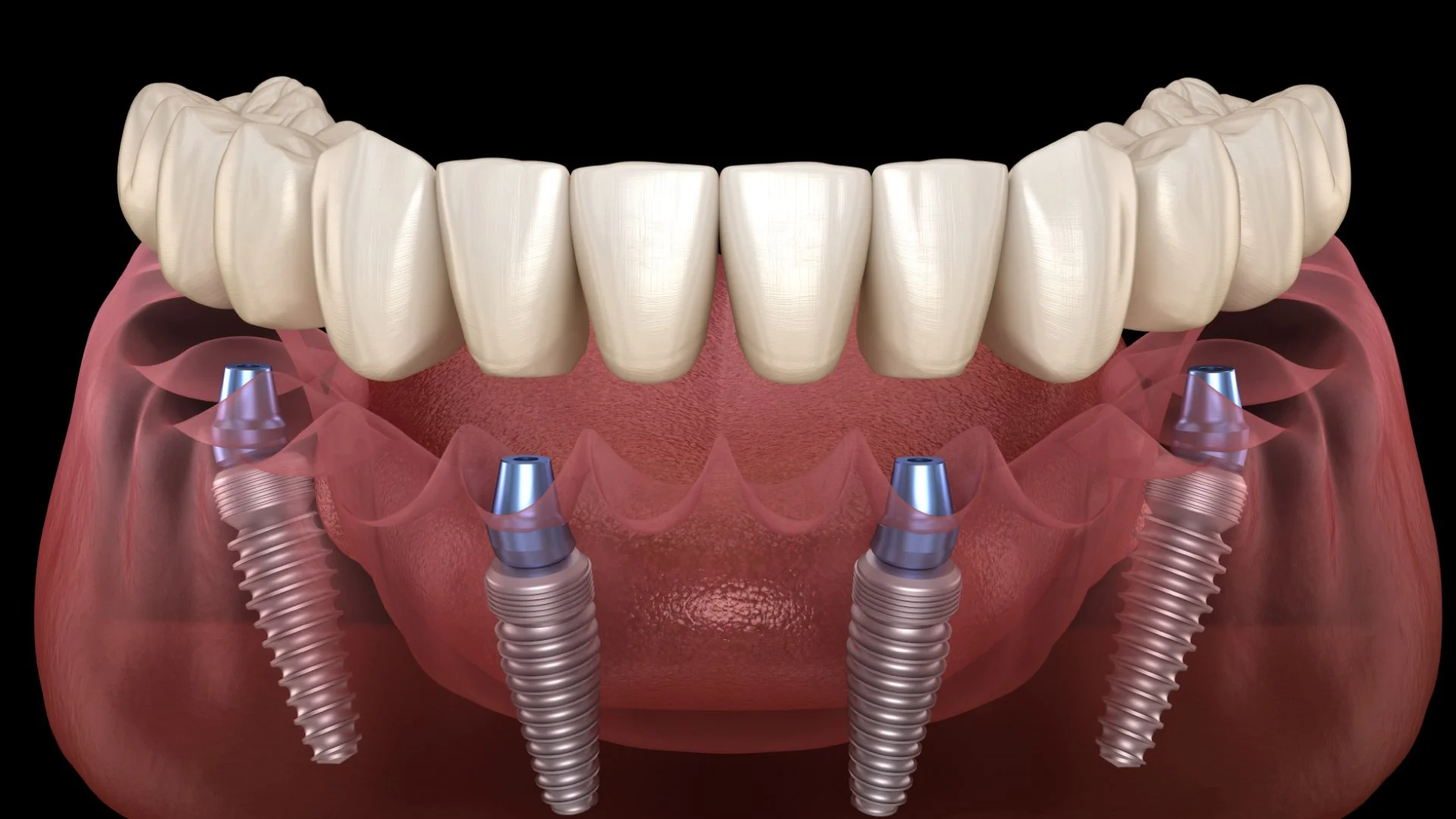
Full-arch dental implants are a revolutionary approach to replacing an entire row of teeth. Instead of placing an implant for every missing tooth, this technique uses a strategic number of implants to support a full bridge of new teeth . Think of the implants as the concrete pillars providing a rock-solid foundation for a beautiful, functional structure on top.

Both All-on-4 and All-on-6 share the same ultimate goal: to give you a stable, natural-looking smile that feels secure and lasts for decades. The main difference is the number of implants used to achieve that goal .

All-on-4: The Efficient and Proven Solution

The All-on-4 technique uses four strategically placed implants per arch. The two front implants are placed vertically, while the two back implants are placed at an angle. This clever angling makes the most of the densest bone available, often eliminating the need for bone grafting procedures—a significant advantage for patients with reduced bone volume .

Developed in 1998, the All-on-4 concept has been extensively studied and proven over decades. Research demonstrates remarkable success rates, with short-term survival rates of 99.2% and long-term rates (over five years) still exceeding 98% . It's the ideal choice for patients looking for a cost-effective, efficient solution with a faster treatment time, especially those transitioning from dentures .

All-on-6: Enhanced Stability for the Long Term

The All-on-6 technique builds on the same principle but uses six implants to support your full arch of teeth. With two additional points of support, chewing forces are distributed more evenly across your jaw, providing greater stability . All-on-6 generally shows a strong performance, with short-term survival rates of 100% and long-term rates of 97.5% .

This option is particularly well-suited for the upper jaw, where the bone is naturally softer and less dense. Many specialists recommend All-on-6 for the upper arch, as the extra implants provide stronger support and improved stability in this area . It's an excellent choice for patients with good bone density who are looking for maximum long-term durability or those with a strong bite .

Making the Choice: Which Is Right for You?

The decision between All-on-4 and All-on-6 isn't about which is "better" universally—it's about which is more appropriate for your unique anatomy and needs . Both have been shown to produce similar, excellent clinical outcomes, with comparable survival rates, marginal bone loss, and complication rates .

All-on-4 may be more suitable if you:

  • Have significant bone loss and want to avoid bone grafting

  • Are looking for a more budget-friendly solution

  • Want a quicker, proven procedure

All-on-6 may be recommended if you:

  • Have good bone density to support the extra implants

  • Are seeking maximum stability and long-term durability, especially for the upper jaw

  • Have a strong bite or require a wider safety margin

Your dentist will use advanced 3D imaging, like a CBCT scan, to map your jaw's bone height, width, and anatomy . This detailed assessment is the only way to determine the ideal solution for your specific situation.

Conclusion

All-on-4 and All-on-6 dental implants have revolutionised full-mouth rehabilitation, offering millions of people a second chance at a confident, functional smile. Both provide a fixed, natural-looking alternative to dentures with exceptionally high success rates. The best choice depends on your bone quality, jaw structure, bite forces, and long-term goals. A thorough consultation with an experienced implant dentist will guide you towards the path that's right for you.

Bruxism: Understanding the Causes and Hidden Dangers of Teeth Grinding

Do you wake up with a sore jaw, dull headaches, or sensitive teeth? Do you ever catch yourself clenching your jaw during a stressful workday? You might be one of the millions of people experiencing bruxism—the medical term for grinding, clenching, or gnashing your teeth.

Bruxism is surprisingly common. It affects up to one-third of adults during the day and more than one in ten people while they sleep . It can affect children too, though many outgrow it . The challenge is that many people don't even know they're doing it, especially if it happens at night .

Bruxism isn't just a harmless habit. Understanding its causes and consequences is the first step to protecting your teeth, easing your pain, and improving your overall well-being.

What Is Bruxism?

Bruxism is an umbrella term for the involuntary, rhythmic or spasmodic grinding or clenching of teeth, which is different from the functional chewing movement of your jaw . It's not a disorder in itself but a motor activity that can be a sign of an underlying issue or a normal variation of behaviour .

There are two main types of bruxism:

Awake Bruxism happens during the day, often subconsciously. It's usually triggered by emotions like stress, anxiety, concentration, or frustration. You might not even notice you're doing it until someone points it out, or you become aware of the tension in your jaw.

Sleep Bruxism occurs at night and is considered a sleep-related movement disorder . It's often more harmful because you have no control over it, and the grinding can be more forceful. The rhythmic muscle contractions tend to peak during REM sleep, the stage where dreaming occurs . People with sleep bruxism are also more likely to have other sleep issues like snoring or sleep apnoea .

What Causes Bruxism?

There isn't one single cause of bruxism. It's a multifactorial condition, meaning it arises from a combination of physical, psychological, and genetic factors . However, a few key triggers are consistently identified.

1. Stress and Anxiety: The Primary Culprit

The most common cause of bruxism, particularly awake bruxism, is emotional stress or anxiety . When you're feeling tense, angry, or frustrated, your body often responds by tensing muscles, including those in your jaw . This subconscious response can become a habit, a way to "release" emotional tension, especially in our modern, fast-paced lives where physical outlets for stress are often suppressed .

2. Sleep Disorders and Breathing Problems

Sleep bruxism is frequently linked to other conditions that interrupt your sleep, especially sleep apnoea, where breathing repeatedly stops and starts. Research has confirmed a strong connection between the two . One theory is that the grinding motion helps to reopen the airway, acting as a protective mechanism to restore breathing . Snoring is another common risk factor for sleep bruxism .

3. Lifestyle Factors and Medications

What you consume can make you more prone to grinding your teeth. Smoking, heavy drinking, and high caffeine intake (more than six cups of coffee a day) are all significant risk factors .

Certain medications can also trigger bruxism. This is particularly common with some antidepressants, especially a class called SSRIs (selective serotonin reuptake inhibitors), which are used to treat anxiety and depression .

4. Personality and Genetics

Your personality can be a contributing factor. People with aggressive, competitive, or hyperactive tendencies are more likely to develop bruxism . It's also common in people who are naturally "type A" and high-strung .

Sleep bruxism often runs in families, suggesting a genetic component . If your parents or siblings grind their teeth, you are at a higher risk.

The Hidden Dangers: Problems Caused by Bruxism

The consequences of untreated bruxism can go far beyond a sore jaw. The constant, excessive force exerted on your teeth and jaw joints can lead to a cascade of problems .

Dental Damage and Tooth Wear

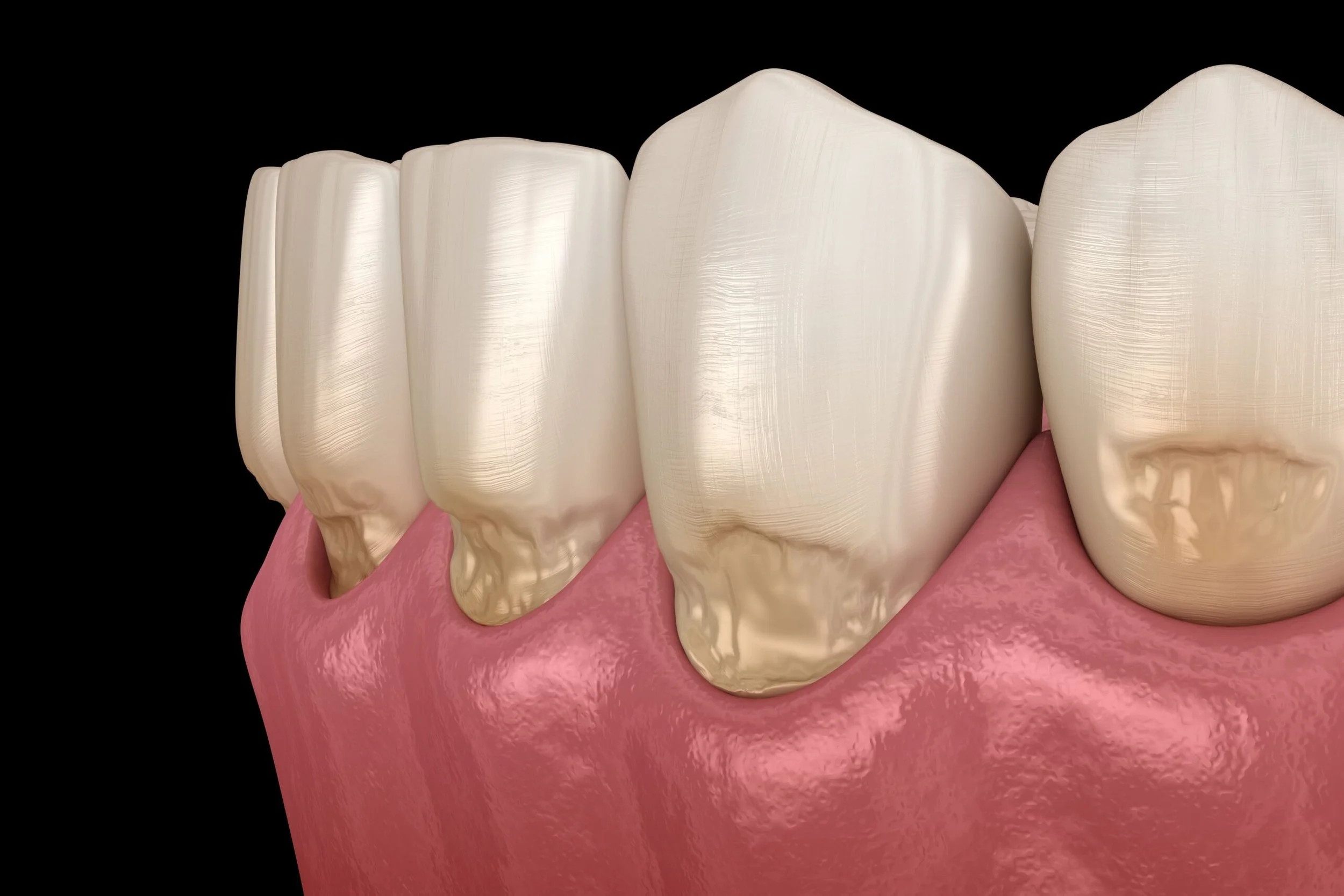
This is one of the most direct and visible impacts. Over time, grinding can flatten, fracture, chip, or loosen your teeth . It can wear down the protective enamel, exposing the softer dentin inside and leading to increased sensitivity to hot and cold . It can also cause your teeth to become mobile and damage existing dental work like crowns and fillings .

Jaw Pain and TMJ Disorders

Bruxism is a leading cause of pain in the jaw muscles and the temporomandibular joint (TMJ)—the hinge connecting your jaw to your skull. This can result in a condition called myofascial pain syndrome, where the pain from overworked jaw muscles radiates to other areas, including the neck, shoulders, and back . You might also hear a clicking or popping sound when you open or close your mouth .

Chronic Headaches and Facial Pain

Many people are surprised to learn that their morning headaches are linked to teeth grinding. The muscle tension from clenching and grinding can cause a dull, aching headache that starts at your temples or feels like an earache, even though your ears are fine .

Reduced Quality of Life

The impact of bruxism can be life-altering. Chronic pain from headaches and jaw issues can interfere with eating, sleeping, and daily concentration, leading to a significant reduction in your overall quality of life . It can also be a source of stress, especially if a sleep partner is disturbed by the sound of your grinding .

Conclusion

Bruxism is more than just a bad habit; it's a complex condition with significant consequences for your dental health and overall well-being. While the causes are varied, from stress to sleep apnoea, it's a manageable condition.

If you suspect you might be grinding your teeth—perhaps because you have a sore jaw, morning headaches, or your partner has heard you grinding at night—the first step is to see your dentist. They can check for signs of tooth wear and help you find the most effective way to protect your smile and ease your pain.

Disclaimer: This article is for informational purposes only and does not constitute medical advice. Always consult with a qualified healthcare provider for diagnosis and treatment of any health condition.